
I have two dataframes and each one has two index columns. I would like to merge them. For example, the first dataframe is the following:
V1 A 1/1/2012 12 2/1/2012 14 B 1/1/2012 15 2/1/2012 8 C 1/1/2012 17 2/1/2012 9 The second dataframe is the following:
V2 A 1/1/2012 15 3/1/2012 21 B 1/1/2012 24 2/1/2012 9 D 1/1/2012 7 2/1/2012 16 and as result I would like to get the following:
V1 V2 A 1/1/2012 12 15 2/1/2012 14 N/A 3/1/2012 N/A 21 B 1/1/2012 15 24 2/1/2012 8 9 C 1/1/2012 7 N/A 2/1/2012 16 N/A D 1/1/2012 N/A 7 2/1/2012 N/A 16 I have tried a few versions using the pd.merge and .join methods, but nothing seems to work. Do you have any suggestions?
2 Answers
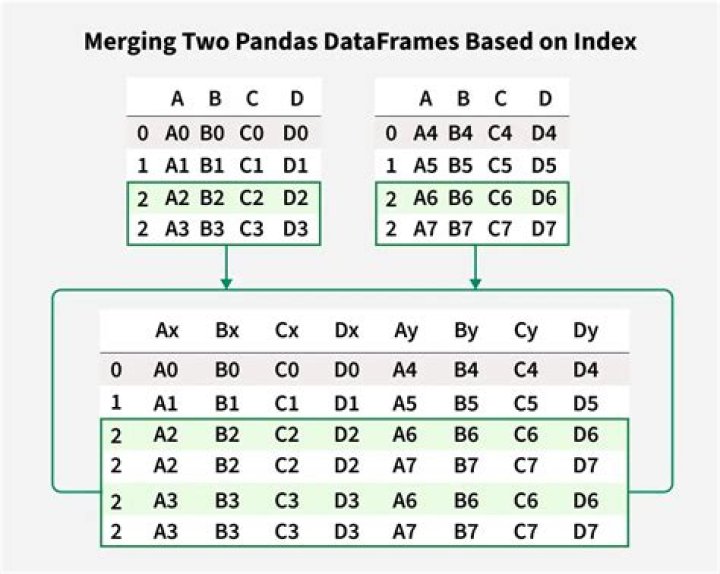
You should be able to use join, which joins on the index as default. Given your desired result, you must use outer as the join type.
>>> df1.join(df2, how='outer') V1 V2 A 1/1/2012 12 15 2/1/2012 14 NaN 3/1/2012 NaN 21 B 1/1/2012 15 24 2/1/2012 8 9 C 1/1/2012 17 NaN 2/1/2012 9 NaN D 1/1/2012 NaN 7 2/1/2012 NaN 16 0Signature: _.join(other, on=None, how='left', lsuffix='', rsuffix='', sort=False) Docstring: Join columns with other DataFrame either on index or on a key column. Efficiently Join multiple DataFrame objects by index at once by passing a list.
You can do this with merge:
df_merged = df1.merge(df2, how='outer', left_index=True, right_index=True) The keyword argument how='outer' keeps all indices from both frames, filling in missing indices with NaN. The left_index and right_index keyword arguments have the merge be done on the indices. If you get all NaN in a column after doing a merge, another troubleshooting step is to verify that your indices have the same dtypes.
The merge code above produces the following output for me:
V1 V2 A 2012-01-01 12.0 15.0 2012-02-01 14.0 NaN 2012-03-01 NaN 21.0 B 2012-01-01 15.0 24.0 2012-02-01 8.0 9.0 C 2012-01-01 17.0 NaN 2012-02-01 9.0 NaN D 2012-01-01 NaN 7.0 2012-02-01 NaN 16.0