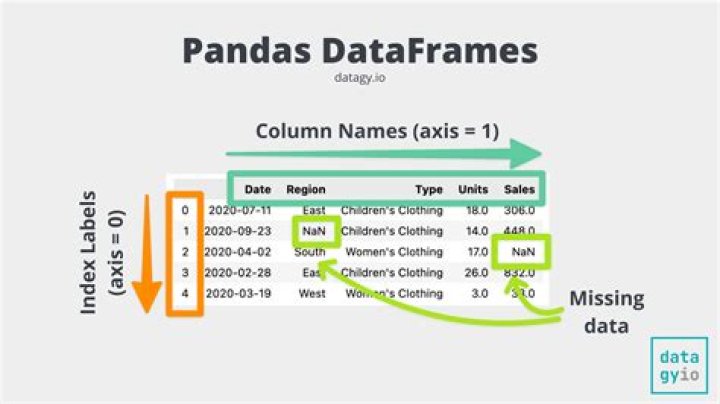

As of August 2017, Pandas DataFame.apply() is unfortunately still limited to working with a single core, meaning that a multi-core machine will waste the majority of its compute-time when you run df.apply(myfunc, axis=1).
How can you use all your cores to run apply on a dataframe in parallel?
12 Answers
The simplest way is to use Dask's map_partitions. You need these imports (you will need to pip install dask):
import pandas as pd import dask.dataframe as dd from dask.multiprocessing import get and the syntax is
data = <your_pandas_dataframe> ddata = dd.from_pandas(data, npartitions=30) def myfunc(x,y,z, ...): return <whatever> res = ddata.map_partitions(lambda df: df.apply((lambda row: myfunc(*row)), axis=1)).compute(get=get) (I believe that 30 is a suitable number of partitions if you have 16 cores). Just for completeness, I timed the difference on my machine (16 cores):
data = pd.DataFrame() data['col1'] = np.random.normal(size = 1500000) data['col2'] = np.random.normal(size = 1500000) ddata = dd.from_pandas(data, npartitions=30) def myfunc(x,y): return y*(x**2+1) def apply_myfunc_to_DF(df): return df.apply((lambda row: myfunc(*row)), axis=1) def pandas_apply(): return apply_myfunc_to_DF(data) def dask_apply(): return ddata.map_partitions(apply_myfunc_to_DF).compute(get=get) def vectorized(): return myfunc(data['col1'], data['col2'] ) t_pds = timeit.Timer(lambda: pandas_apply()) print(t_pds.timeit(number=1)) 28.16970546543598
t_dsk = timeit.Timer(lambda: dask_apply()) print(t_dsk.timeit(number=1)) 2.708152851089835
t_vec = timeit.Timer(lambda: vectorized()) print(t_vec.timeit(number=1)) 0.010668013244867325
Giving a factor of 10 speedup going from pandas apply to dask apply on partitions. Of course, if you have a function you can vectorize, you should - in this case the function (y*(x**2+1)) is trivially vectorized, but there are plenty of things that are impossible to vectorize.
You may use the swifter package:
pip install swifter (Note that you may want to use this in a virtualenv to avoid version conflicts with installed dependencies.)
Swifter works as a plugin for pandas, allowing you to reuse the apply function:
import swifter def some_function(data): return data * 10 data['out'] = data['in'].swifter.apply(some_function) It will automatically figure out the most efficient way to parallelize the function, no matter if it's vectorized (as in the above example) or not.
More examples and a performance comparison are available on GitHub. Note that the package is under active development, so the API may change.
Also note that this will not work automatically for string columns. When using strings, Swifter will fallback to a “simple” Pandas apply, which will not be parallel. In this case, even forcing it to use dask will not create performance improvements, and you would be better off just splitting your dataset manually and parallelizing using multiprocessing.
you can try pandarallel instead: A simple and efficient tool to parallelize your pandas operations on all your CPUs (On Linux & macOS)
- Parallelization has a cost (instanciating new processes, sending data via shared memory, etc ...), so parallelization is efficiant only if the amount of calculation to parallelize is high enough. For very little amount of data, using parallezation not always worth it.
- Functions applied should NOT be lambda functions.
from pandarallel import pandarallel from math import sin pandarallel.initialize() # FORBIDDEN df.parallel_apply(lambda x: sin(x**2), axis=1) # ALLOWED def func(x): return sin(x**2) df.parallel_apply(func, axis=1) If you want to stay in native python:
import multiprocessing as mp with mp.Pool(mp.cpu_count()) as pool: df['newcol'] = pool.map(f, df['col']) will apply function f in a parallel fashion to column col of dataframe df
Just want to give an update answer for Dask
import dask.dataframe as dd def your_func(row): #do something return row ddf = dd.from_pandas(df, npartitions=30) # find your own number of partitions ddf_update = ddf.apply(your_func, axis=1).compute() On my 100,000 records, without Dask:
CPU times: user 6min 32s, sys: 100 ms, total: 6min 32s Wall time: 6min 32s
With Dask:
CPU times: user 5.19 s, sys: 784 ms, total: 5.98 s Wall time: 1min 3s
To use all (physical or logical) cores, you could try mapply as an alternative to swifter and pandarallel.
You can set the amount of cores (and the chunking behaviour) upon init:
import pandas as pd import mapply mapply.init(n_workers=-1) ... df.mapply(myfunc, axis=1) By default (n_workers=-1), the package uses all physical CPUs available on the system. If your system uses hyper-threading (usually twice the amount of physical CPUs would show up), mapply will spawn one extra worker to prioritise the multiprocessing pool over other processes on the system.
Depending on your definition of all your cores, you could also use all logical cores instead (beware that like this the CPU-bound processes will be fighting for physical CPUs, which might slow down your operation):
import multiprocessing n_workers = multiprocessing.cpu_count() # or more explicit import psutil n_workers = psutil.cpu_count(logical=True) Here is an example of sklearn base transformer, in which pandas apply is parallelized
import multiprocessing as mp from sklearn.base import TransformerMixin, BaseEstimator class ParllelTransformer(BaseEstimator, TransformerMixin): def __init__(self, n_jobs=1): """ n_jobs - parallel jobs to run """ self.variety = variety self.user_abbrevs = user_abbrevs self.n_jobs = n_jobs def fit(self, X, y=None): return self def transform(self, X, *_): X_copy = X.copy() cores = mp.cpu_count() partitions = 1 if self.n_jobs <= -1: partitions = cores elif self.n_jobs <= 0: partitions = 1 else: partitions = min(self.n_jobs, cores) if partitions == 1: # transform sequentially return X_copy.apply(self._transform_one) # splitting data into batches data_split = np.array_split(X_copy, partitions) pool = mp.Pool(cores) # Here reduce function - concationation of transformed batches data = pd.concat( pool.map(self._preprocess_part, data_split) ) pool.close() pool.join() return data def _transform_part(self, df_part): return df_part.apply(self._transform_one) def _transform_one(self, line): # some kind of transformations here return line Here another one using Joblib and some helper code from scikit-learn. Lightweight (if you already have scikit-learn), good if you prefer more control over what it is doing since joblib is easily hackable.
from joblib import parallel_backend, Parallel, delayed, effective_n_jobs from sklearn.utils import gen_even_slices from sklearn.utils.validation import _num_samples def parallel_apply(df, func, n_jobs= -1, **kwargs): """ Pandas apply in parallel using joblib. Uses sklearn.utils to partition input evenly. Args: df: Pandas DataFrame, Series, or any other object that supports slicing and apply. func: Callable to apply n_jobs: Desired number of workers. Default value -1 means use all available cores. **kwargs: Any additional parameters will be supplied to the apply function Returns: Same as for normal Pandas DataFrame.apply() """ if effective_n_jobs(n_jobs) == 1: return df.apply(func, **kwargs) else: ret = Parallel(n_jobs=n_jobs)( delayed(type(df).apply)(df[s], func, **kwargs) for s in gen_even_slices(_num_samples(df), effective_n_jobs(n_jobs))) return pd.concat(ret) Usage: result = parallel_apply(my_dataframe, my_func)
Instead of
df["new"] = df["old"].map(fun) do
from joblib import Parallel, delayed df["new"] = Parallel(n_jobs=-1, verbose=10)(delayed(fun)(i) for i in df["old"]) To me this is a slight improvement over
import multiprocessing as mp with mp.Pool(mp.cpu_count()) as pool: df["new"] = pool.map(fun, df["old"]) as you get a progress indication and automatic batching if the jobs are very small.
The native Python solution (with numpy) that can be applied on the whole DataFrame as the original question asks (not only on a single column)
import numpy as np import multiprocessing as mp dfs = np.array_split(df, 8000) # divide the dataframe as desired def f_app(df): return df.apply(myfunc, axis=1) with mp.Pool(mp.cpu_count()) as pool: res = pd.concat(pool.map(f_app, dfs)) Since the question was "How can you use all your cores to run apply on a dataframe in parallel?", the answer can also be with modin. You can run all cores in parallel, though the real time is worse.
See . It runs of top of dask or ray. They say "Modin is a DataFrame designed for datasets from 1MB to 1TB+." I tried: pip3 install "modin"[ray]". Modin vs pandas was - 12 sec on six cores vs. 6 sec.
In case you need to do something based on the column name inside the function beware that .apply function may give you some trouble. In my case I needed to change the column type using astype() function based on the column name. This is probably not the most efficient way of doing it but suffices the purpose and keeps the column names as the original one.
import multiprocessing as mp def f(df): """ the function that you want to apply to each column """ column_name = df.columns[0] # this is the same as the original column name # do something what you need to do to that column return df # Here I just make a list of all the columns. If you don't use .to_frame() # it will pass series type instead of a dataframe dfs = [df[column].to_frame() for column in df.columns] with mp.Pool(mp.cpu_num) as pool: processed_df = pd.concat(pool.map(f, dfs), axis=1)