 $\begingroup$
I tried doing this by putting $$\frac{ \sin p}{\sqrt2} +\frac{ \cos p}{\sqrt2} = 0 $$ which implies $$ \sin(p + π/4) = \sin 0 $$ which implies $p+ π/4 = nπ $. Now according to the question I'm solving $p = 2πt/T$. I need to get the relation $t = 3T/8$. How do I get this? Am I going the right way?
$\endgroup$14 Answers
$\begingroup$From here
$$\sin(x)+\cos(x)=0$$
we have that $\cos x=0$ is not a solution then we can divide both sides by $\cos x\neq 0$ and obtain
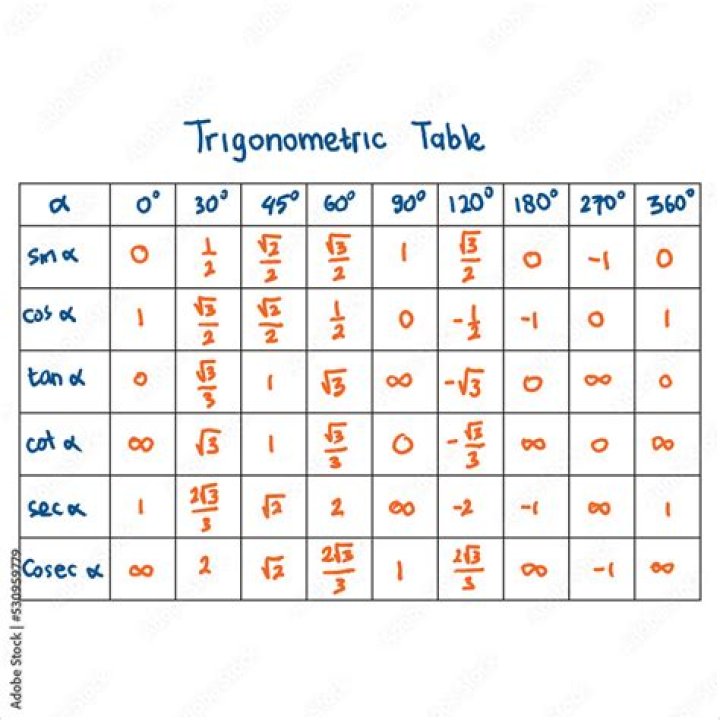
$$\sin(x)+\cos(x)=0\implies \tan x+1=0\implies \tan x =-1 \implies x=-\frac{\pi}4+k\pi\quad k\in \mathbb{Z}$$
$\endgroup$3$\begingroup$You are so close to the ...answer. Note that $\sin p + \cos p = 0\implies \sqrt{2}\cdot \sin(p+\pi/4) = 0\implies p +\pi/4 = n\pi\implies p = -\pi/4+n\pi, n \in \mathbb{Z}$
$\endgroup$0$\begingroup$$$\sin x + \cos x = 0$$ $$\Rightarrow \sin^2 x + 2 \sin x \cos x + \cos^2 x = 0$$ $$\Rightarrow \sin(2x) + 1 = 0$$ $$\Rightarrow \sin(2x) = -1$$
Since we know that $\sin x = -1$ when $x = \frac{3\pi}{2} + 2\pi n$, then $\sin(2x) = -1$ when $x = \frac{3\pi}{4} + \pi n $.
$\endgroup$0$\begingroup$Note that $\sin(x)+\cos(x)=0$ if and only if $\sin(x)=-\cos(x)$. Now, you can use trigonometric identities to show that the values of $x$ for which this expression holds are $x=\frac{3}{4}\pi,\frac{7}{4}\pi,...etc$
$\endgroup$0