It seems like there should be a simpler way than:
import string s = "string. With. Punctuation?" # Sample string out = s.translate(string.maketrans("",""), string.punctuation) Is there?
932 Answers
From an efficiency perspective, you're not going to beat
s.translate(None, string.punctuation) For higher versions of Python use the following code:
s.translate(str.maketrans('', '', string.punctuation)) It's performing raw string operations in C with a lookup table - there's not much that will beat that but writing your own C code.
If speed isn't a worry, another option though is:
exclude = set(string.punctuation) s = ''.join(ch for ch in s if ch not in exclude) This is faster than s.replace with each char, but won't perform as well as non-pure python approaches such as regexes or string.translate, as you can see from the below timings. For this type of problem, doing it at as low a level as possible pays off.
Timing code:
import re, string, timeit s = "string. With. Punctuation" exclude = set(string.punctuation) table = string.maketrans("","") regex = re.compile('[%s]' % re.escape(string.punctuation)) def test_set(s): return ''.join(ch for ch in s if ch not in exclude) def test_re(s): # From Vinko's solution, with fix. return regex.sub('', s) def test_trans(s): return s.translate(table, string.punctuation) def test_repl(s): # From S.Lott's solution for c in string.punctuation: s=s.replace(c,"") return s print "sets :",timeit.Timer('f(s)', 'from __main__ import s,test_set as f').timeit(1000000) print "regex :",timeit.Timer('f(s)', 'from __main__ import s,test_re as f').timeit(1000000) print "translate :",timeit.Timer('f(s)', 'from __main__ import s,test_trans as f').timeit(1000000) print "replace :",timeit.Timer('f(s)', 'from __main__ import s,test_repl as f').timeit(1000000) This gives the following results:
sets : 19.8566138744 regex : 6.86155414581 translate : 2.12455511093 replace : 28.4436721802 Regular expressions are simple enough, if you know them.
import re s = "string. With. Punctuation?" s = re.sub(r'[^\w\s]','',s) For the convenience of usage, I sum up the note of striping punctuation from a string in both Python 2 and Python 3. Please refer to other answers for the detailed description.
Python 2
import string s = "string. With. Punctuation?" table = string.maketrans("","") new_s = s.translate(table, string.punctuation) # Output: string without punctuation Python 3
import string s = "string. With. Punctuation?" table = str.maketrans(dict.fromkeys(string.punctuation)) # OR {key: None for key in string.punctuation} new_s = s.translate(table) # Output: string without punctuation myString.translate(None, string.punctuation) I usually use something like this:
>>> s = "string. With. Punctuation?" # Sample string >>> import string >>> for c in string.punctuation: ... s= s.replace(c,"") ... >>> s 'string With Punctuation' string.punctuation is ASCII only! A more correct (but also much slower) way is to use the unicodedata module:
# -*- coding: utf-8 -*- from unicodedata import category s = u'String — with - «punctation »...' s = ''.join(ch for ch in s if category(ch)[0] != 'P') print 'stripped', s You can generalize and strip other types of characters as well:
''.join(ch for ch in s if category(ch)[0] not in 'SP') It will also strip characters like ~*+§$ which may or may not be "punctuation" depending on one's point of view.
Not necessarily simpler, but a different way, if you are more familiar with the re family.
import re, string s = "string. With. Punctuation?" # Sample string out = re.sub('[%s]' % re.escape(string.punctuation), '', s) For Python 3 str or Python 2 unicode values, str.translate() only takes a dictionary; codepoints (integers) are looked up in that mapping and anything mapped to None is removed.
To remove (some?) punctuation then, use:
import string remove_punct_map = dict.fromkeys(map(ord, string.punctuation)) s.translate(remove_punct_map) The dict.fromkeys() class method makes it trivial to create the mapping, setting all values to None based on the sequence of keys.
To remove all punctuation, not just ASCII punctuation, your table needs to be a little bigger; see J.F. Sebastian's answer (Python 3 version):
import unicodedata import sys remove_punct_map = dict.fromkeys(i for i in range(sys.maxunicode) if unicodedata.category(chr(i)).startswith('P')) string.punctuation misses loads of punctuation marks that are commonly used in the real world. How about a solution that works for non-ASCII punctuation?
import regex s = u"string. With. Some・Really Weird、Non?ASCII。 「(Punctuation)」?" remove = regex.compile(ur'[\p{C}|\p{M}|\p{P}|\p{S}|\p{Z}]+', regex.UNICODE) remove.sub(u" ", s).strip() Personally, I believe this is the best way to remove punctuation from a string in Python because:
- It removes all Unicode punctuation
- It's easily modifiable, e.g. you can remove the
\{S}if you want to remove punctuation, but keep symbols like$. - You can get really specific about what you want to keep and what you want to remove, for example
\{Pd}will only remove dashes. - This regex also normalizes whitespace. It maps tabs, carriage returns, and other oddities to nice, single spaces.
This uses Unicode character properties, which you can read more about on Wikipedia.
2I haven't seen this answer yet. Just use a regex; it removes all characters besides word characters (\w) and number characters (\d), followed by a whitespace character (\s):
import re s = "string. With. Punctuation?" # Sample string out = re.sub(ur'[^\w\d\s]+', '', s) Here's a one-liner for Python 3.5:
import string "l*ots! o(f. p@u)n[c}t]u[a'ti\"on#$^?/".translate(str.maketrans({a:None for a in string.punctuation})) This might not be the best solution however this is how I did it.
import string f = lambda x: ''.join([i for i in x if i not in string.punctuation]) import re s = "string. With. Punctuation?" # Sample string out = re.sub(r'[^a-zA-Z0-9\s]', '', s) Here is a function I wrote. It's not very efficient, but it is simple and you can add or remove any punctuation that you desire:
def stripPunc(wordList): """Strips punctuation from list of words""" puncList = [".",";",":","!","?","/","\\",",","#","@","$","&",")","(","\""] for punc in puncList: for word in wordList: wordList=[word.replace(punc,'') for word in wordList] return wordList Just as an update, I rewrote the @Brian example in Python 3 and made changes to it to move regex compile step inside of the function. My thought here was to time every single step needed to make the function work. Perhaps you are using distributed computing and can't have regex object shared between your workers and need to have re.compile step at each worker. Also, I was curious to time two different implementations of maketrans for Python 3
table = str.maketrans({key: None for key in string.punctuation}) vs
table = str.maketrans('', '', string.punctuation) Plus I added another method to use set, where I take advantage of intersection function to reduce number of iterations.
This is the complete code:
import re, string, timeit s = "string. With. Punctuation" def test_set(s): exclude = set(string.punctuation) return ''.join(ch for ch in s if ch not in exclude) def test_set2(s): _punctuation = set(string.punctuation) for punct in set(s).intersection(_punctuation): s = s.replace(punct, ' ') return ' '.join(s.split()) def test_re(s): # From Vinko's solution, with fix. regex = re.compile('[%s]' % re.escape(string.punctuation)) return regex.sub('', s) def test_trans(s): table = str.maketrans({key: None for key in string.punctuation}) return s.translate(table) def test_trans2(s): table = str.maketrans('', '', string.punctuation) return(s.translate(table)) def test_repl(s): # From S.Lott's solution for c in string.punctuation: s=s.replace(c,"") return s print("sets :",timeit.Timer('f(s)', 'from __main__ import s,test_set as f').timeit(1000000)) print("sets2 :",timeit.Timer('f(s)', 'from __main__ import s,test_set2 as f').timeit(1000000)) print("regex :",timeit.Timer('f(s)', 'from __main__ import s,test_re as f').timeit(1000000)) print("translate :",timeit.Timer('f(s)', 'from __main__ import s,test_trans as f').timeit(1000000)) print("translate2 :",timeit.Timer('f(s)', 'from __main__ import s,test_trans2 as f').timeit(1000000)) print("replace :",timeit.Timer('f(s)', 'from __main__ import s,test_repl as f').timeit(1000000)) This is my results:
sets : 3.1830138750374317 sets2 : 2.189873124472797 regex : 7.142953420989215 translate : 4.243278483860195 translate2 : 2.427158243022859 replace : 4.579746678471565 A one-liner might be helpful in not very strict cases:
''.join([c for c in s if c.isalnum() or c.isspace()]) >>> s = "string. With. Punctuation?" >>> s = re.sub(r'[^\w\s]','',s) >>> re.split(r'\s*', s) ['string', 'With', 'Punctuation'] Here's a solution without regex.
import string input_text = "!where??and!!or$$then:)" punctuation_replacer = string.maketrans(string.punctuation, ' '*len(string.punctuation)) print ' '.join(input_text.translate(punctuation_replacer).split()).strip() Output>> where and or then - Replaces the punctuations with spaces
- Replace multiple spaces in between words with a single space
- Remove the trailing spaces, if any with strip()
Why none of you use this?
''.join(filter(str.isalnum, s)) Too slow?
2Here's one other easy way to do it using RegEx
import re punct = re.compile(r'(\w+)') sentence = 'This ! is : a # sample $ sentence.' # Text with punctuation tokenized = [m.group() for m in punct.finditer(sentence)] sentence = ' '.join(tokenized) print(sentence) 'This is a sample sentence' I was looking for a really simple solution. here's what I got:
import re s = "string. With. Punctuation?" s = re.sub(r'[\W\s]', ' ', s) print(s) 'string With Punctuation ' # FIRST METHOD # Storing all punctuations in a variable punctuation='!?,.:;"\')(_-' newstring ='' # Creating empty string word = raw_input("Enter string: ") for i in word: if(i not in punctuation): newstring += i print ("The string without punctuation is", newstring) # SECOND METHOD word = raw_input("Enter string: ") punctuation = '!?,.:;"\')(_-' newstring = word.translate(None, punctuation) print ("The string without punctuation is",newstring) # Output for both methods Enter string: hello! welcome -to_python(programming.language)??, The string without punctuation is: hello welcome topythonprogramminglanguage with open('one.txt','r')as myFile: str1=myFile.read() print(str1) punctuation = ['(', ')', '?', ':', ';', ',', '.', '!', '/', '"', "'"] for i in punctuation: str1 = str1.replace(i," ") myList=[] myList.extend(str1.split(" ")) print (str1) for i in myList: print(i,end='\n') print ("____________") Try that one :)
regex.sub(r'\p{P}','', s) The question does not have a lot of specifics, so the approach I took is to come up with a solution with the simplest interpretation of the problem: just remove the punctuation.
Note that solutions presented don't account for contracted words (e.g., you're) or hyphenated words (e.g., anal-retentive)...which is debated as to whether they should or shouldn't be treated as punctuations...nor to account for non-English character set or anything like that...because those specifics were not mentioned in the question. Someone argued that space is punctuation, which is technically correct...but to me it makes zero sense in the context of the question at hand.
# using lambda ''.join(filter(lambda c: c not in string.punctuation, s)) # using list comprehension ''.join('' if c in string.punctuation else c for c in s) Apparently I can't supply edits to the selected answer, so here's an update which works for Python 3. The translate approach is still the most efficient option when doing non-trivial transformations.
Credit for the original heavy lifting to @Brian above. And thanks to @ddejohn for his excellent suggestion for improvement to the original test.
#!/usr/bin/env python3 """Determination of most efficient way to remove punctuation in Python 3. Results in Python 3.8.10 on my system using the default arguments: set : 51.897 regex : 17.901 translate : 2.059 replace : 13.209 """ import argparse import re import string import timeit parser = argparse.ArgumentParser() parser.add_argument("--filename", "-f", default=argparse.__file__) parser.add_argument("--iterations", "-i", type=int, default=10000) opts = parser.parse_args() with open(opts.filename) as fp: s = fp.read() exclude = set(string.punctuation) table = str.maketrans("", "", string.punctuation) regex = re.compile(f"[{re.escape(string.punctuation)}]") def test_set(s): return "".join(ch for ch in s if ch not in exclude) def test_regex(s): # From Vinko's solution, with fix. return regex.sub("", s) def test_translate(s): return s.translate(table) def test_replace(s): # From S.Lott's solution for c in string.punctuation: s = s.replace(c, "") return s opts = dict(globals=globals(), number=opts.iterations) solutions = "set", "regex", "translate", "replace" for solution in solutions: elapsed = timeit.timeit(f"test_{solution}(s)", **opts) print(f"{solution:<10}: {elapsed:6.3f}") Considering unicode. Code checked in python3.
from unicodedata import category text = 'hi, how are you?' text_without_punc = ''.join(ch for ch in text if not category(ch).startswith('P')) You can also do this:
import string ' '.join(word.strip(string.punctuation) for word in 'text'.split()) When you deal with the Unicode strings, I suggest using PyPi regex module because it supports both Unicode property classes (like \p{X} / \P{X}) and POSIX character classes (like [:name:]).
Just install the package by typing pip install regex (or pip3 install regex) in your terminal and hit ENTER.
In case you need to remove punctuation and symbols of any kind (that is, anything other than letters, digits and whitespace) you can use
regex.sub(r'[\p{P}\p{S}]', '', text) # to remove one by one regex.sub(r'[\p{P}\p{S}]+', '', text) # to remove all consecutive punctuation/symbols with one go regex.sub(r'[[:punct:]]+', '', text) # Same with a POSIX character class See a Python demo online:
import regex text = 'भारत India <><>^$.,,! 002' new_text = regex.sub(r'[\p{P}\p{S}\s]+', ' ', text).lower().strip() # OR # new_text = regex.sub(r'[[:punct:]\s]+', ' ', text).lower().strip() print(new_text) # => भारत india 002 Here, I added a whitespace \s pattern to the character class
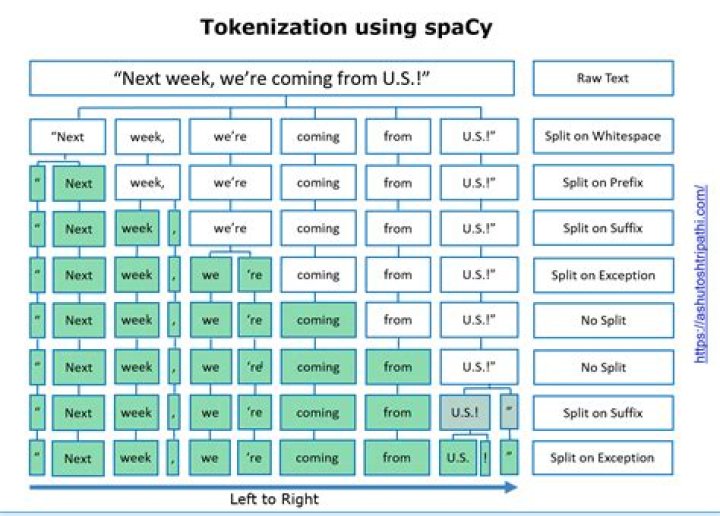
For serious natural language processing (NLP), you should let a library like SpaCy handle punctuation through tokenization, which you can then manually tweak to your needs.
For example, how do you want to handle hyphens in words? Exceptional cases like abbreviations? Begin and end quotes? URLs? IN NLP it's often useful to separate out a contraction like "let's" into "let" and "'s" for further processing.