
echo "text" >> 'Users/Name/Desktop/TheAccount.txt' How do I make it so it creates the file if it doesn't exist, but overwrites it if it already exists. Right now this script just appends.
08 Answers
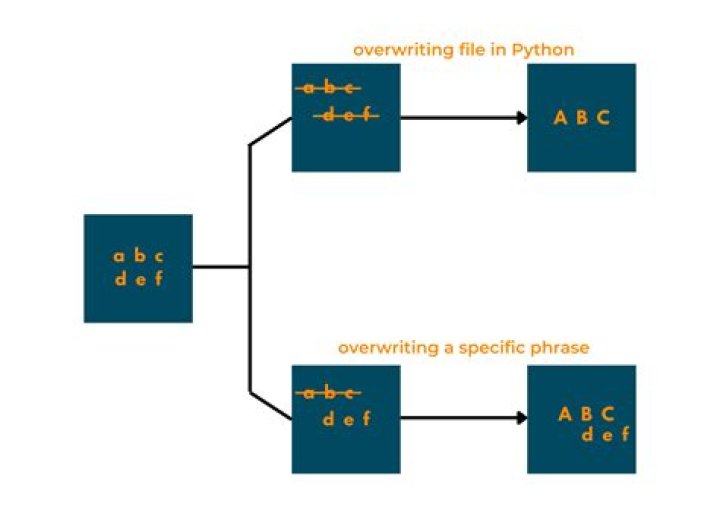
The >> redirection operator will append lines to the end of the specified file, where-as the single greater than > will empty and overwrite the file.
echo "text" > 'Users/Name/Desktop/TheAccount.txt' In Bash, if you have set noclobber a la set -o noclobber, then you use the syntax >|
For example:
echo "some text" >| existing_file This also works if the file doesn't exist yet
Check if noclobber is set with:
set -o | grep noclobberFor a more detailed explanation on this special type of operator, see this post
For a more exhaustive list of redirection operators, refer to this post
Despite NylonSmile's answer, which is "sort of" correct.. I was unable to overwrite files, in this manner..
echo "i know about Pipes, girlfriend" > thatAnswer
zsh: file exists: thatAnswer
to solve my issues.. I had to use... >!, á la..
[[ $FORCE_IT == 'YES' ]] && echo "$@" >! "$X" || echo "$@" > "$X" Obviously, be careful with this...
1If your environment doesn't allow overwriting with >, use pipe | and tee instead as follows:
echo "text" | tee 'Users/Name/Desktop/TheAccount.txt' Note this will also print to the stdout. In case this is unwanted, you can redirect the output to /dev/null as follows:
echo "text" | tee 'Users/Name/Desktop/TheAccount.txt' > /dev/null #!/bin/bash cat <<EOF > SampleFile Put Some text here Put some text here Put some text here EOF Just noting that if you wish to redirect both stderr and stdout to a file while you have noclobber set (i.e. set -o noclobber), you can use the code:
cmd >| file.txt 2>&1 More information about this can be seen at .
Also this answer's @TuBui's question on the answer @BrDaHa provided above at Aug 9 '18 at 9:34.
To overwrite one file's content to another file you use the single greater than sign, using two will append.
echo "this is foo" > foobar.txt cat foobar.txt > this is foo echo "this is bar" > foobar.txt cat foobar.txt > this is bar echo "this is foo, again" >> foobar.txt cat foobar.txt > this is bar > this is foo, again As mentioned in other answers, if you have noclobber set then use the >| operator.
If you have output that can have errors, you may want to use an ampersand and a greater than, as follows:
my_task &> 'Users/Name/Desktop/task_output.log' this will redirect both stderr and stdout to the log file (instead of stdout only).