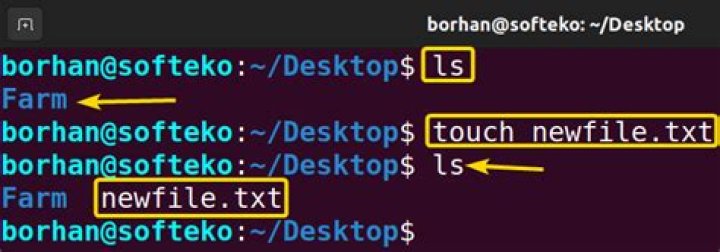

What do you use when you want to update the date-modified field of a file on Windows?
- commands accessible via C++, .NET, C#, or something native to Windows (Vista preferably)
- tools/applications preferably free, and if possible open source as well
Edit: there is already a page for applications as pointed out by CheapScotsman here.
If anyone knows how I can do this via C++, C#, WSH or something similar, well and good, else I would think everything else is covered in the linked question.
332 Answers
If you want to touch the date stamp of a file using windows, use the following command at the command prompt:
copy /b filename.ext +,, (where filename.ext is your file's name). The +,, is a special flag to copy telling it to simply update the date/time on the file:
* Changing the time and date of a file
If you want to assign the current time and date to a file without modifying the file, use the following syntax:
copy /b Source+,,The commas indicate the omission of the Destination parameter.
Edit based on comments by Lumi and Justin: put this in a batch file, eg. touch.cmd
@COPY /B %1+,, %1 This works even if the file is not in the current directory (tested on Windows 7).
21I've used and recommend unxutils which are native Win32 ports of lots of common Unix utilities. There is a touch command in there.
If all you want is to change the file's last modified date (which was my case):
C:\> powershell (ls your-file-name-here).LastWriteTime = Get-Date type nul >>file & copy file +,, - Creates
fileif it does not exist. - Leaves file contents alone.
- Just uses
cmdbuilt-ins. - Both last-access and creation times updated.
UPDATE
Gah! This doesn't work on read-only files, whereas touch does. I suggest:
:touch if not exist "%~1" type nul >>"%~1"& goto :eof set _ATTRIBUTES=%~a1 if "%~a1"=="%_ATTRIBUTES:r=%" (copy "%~1"+,,) else attrib -r "%~1" & copy "%~1"+,, & attrib +r "%~1" @dash-tom-bang:
Here is Technet's explanation of the mysterious '+' and commas:
copy /b Source+,,
The commas indicate the omission of the Destination parameter.
The copy command supports merging multiple files into a single destination file. Since a blank destination cannot be specified using a space character at the command prompt, two commas can be used to denote that.
And this is Technet's copy command reference:
6If you feel like coding it yourself, .NET offers the File.SetLastAccessTime, File.SetCreationTime and File.SetLastWriteTime methods.
here is a recursive version using powershell... this will change the last modified time for all files and subdirectories, and files within this directory's subdirectories
ps c:myDir> Get-ChildItem . * -recurse | ForEach-Object{$_.LastWriteTime = get-date} I tried this to create an empty file in my batch script. You can use this:
ECHO text>file1.txt The GnuWin32 project has Windows ports of the Gnu versions of the Unix command line utilities.
It comes as a number of separate packages and you can install just the commands you need with no other dependencies. For touch you would need the CoreUtils package.
cygwin comes with touch. I know you mentioned that you don't want to install a whole framework, but cygwin is quite lightweight, and can be called from dos command window without the whole unix-like command line turned on.
You can also control what tools to install, so you could simply install the touch.exe file, and leave the rest of the framework.
Here's a simple regfile I wrote to add right-click "touch" in Windows explorer. It'd be easy to script it, too, since it just calls:
cmd.exe /c copy %1+nul %1 /by Native win32 ports of many unix commands, including touch.
I've used it before and it works well - no installation, no DLLs, etc
Try this one from CodeProject.
- No need to install.
- If you want, you can even modify the source.
You could also install Cygwin which gives you Touch as well as a plethora of other *NIX commands.
2This content can be saved to a reg file. This will add a right click context menu for all files with the "Touch File" ability (tested on Windows 7). Copy all the following lines to reg file. Run the file and approve the question. Right click on any file (or multiple files) - "Touch File" option is now available.
Windows Registry Editor Version 5.00 [HKEY_CLASSES_ROOT\*\shell] [HKEY_CLASSES_ROOT\*\shell\Touch File] [HKEY_CLASSES_ROOT\*\shell\Touch File\command] @="cmd /C copy /b \"%1\" +,," There are Windows ports of many Unix utilities. Have a look at unxutils or GnuWin32 projects.
From a similar question on Stack Overflow.
For updating timestamps (ignoring the other functionality of touch), I'd go with:
copy /b filename.ext +,, How about codeproject "Touch for Windows":
1from the website:
0Funduc Software Touch is a free 'touch' utility that allows you to change the time/date &/or attribute stamps on one or more files. In addition, FS Touch can add/subtract a specified number of seconds from the existing file time. You can specify which file(s) and/or subdirectories to change via 'complex file masks'. The program can be run from interactively or the command line. New to version 7.2 is a command line switch to change file modified time stamp +/- the specified number of seconds.
FS Touch runs on Windows XP, Vista, Windows 7, & Windows 8.
If you are using git for one or more projects, the mingw based git-bash for Windows has the touch command. I want to thank @greg-hewgill for pointing out to me that 'nix utilities exist for windows, because it was that which put me on the idea to try touch in git-bash.
in PowerShell try:
ni fileName.txt NI is an alias of the New-Item cmdlet.
Save the following as touch.bat in your %windir%\system32 folder or add the folder in which it is saved to your PATH environment variable:
@echo off if %1.==. goto end if not exist %1 goto end copy /b %1 +,, > nul echo %1 touched! :end Sample usage:
touch *.cpp touch somefile.c Reference: Microsoft KB 69581
1I found a quick way to do it if you have vim installed (not great for big files, will open entire file then close it...)
vim foobar.txt +wq! The "+" sets argument to run the following commands. "wq!" is "write, quit, force". This will open file, do a save, then close it immediately afterward.
1I wanted the 'touch' feature of cloning / duplicating the file dates from another file, natively, and be usable from a batch file.
So 'drag and drop' video file on to batch file, FFMPEG runs, then 'Date Created' and 'Date Modified' from the input file gets copied to the output file.
This seemed simple at first until you find batch files are terrible at handling unicode file names, in-line PowerShell messes up with file name symbols, and double escaping them is a nightmare.
My solution was make the 'touch' part a seperate PowerShell script which I called 'CLONE-FILE-DATE.ps1' and it contains:
param ( [Parameter(Mandatory=$true)][string]$SourcePath, [Parameter(Mandatory=$true)][string]$TargetPath ) (GI -LiteralPath $TargetPath).CreationTime = (GI -LiteralPath $SourcePath).CreationTime (GI -LiteralPath $TargetPath).LastWriteTime = (GI -LiteralPath $SourcePath).LastWriteTime Then here is example usage within my 'CONVERT.BAT' batch file:
%~dp0\ffmpeg -i "%~1" ACTION "%~1-output.mp4" CHCP 65001 > nul && PowerShell -ExecutionPolicy ByPass -File "%~dp0\CLONE-FILE-DATE.PS1" "%~1" "%~1-output.mp4" I think the PowerShell is readable, so will just explain the batch speak:
%~dp0 is the current directory of the batch file.
%~1 is the path of the file dropped onto the batch without quotes.
CHCP 65001 > nul sets characters to UTF-8 and swallows the output.
-ExecutionPolicy ByPass allows you to run PowerShell without needing to modify the global policy, which is there to prevent people accidentally running scripts.
Try
fsutil file createnew new.txt 0
1The five alternatives mentioned above, plus three more not mentioned here, can be found on SuperUser: "Windows Recursive Touch Command"
1This is slightly unrelated to the original question, but I find this very useful on Windows due to the GUI.
I'm using the TouchPro utility which provides a GUI (builds into explorer shell):
I appreciate this is an old question, I just discovered touch on my Windows 10 system. I downloaded and installed Git from here (I think) and it looks like touch and various other utilities are in the bin folder.
Well, if you really want to have the touch command available, you can put this in a batch file called touch.bat and stick it in C:\Windows:
TYPE NUL >>%1 Simple enough.
1The Unix people fixed the general problem of updating the file date of any file with the touch command. However, for Windows, sometimes a simpler method is possible for special cases.
I need to update the timestamp of an application shortcut in Windows 8.1 in order to make changes to the background color of the Application Tile visible, see this SO question. Rather than implementing one of the clever tools above, I find it easier to edit the comment field of the shortcut. Most people leave this empty, but of course, a useful comment is quickly conceived. And if a comment exists, adding or removing a final period does never harm.