 $\begingroup$
I would be very grateful if you can help me with this problem.
I am trying to explain in the simplest terms possible the sequence of f-stops in photography.
The common f-stop rounded sequence is:
f/1 f/1.4 f/2 f/2.8 f/4 f/5.6 f/8 f/11 f/16 f/22 f/32 f/45 f/64 etc.
What this implies is that if you take the focal length of a lens (f) and divide it by the first number in the sequence, 1, you get the diameter of the aperture. So if we have a 50mm lens, you would divide 50mm/1 which gives you 1.
The f-stop sequence is organised in such a way that each subsequent stop gives you a diameter for a circle whose area is exactly half of the one preceding it.
I know that if you want to get an area of a circle with half the area of an existing circle you would take the diameter and divide it by the √2.
So if we calculate the area of a circle by using this formula:
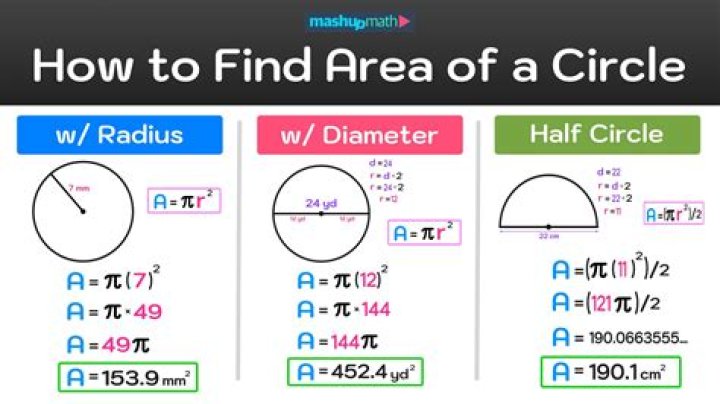
$$A = \pi \times r^2$$
or if we want to work with a diameter we would use
$$A = \pi \times \left ( \dfrac d2 \right)^2$$
So I think (I am not sure), if we wanted to calculate half the area we would then use:
$$\dfrac A2 = \dfrac {\pi}2 \times \dfrac {\left ( \dfrac d 2 \right)^2}2 $$
So my question is, how do we get that
$$ \dfrac A2 = \dfrac d {\sqrt 2}$$ ?
And another related questions- photography also uses shutter speeds. Again, each subsequent number is half the time of the previous. They are an approximation of the following geometric progression:
1/1 1/2 1/4 1/8 1/16 1/32 1/64 1/128 1/256 1/512 1/1024 (where these are also rounded off).
I noticed that if you calculate the square root of each one of denominators you get the same sequence (again rounded off):
1 1.4 2 2.8 4 5.6 8 11 16 22 32 45 etc.
So again, how can I explain and relate the sequence of the shutter speeds to the sequence of apertures, and why do I halve the number when working with shutter speeds, and divide the number by a square root in the case of apertures?
This is probably very simple but I am not very good at maths so I would be very grateful if you could explain this to me.
$\endgroup$63 Answers
$\begingroup$The area $A$ of a circle of diameter $d$ is $$A = \pi \left( \frac{d}{2} \right)^2 = \frac{\pi d^2}{4}$$
Let's say we have two diameters $d_1$ and $d_2$, and their corresponding areas $A_1$ and $A_2$: $$A_1 = \frac{\pi d_1^2}{4}, \quad A_2 = \frac{\pi d_2^2}{4}$$ Let's see what the diameters are if $A_2 = 2 A_1 \gt 0$ (so $d_1 \gt 0$ and $d_2 \gt 0$ too): $$\begin{aligned} \frac{\pi d_2^2}{4} &= 2 \frac{\pi d_1^2}{4} \\ d_2^2 &= 2 d_1^2 \\ \sqrt{d_2^2} &= \sqrt{2 d_1^2} \\ d_2 &= \sqrt{2} d_1 \\ \end{aligned}$$ Above, we are allowed to take the square root because both sides are nonnegative, since $d_1 \gt 0$ and $d_2 \gt 0$.
In other words, the square root comes from the fact that the area is proportional to the square of the diameter; and the square root of 2 comes from the fact that we are comparing areas whose ratio is 2.
$\endgroup$$\begingroup$Because the area is proportional to the square of the radius: $A = \pi r^2$ or $r = \sqrt{A/\pi}$, which means that $r$ is proportional to the square root of the area.
Therefore, if $A$ is replaced by $A/2$, $r$ becomes $\sqrt{(A/2)/\pi} =\dfrac{\sqrt{A/\pi}}{\sqrt{2}} $.
$\endgroup$2$\begingroup$You can just consider the formula for area of a circle, which is $ \pi\times r^2.$
That's the area of some circle of some radius $r$. What radius do we have to use in order to get double the area?
Let's make an inspired guess that we want the radius to be $\sqrt2\times r.$ So now we have a new, obviously larger (larger radius) circle with area $\pi\times \left(\sqrt2\times r \right)^2$.
But let's see what that's equal to:
\begin{align} \pi\times \left(\sqrt2\times r \right)^2 &= \pi \times \left(\sqrt2\right)^2 \times r^2 && \text{because $(ab)^2 = a^2b^2$}\\ &= \pi \times 2 \times r^2 \\ &= 2\times\left(\pi \times r^2\right) && \text{associativity and commutativity of multiplication}\\ \end{align}
So before we had $\pi\times r^2,$ and now we have $2\times\left(\pi \times r^2\right)$, that is, exactly twice as much area, where $r$ is still the same number.
So to double the area, we just have to multiply the radius by $\sqrt2.$
The diameter is just exactly twice the radius, so when you multiply the radius by $\sqrt2$ you also multiply the diameter by $\sqrt2.$
So to double the area, multiply the diameter by $\sqrt2.$
If you want to get half the area, just suppose you started with the larger circle; now you have to divide its diameter by $\sqrt2$ to get the diameter of the smaller circle, which has half the area.
$\endgroup$2