
Why are there no [widely supported] video formats that support transparency?
For example, the PNG image format supports transparency, allowing for some interesting effects in websites and documents. What's stopping us from having a video format that supports transparency in the same way?
52 Answers
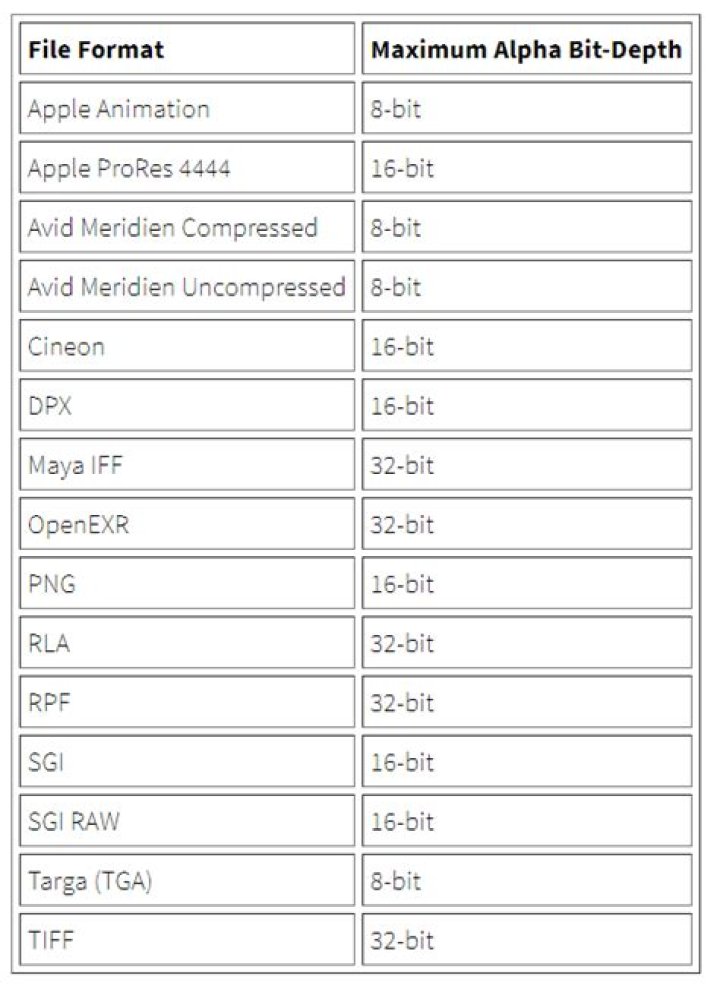
But apparently video formats do support transparency.
Maybe too heavy for the web?
| File Format | Maximum Alpha Bit-Depth |
|---|---|
| Apple Animation | 8-bit |
| Apple ProRes 4444 | 16-bit |
| Avid Meridien Compressed | 8-bit |
| Avid Meridien Uncompressed | 8-bit |
| Cineon | 16-bit |
| DPX | 16-bit |
| Maya IFF | 32-bit |
| OpenEXR | 32-bit |
| PNG | 16-bit |
| RLA | 32-bit |
| RPF | 32-bit |
| SGI | 16-bit |
| SGI RAW | 16-bit |
| Targa (TGA) | 8-bit |
| TIFF | 32-bit |
Because there is little purpose in transparency for most people. If you are watching a video, it doesn't need transparency since your screen can't display it. If a video on a website wants to give the illusion of transparency, it can use the same background colour as the website does. Although common codecs such as MPEG-2 and h.264 don't support transparency, there are ways for those who need it such as series of images.
If we use this video as an example, it utilises an artificial green screen so people can easily import it into video editors with transparency. However, have a peak in the description and a download is available which contains each frame as a PNG as well as a lossless .mov with transparency! PNGs are 30MB, MOV is 174.1MB.