I am calling the web service by using Fetch but the same I can do with the help of Axios. So now I am confused. Should I go for either Axios or Fetch?
211 Answers
Fetch and Axios are very similar in functionality, but for more backwards compatibility Axios seems to work better (fetch doesn't work in IE 11 for example, check this post)
Also, if you work with JSON requests, the following are some differences I stumbled upon with.
Fetch JSON post request
let url = ' let options = { method: 'POST', mode: 'cors', headers: { 'Accept': 'application/json', 'Content-Type': 'application/json;charset=UTF-8' }, body: JSON.stringify({ property_one: value_one, property_two: value_two }) }; let response = await fetch(url, options); let responseOK = response && response.ok; if (responseOK) { let data = await response.json(); // do something with data } Axios JSON post request
let url = ' let options = { method: 'POST', url: url, headers: { 'Accept': 'application/json', 'Content-Type': 'application/json;charset=UTF-8' }, data: { property_one: value_one, property_two: value_two } }; let response = await axios(options); let responseOK = response && response.status === 200 && response.statusText === 'OK'; if (responseOK) { let data = await response.data; // do something with data } So:
- Fetch's body = Axios' data
- Fetch's body has to be stringified, Axios' data contains the object
- Fetch has no url in request object, Axios has url in request object
- Fetch request function includes the url as parameter, Axios request function does not include the url as parameter.
- Fetch request is ok when response object contains the ok property, Axios request is ok when status is 200 and statusText is 'OK'
- To get the json object response: in fetch call the json() function on the response object, in Axios get data property of the response object.
They are HTTP request libraries...
I end up with the same doubt but the table in this post makes me go with isomorphic-fetch. Which is fetch but works with NodeJS.
The link above is dead The same table is here:
Or here: 
According to mzabriskie on GitHub:
Overall they are very similar. Some benefits of axios:
Transformers: allow performing transforms on data before a request is made or after a response is received
Interceptors: allow you to alter the request or response entirely (headers as well). also, perform async operations before a request is made or before Promise settles
Built-in XSRF protection
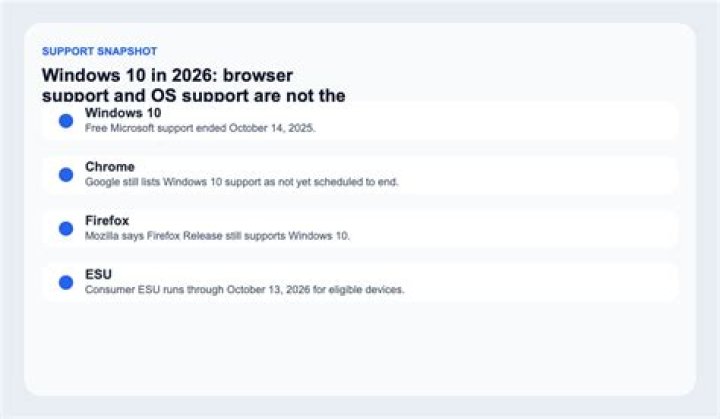
please check Browser Support Axios
I think you should use axios.
1One more major difference between fetch API & axios API
- While using service worker, you have to use fetch API only if you want to intercept the HTTP request
- Ex. While performing caching in PWA using service worker you won't be able to cache if you are using axios API (it works only with fetch API)
Axios is a stand-alone 3rd party package that can be easily installed into a React project using NPM.
The other option you mentioned is the fetch function. Unlike Axios, fetch() is built into most modern browsers. With fetch you do not need to install a third party package.
So its up to you, you can go with fetch() and potentially mess up if you don't know what you are doing OR just use Axios which is more straightforward in my opinion.
Benefits of axios:
- Transformers: allow performing transforms on data before request is made or after response is received
- Interceptors: allow you to alter the request or response entirely (headers as well). also perform async operations before request is made or before Promise settles
- Built-in XSRF protection
Advantages of axios over fetch
Fetch API, need to deal with two promises to get the response data in JSON Object property. While axios result into JSON object.
Also error handling is different in fetch, as it does not handle server side error in the catch block, the Promise returned from fetch() won’t reject on HTTP error status even if the response is an HTTP 404 or 500. Instead, it will resolve normally (with ok status set to false), and it will only reject on network failure or if anything prevented the request from completing. While in axios you can catch all error in catch block.
I will say better to use axios, straightforward to handle interceptors, headers config, set cookies and error handling.
In addition... I was playing around with various libs in my test and noticed their different handling of 4xx requests. In this case my test returns a json object with a 400 response. This is how 3 popular libs handle the response:
// request-promise-native const body = request({ url: url, json: true }) const res = await t.throws(body); console.log(res.error) // node-fetch const body = await fetch(url) console.log(await body.json()) // Axios const body = axios.get(url) const res = await t.throws(body); console.log(res.response.data) Of interest is that request-promise-native and axios throw on 4xx response while node-fetch doesn't. Also fetch uses a promise for json parsing.
With fetch, we need to deal with two promises. With axios, we can directly access the JSON result inside the response object data property.
A job I do a lot it seems, it's to send forms via ajax, that usually includes an attachment and several input fields. In the more classic workflow (HTML/PHP/JQuery) I've used $.ajax() in the client and PHP on the server with total success.
I've used axios for dart/flutter but now I'm learning react for building my web sites, and JQuery doesn't make sense.
Problem is axios is giving me some headaches with PHP on the other side, when posting both normal input fields and uploading a file in the same form. I tried $_POST and file_get_contents("php://input") in PHP, sending from axios with FormData or using a json construct, but I can never get both the file upload and the input fields.
On the other hand with Fetch I've been successful with this code:
var formid = e.target.id; // populate FormData var fd = buildFormData(formid); // post to remote fetch('apiurl.php', { method: 'POST', body: fd, headers: { 'Authorization' : 'auth', "X-Requested-With" : "XMLHttpRequest" } }) On the PHP side I'm able to retrieve the uploads via $_FILES and processing the other fields data via $_POST:
$posts = []; foreach ($_POST as $post) { $posts[] = json_decode($post); } Axios is an HTTP client library based on promises whereas Fetch is a javascript API for making API requests.
- The Main difference is browser support: Axios supports all browsers including IE whereas Fetch is supported by the latest browser only and IE does not support it.