 $\begingroup$
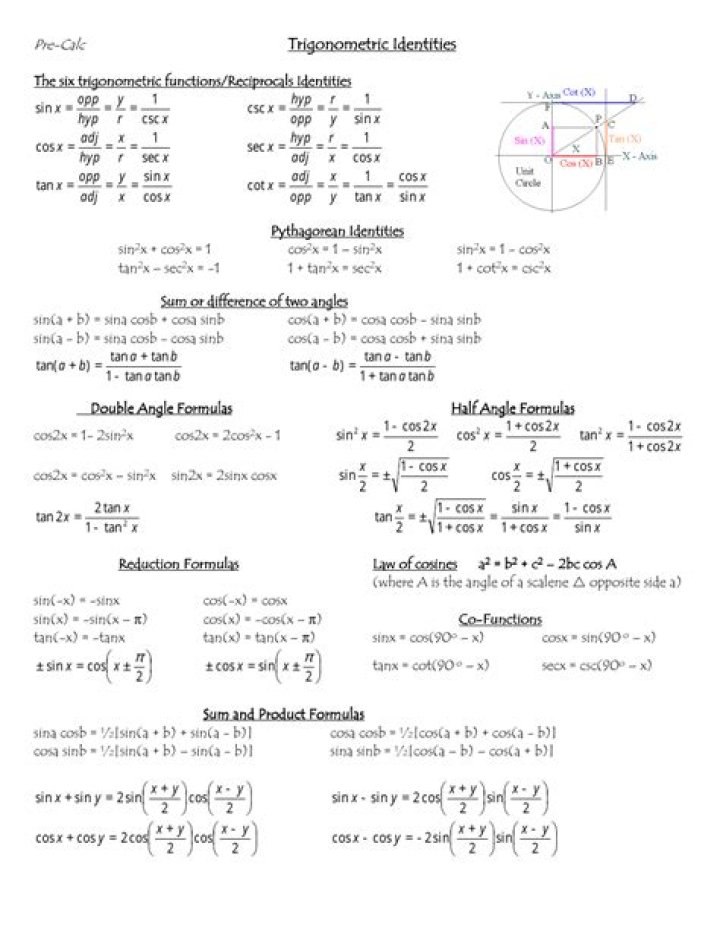
I remember back in high school at some point delving into worksheet after worksheet of trigonometric "identities", the vast majority of which are basically restatements of $\sin^2(x) + \cos^2(x) = 1$ (the remainder use variations of $\sin(x+y)$), e.g. (ignoring domain restrictions):
$$\csc(x) = \frac{\sin(x)}{1+\cos(x)}+\cot(x)$$
$$\frac{1+\sin(x)}{\cos(x)}=\frac{\cos(x)}{1-\sin(x)}$$
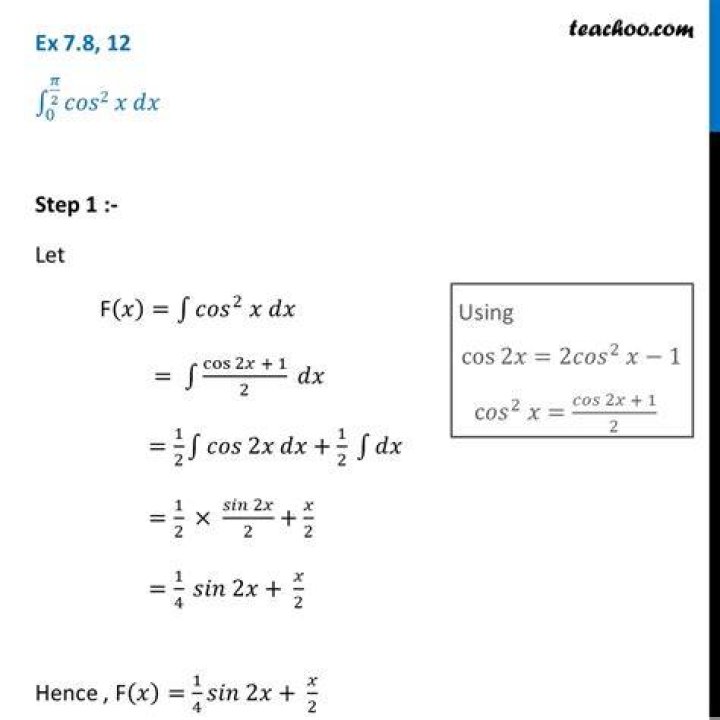
The list seems truly never-ending, and while some of them may be pretty to look at due to symmetry, it seems very few are of practical use. I understand a few are helpful for understanding integrals which may come up in, e.g., physics::harmonic motion (e.g., the double angle formulas), but why not cross that bridge when we get to it?
I must be missing something -- is there a reason why we spend such an outsized chunk of time in such beginning courses devoted to these exercises in algebraic manipulation?
$\endgroup$32 Answers
$\begingroup$The point back in high school (for me it was 1973) was to memorize them so you didn't have to stop in the middle of a problem to derive them
Its actually the same reason we learned multiplication tables in elementary school. The younger you are when you memorize them, the more likely they are to stay with you.
Now, I would say it could be useful to identify students capable of eventually handling complex analysis.
$\endgroup$1$\begingroup$Because when you get up to the "bridge" and need to work out a trig identity to cross it, you will be working in the context of some system or problem that is complex enough to be interesting in and of itself. You will have a lot of difficulty if at the same time you have to focus all your mental acuity in understanding/deriving the trig.
The other thing, in pre-calculus, is that if you place a boundary around the course material to exclude calculus and anything else that depends on calculus, then there are only certain areas available that fit three conditions:
- They might be useful at some point later in your development
- They are not completely trivial, given the background of good equation manipulation skills (high-school algebra)
- They are not insanely difficult for a high-school studet.
So for example, geometry problems at the level beyond the usual Euclid-probably-did-this-one" quickly get insanely difficult -- try proving the 9-point circle theorem or than the three meeting points of consecutive angle trisectors in a triangle form an equilateral triangle. Moving ahead on High-Shohol Algebra on Steroids might be sensible; you could derive the cubic and quartic formulas, but that is a topic best left till you have more math maturity.
Trig is right in the desired sweet spot.
That said "endless worksheets" of similar problems is almost never the best pedagogical way of conveying a subject to students. It seems like a good way to take the love of math out of anybody but a geek like myself (who intentionally did all the problems in the book, even though only a couple were assigned). So your point is well taken.
$\endgroup$1