
I am trying to port a query from MySQL to SQL SERVER 2012.
How do i write an equivalent for MySQL's substring_index()?
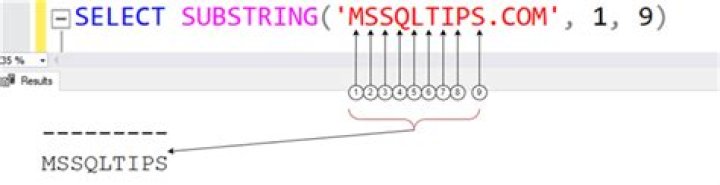
MySQL SUBSTRING_INDEX() returns the substring from the given string before a specified number of occurrences of a delimiter.
SUBSTRING_INDEX(str, delim, count)
SELECT SUBSTRING_INDEX('); Output: '
7 Answers
Try this solution based on T-SQL and XQuery((root/row)[position() <= sql:variable("@count")]):
T-SQL Scalar function:
CREATE FUNCTION dbo.SUBSTRING_INDEX ( @str NVARCHAR(4000), @delim NVARCHAR(1), @count INT ) RETURNS NVARCHAR(4000) WITH SCHEMABINDING BEGIN DECLARE @XmlSourceString XML; SET @XmlSourceString = (SELECT N'<root><row>' + REPLACE( (SELECT @str AS '*' FOR XML PATH('')) , @delim, N'</row><row>' ) + N'</row></root>'); RETURN STUFF ( (( SELECT @delim + x.XmlCol.value(N'(text())[1]', N'NVARCHAR(4000)') AS '*' FROM @XmlSourceString.nodes(N'(root/row)[position() <= sql:variable("@count")]') x(XmlCol) FOR XML PATH(N''), TYPE ).value(N'.', N'NVARCHAR(4000)')), 1, 1, N'' ); END GO SELECT dbo.SUBSTRING_INDEX(N' N'.', 2) AS Result; Output:
/* Result --------------- */ or
TSQL Inline Table-Valued Function:
CREATE FUNCTION dbo.SUBSTRING_INDEX ( @str NVARCHAR(4000), @delim NVARCHAR(1), @count INT ) RETURNS TABLE AS RETURN WITH Base AS ( SELECT XmlSourceString = CONVERT(XML, (SELECT N'<root><row>' + REPLACE( (SELECT @str AS '*' FOR XML PATH('')) , @delim, N'</row><row>' ) + N'</row></root>')) ) SELECT STUFF ( (( SELECT @delim + x.XmlCol.value(N'(text())[1]', N'NVARCHAR(4000)') AS '*' FROM Base b CROSS APPLY b.XmlSourceString.nodes(N'(root/row)[position() <= sql:variable("@count")]') x(XmlCol) FOR XML PATH(N''), TYPE ).value(N'.', N'NVARCHAR(4000)')), 1, 1, N'' ) AS Result; GO SELECT * FROM ( SELECT N' UNION ALL SELECT N' UNION ALL SELECT N' ) a(Value) CROSS APPLY dbo.SUBSTRING_INDEX(a.Value, N'.', 2) b; Output:
/* Value Result ------------------- --------------- */ I needed this recently, so I wrote the following stored function. At the end are a bunch of tests to make sure it operates exactly as the MySql function does (the expected results were copied from MySql after running the same tests there):
-- Function to reproduce the useful functionality of SUBSTRING_INDEX from MySql CREATE FUNCTION dbo.SUBSTRING_INDEX(@InString NVARCHAR(Max), @Delimiter NVARCHAR(Max), @Count INT) RETURNS NVARCHAR(200) AS BEGIN DECLARE @Pos INT; DECLARE @DelimiterOffsets TABLE ( i INT IDENTITY(1, 1) NOT NULL, offset INT NOT NULL ); -- If @Count is zero, we return '' as per spec IF @Count = 0 BEGIN RETURN ''; END; DECLARE @OrigLength INT = LEN(@InString); DECLARE @DelimiterLength INT = LEN(@Delimiter); -- Prime the pump. SET @Pos = Charindex(@Delimiter, @InString, 1); -- If the delimiter does not exist in @InString, return the whole string IF @Pos = 0 BEGIN RETURN @InString; END; -- Put all delimiter offsets into @DelimiterOffsets, they get numbered automatically. DECLARE @CurrentOffset INT = 0; WHILE @Pos > 0 BEGIN SET @CurrentOffset = @Pos; INSERT INTO @DelimiterOffsets (offset) VALUES (@CurrentOffset); SET @Pos = Charindex(@Delimiter, @InString, @CurrentOffset + @DelimiterLength); END; -- This number is guaranteed to be > 0. DECLARE @DelimitersFound INT = (SELECT Count(*) FROM @DelimiterOffsets); -- If they requested more delimiters than were found, return the whole string, as per spec. IF Abs(@Count) > @DelimitersFound BEGIN RETURN @InString; END; DECLARE @StartSubstring INT = 0; DECLARE @EndSubstring INT = @OrigLength; -- OK, now return the part they requested IF @Count > 0 BEGIN SET @EndSubstring = (SELECT offset FROM @DelimiterOffsets WHERE i = @Count); END ELSE BEGIN SET @StartSubstring = (SELECT offset + @DelimiterLength FROM @DelimiterOffsets WHERE i = (@DelimitersFound + @Count + 1)); END; RETURN Substring(@InString, @StartSubstring, @EndSubstring); END; Go GRANT EXECUTE ON [dbo].SUBSTRING_INDEX TO PUBLIC; -- Tests DECLARE @TestResults TABLE (i int, answer nVarChar(MAX), expected nVarChar(MAX)); insert into @TestResults select * from ( (SELECT 1 as i, [dbo].SUBSTRING_INDEX(N' N'.', 2) as r, ' as e) UNION (SELECT 2 as i, [dbo].SUBSTRING_INDEX(N' N'.', 2) as r, ' as e) UNION (SELECT 3 as i, [dbo].SUBSTRING_INDEX(N' N'.', 2) as r, ' as e) UNION (SELECT 4 as i, [dbo].SUBSTRING_INDEX(N' N'.', -2) as r, 'somewebsite.com' as e) UNION (SELECT 5 as i, [dbo].SUBSTRING_INDEX(N' N'.', -2) as r, 'yahoo.com' as e) UNION (SELECT 6 as i, [dbo].SUBSTRING_INDEX(N' N'.', -2) as r, 'outlook.com' as e) UNION (select 7 as i, [dbo].SUBSTRING_INDEX('hi.you.com','.',2) as r, 'hi.you' as e) UNION (select 8 as i, [dbo].SUBSTRING_INDEX('hi.you.com','.',-1) as r, 'com' as e) UNION (select 9 as i, [dbo].SUBSTRING_INDEX(N'prueba','ue',1) as r, 'pr' as e) UNION (select 10 as i, [dbo].SUBSTRING_INDEX(N'prueba','ue',-1) as r, 'ba' as e) UNION (select 11 as i, [dbo].SUBSTRING_INDEX(N'prueba','ue',0) as r, '' as e) UNION (SELECT 12 as i, [dbo].SUBSTRING_INDEX(N'wwwxxxoutlookxxxcom', N'xxx', 2) as r, 'wwwxxxoutlook' as e) UNION (SELECT 13 as i, [dbo].SUBSTRING_INDEX(N'wwwxxxoutlookxxxcom', N'xxx', -2) as r, 'outlookxxxcom' as e) UNION (SELECT 14 as i, [dbo].SUBSTRING_INDEX(N'wwwxxxoutlookxxxcom', N'xxx', 5) as r, 'wwwxxxoutlookxxxcom' as e) UNION (SELECT 15 as i, [dbo].SUBSTRING_INDEX(N'wwwxxxoutlookxxxcom', N'xxx', -5) as r, 'wwwxxxoutlookxxxcom' as e) ) as results; select tr.i, tr.answer, tr.expected, CASE WHEN tr.answer = tr.expected THEN 'Test Succeeded' ELSE 'Test Failed' END testState from @TestResults tr order by i; Here's a version inspired by Bogdan Sahlean's answer using SQL Server's XML functionality to do the parsing and combining:
CREATE FUNCTION dbo.SUBSTRING_INDEX(@InString NVARCHAR(Max), @Delimiter NVARCHAR(Max), @Count INT) RETURNS NVARCHAR(200) AS BEGIN -- If @Count is zero, we return '' as per spec IF @Count = 0 BEGIN RETURN ''; END; -- First we let the XML parser break up the string by @Delimiter. -- Each parsed value will be <piece>[text]</piece>. DECLARE @XmlSourceString XML = (select N'<piece>' + REPLACE( (SELECT @InString AS '*' FOR XML PATH('')) , @Delimiter, N'</piece><piece>' ) + N'</piece>'); -- This will contain the final requested string. DECLARE @Results nVarChar(MAX); ;WITH Pieces(RowNumber, Piece) as ( -- Take each node in @XmlSourceString, and return it with row numbers -- which will identify each piece and give us a handle to change the -- order, depending on the direction of search. SELECT row_number() over(order by x.XmlCol) as RowNumber, @Delimiter + x.XmlCol.value(N'(text())[1]', N'NVARCHAR(MAX)') AS '*' FROM @XmlSourceString.nodes(N'(piece)') x(XmlCol) ), orderedPieces(RowNumber, Piece) as ( -- Order the pieces normally or reversed depending on whether they want -- the first @Count pieces or the last @Count pieces. select TOP (ABS(@Count)) RowNumber, Piece from Pieces ORDER BY CASE WHEN @Count < 0 THEN RowNumber END DESC , CASE WHEN @Count > 0 THEN RowNumber END ASC ), combinedPieces(result) as ( -- Now combine the pieces back together, ordering them by -- the original order. There will always -- be an extra @Delimiter on the front of the string. select CAST(Piece AS VARCHAR(100)) from OrderedPieces order by RowNumber FOR XML PATH(N'') ) -- Finally, strip off the extra delimiter using STUFF and store the string in @Results. select @Results = STUFF(result, 1, LEN(@Delimiter), '') from combinedPieces; return @Results; END; Running the tests produces this:
i answer expected testState 1 Test Succeeded 2 Test Succeeded 3 Test Succeeded 4 somewebsite.com somewebsite.com Test Succeeded 5 yahoo.com yahoo.com Test Succeeded 6 outlook.com outlook.com Test Succeeded 7 hi.you hi.you Test Succeeded 8 com com Test Succeeded 9 pr pr Test Succeeded 10 ba ba Test Succeeded 11 Test Succeeded 12 wwwxxxoutlook wwwxxxoutlook Test Succeeded 13 outlookxxxcom outlookxxxcom Test Succeeded 14 wwwxxxoutlookxxxcom wwwxxxoutlookxxxcom Test Succeeded 15 wwwxxxoutlookxxxcom wwwxxxoutlookxxxcom Test Succeeded My best bet is:
select substring(email,(charindex('@', email,1)+1),100) from yourtable; assuming that TLD.EXT max 100 characters. You can increase as you like.
Good Luck
0 CREATE FUNCTION FN_SUBSTRING_INDEX ( @TEXTO NVARCHAR(200), @SUBSTRING_INDEX NVARCHAR(10), @DESPLAZAMIENTO INT ) RETURNS NVARCHAR(200) AS BEGIN DECLARE @indiceSubstring INT DECLARE @RESULTADO NVARCHAR(200) SELECT @indiceSubstring = CHARINDEX(@SUBSTRING_INDEX,@TEXTO) IF @DESPLAZAMIENTO > 0 BEGIN SELECT @RESULTADO=SUBSTRING(@TEXTO,@indiceSubstring+@DESPLAZAMIENTO+1,LEN(@TEXTO)) END ELSE BEGIN SELECT @RESULTADO=SUBSTRING(@TEXTO,0,@indiceSubstring-@DESPLAZAMIENTO-1) END RETURN @RESULTADO END GO to right select dbo.FN_SUBSTRING_INDEX(N'prueba','ue',1);
to left select dbo.FN_SUBSTRING_INDEX(N'prueba','ue',-1);
Try This One.....
CREATE FUNCTION SubString_Index ( @ExistingString NVARCHAR(200), @BreakPoint NVARCHAR(10), @number INT ) RETURNS NVARCHAR(200) AS BEGIN DECLARE @Count INT DECLARE @Substring NVARCHAR(200) DECLARE @ssubstring NVARCHAR(200) SET @ssubstring=@ExistingString DECLARE @scount INT SET @scount=0 DECLARE @sscount INT SET @sscount=0 WHILE(@number>@scount) BEGIN Select @Count=CHARINDEX(@BreakPoint,@ExistingString) Select @ExistingString=SUBSTRING(@ExistingString,@Count+1,LEN(@ExistingString)) Select @scount=@scount+1 select @sscount=@sscount+@Count END SELECT @Substring=SUBSTRING(@ssubstring,0,@sscount) RETURN @Substring END GO select dbo.SubStringIndex('hi.you.com','.',1) This microsoft sql function Works exactly like substring_index function in mysql
/** This microsoft sql function Works exactly like substring_index function in mysql **/ CREATE FUNCTION SubString_Index ( @ExistingString NVARCHAR(MAX), @BreakPoint NVARCHAR(MAX), @number INT ) RETURNS NVARCHAR(MAX) AS BEGIN DECLARE @Count INT DECLARE @SubstringLength INT DECLARE @Substring NVARCHAR(MAX) DECLARE @ssubstring NVARCHAR(MAX) SET @ssubstring=@ExistingString DECLARE @scount INT SET @scount=0 DECLARE @sscount INT SET @sscount=0 DECLARE @number2 INT DECLARE @occurence INT SET @occurence=LEN(@ExistingString) - LEN(REPLACE(@ExistingString, @BreakPoint, '')) If @number<0 BEGIN SET @number2= @occurence-(-1*@number)+1 END If @number>0 BEGIN SET @number2=@number END WHILE(@number2>@scount) BEGIN Select @Count=CHARINDEX(@BreakPoint,@ExistingString) Select @SubstringLength=@Count+LEN(@BreakPoint) Select @ExistingString=SUBSTRING(@ExistingString,@SubstringLength,LEN(@ExistingString)-@Count) Select @scount=@scount+1 select @sscount=@sscount+@Count END If @number<0 BEGIN if (@number = -1) and (@sscount+LEN(@BreakPoint)) = (LEN(@ssubstring)+1) BEGIN SELECT @Substring='' END else if @occurence = 0 BEGIN SELECT @Substring='' END else BEGIN SELECT @Substring=SUBSTRING(@ssubstring, @sscount+LEN(@BreakPoint), LEN(@ssubstring)) END END If @number>0 if @occurence = 0 BEGIN SELECT @Substring='' END else BEGIN SELECT @Substring=SUBSTRING(@ssubstring,0,@sscount) END RETURN @Substring END GO GETTING INDEX -2 WITH PYTHON
use my_guitar_shop; go EXEC sp_execute_external_script @language =N'Python', @script=N' import pandas as pd import numpy as np x = np.array(InputDataSet["email_address"], dtype = str) broken = np.char.split(x, sep = ".") OutputDataSet = pd.DataFrame([".".join(e[-2:]) if len(e)>2 else ".".join(e) for e in broken]) ', @input_data_1 = N'SELECT email_address from customers;' WITH RESULT SETS(([indexed_email] nvarchar(250)));