
I haven't used regular expressions at all, so I'm having difficulty troubleshooting. I want the regex to match only when the contained string is all numbers; but with the two examples below it is matching a string that contains all numbers plus an equals sign like "1234=4321". I'm sure there's a way to change this behavior, but as I said, I've never really done much with regular expressions.
string compare = "1234=4321"; Regex regex = new Regex(@"[\d]"); if (regex.IsMatch(compare)) { //true } regex = new Regex("[0-9]"); if (regex.IsMatch(compare)) { //true } In case it matters, I'm using C# and .NET2.0.
620 Answers
Use the beginning and end anchors.
Regex regex = new Regex(@"^\d$"); Use "^\d+$" if you need to match more than one digit.
Note that "\d" will match [0-9] and other digit characters like the Eastern Arabic numerals ٠١٢٣٤٥٦٧٨٩. Use "^[0-9]+$" to restrict matches to just the Arabic numerals 0 - 9.
If you need to include any numeric representations other than just digits (like decimal values for starters), then see @tchrist's comprehensive guide to parsing numbers with regular expressions.
2Your regex will match anything that contains a number, you want to use anchors to match the whole string and then match one or more numbers:
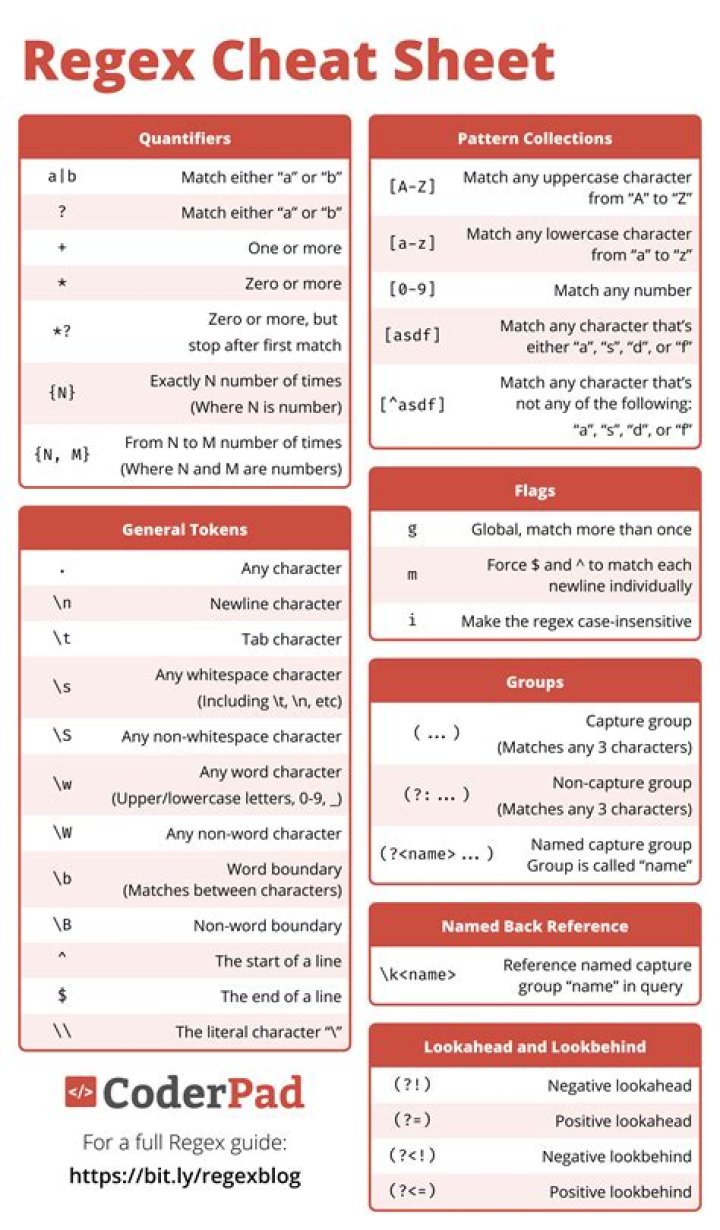
regex = new Regex("^[0-9]+$"); The ^ will anchor the beginning of the string, the $ will anchor the end of the string, and the + will match one or more of what precedes it (a number in this case).
If you need to tolerate decimal point and thousand marker
var regex = new Regex(@"^-?[0-9][0-9,\.]+$"); You will need a "-", if the number can go negative.
5This works with integers and decimal numbers. It doesn't match if the number has the coma thousand separator ,
"^-?\\d*(\\.\\d+)?$" some strings that matches with this:
894 923.21 76876876 .32 -894 -923.21 -76876876 -.32 some strings that doesn't:
hello 9bye hello9bye 888,323 5,434.3 -8,336.09 87078. It is matching because it is finding "a match" not a match of the full string. You can fix this by changing your regexp to specifically look for the beginning and end of the string.
^\d+$ Perhaps my method will help you.
public static bool IsNumber(string s) { return s.All(char.IsDigit); } If you need to check if all the digits are number (0-9) or not,
^[0-9]+$ Matches
1425 0142 0 1 And does not match
154a25 1234=3254 Sorry for ugly formatting. For any number of digits:
[0-9]* For one or more digit:
[0-9]+ ^\d+$, which is "start of string", "1 or more digits", "end of string" in English.
0Here is my working one:
^(-?[1-9]+\\d*([.]\\d+)?)$|^(-?0[.]\\d*[1-9]+)$|^0$ And some tests
Positive tests:
string []goodNumbers={"3","-3","0","0.0","1.0","0.1","0.0001","-555","94549870965"}; Negative tests:
string []badNums={"a",""," ","-","001","-00.2","000.5",".3","3."," -1","--1","-.1","-0"}; Checked not only for C#, but also with Java, Javascript and PHP
2Use beginning and end anchors.
Regex regex = new Regex(@"^\d$"); Use "^\d+$" if you need to match more than one digit.
While non of the above solutions was fitting my purpose, this worked for me.
var pattern = @"^(-?[1-9]+\d*([.]\d+)?)$|^(-?0[.]\d*[1-9]+)$|^0$|^0.0$"; return Regex.Match(value, pattern, RegexOptions.IgnoreCase).Success; Example of valid values:
"3", "-3", "0", "0.0", "1.0", "0.7", "690.7", "0.0001", "-555", "945465464654" Example of not valid values:
"a", "", " ", ".", "-", "001", "00.2", "000.5", ".3", "3.", " -1", "--1", "-.1", "-0", "00099", "099" Another way: If you like to match international numbers such as Persian or Arabic, so you can use following expression:
Regex = new Regex(@"^[\p{N}]+$"); To match literal period character use:
Regex = new Regex(@"^[\p{N}\.]+$"); Regex for integer and floating point numbers:
^[+-]?\d*\.\d+$|^[+-]?\d+(\.\d*)?$ A number can start with a period (without leading digits(s)), and a number can end with a period (without trailing digits(s)). Above regex will recognize both as correct numbers.
A . (period) itself without any digits is not a correct number. That's why we need two regex parts there (separated with a "|").
Hope this helps.
1I think that this one is the simplest one and it accepts European and USA way of writing numbers e.g. USA 10,555.12 European 10.555,12 Also this one does not allow several commas or dots one after each other e.g. 10..22 or 10,.22 In addition to this numbers like .55 or ,55 would pass. This may be handy.
^([,|.]?[0-9])+$ console.log(/^(0|[1-9][0-9]*)$/.test(3000)) // true If you want to extract only numbers from a string the pattern "\d+" should help.
To check string is uint, ulong or contains only digits one .(dot) and digits Sample inputs
Regex rx = new Regex(@"^([1-9]\d*(\.)\d*|0?(\.)\d*[1-9]\d*|[1-9]\d*)$"); string text = "12.0"; var result = rx.IsMatch(text); Console.WriteLine(result); Samples
123 => True 123.1 => True 0.123 => True .123 => True 0.2 => True 3452.434.43=> False 2342f43.34 => False svasad.324 => False 3215.afa => False The following regex accepts only numbers (also floating point) in both English and Arabic (Persian) languages (just like Windows calculator):
^((([0\u0660\u06F0]|([1-9\u0661-\u0669\u06F1-\u06F9][0\u0660\u06F0]*?)+)(\.)[0-9\u0660-\u0669\u06F0-\u06F9]+)|(([0\u0660\u06F0]?|([1-9\u0661-\u0669\u06F1-\u06F9][0\u0660\u06F0]*?)+))|\b)$ The above regex accepts the following patterns:
11 1.2 0.3 ۱۲ ۱.۳ ۰.۲ ۲.۷ The above regex doesn't accept the following patterns:
3. .3 0..3 .۱۲ Regex regex = new Regex ("^[0-9]{1,4}=[0-9]{1,4]$")
1