 $\begingroup$
If each of side of a rectangle or any two dimensional shape is increased by $x\%$, its area is increased by $\left(\dfrac{x^2}{100}+2x\right)\%$
Source: careerbless.com
I am trying to generate a proof for the above formula. I succeeded in generating this formula for a rectangle. My proof is given below
Suppose sides are $p$ and $q$. Suppose each side is incremented by $x\%$
Initial Area $=pq$
New area $=p\left(\dfrac{100+x}{100}\right)q\left(\dfrac{100+x}{100}\right)=pq\left(1+\dfrac{2x}{100}+\dfrac{x^2}{100^2}\right)$
Increase in area $=pq\left(\dfrac{2x}{100}+\dfrac{x^2}{100^2}\right)$
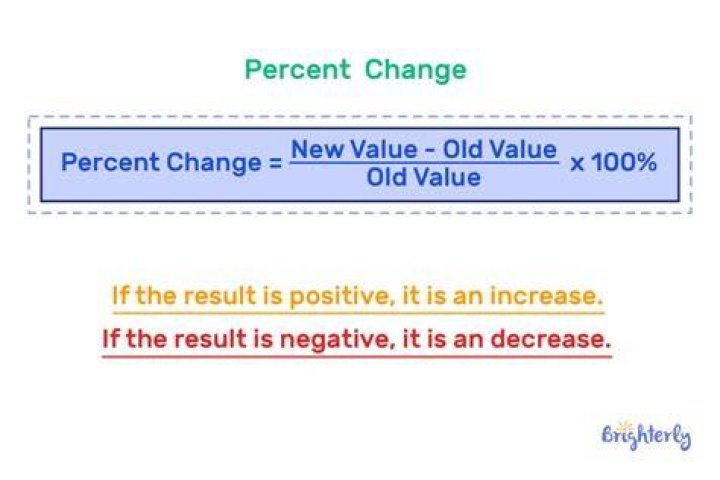
Percent increase in area $=\dfrac{pq\left(\dfrac{2x}{100}+\dfrac{x^2}{100^2}\right)}{pq}\times 100=2x+\dfrac{x^2}{100}$
So, I succeeded in deriving the proof for a rectangle.
I proved the same using formula of area of a right angled triangle.
$\endgroup$3But, I am not able to derive this formula generic for any two dimensional shape. Can you please guide me on how to proceed further for proving this formula for any two dimensional shape?
1 Answer
$\begingroup$The answer hinges on how you define area. One way is to define area for a rectangle, then use approximations by unions of rectangles and take some limiting process to find the area of a more general shape. With this approach, if you know how stretching affects a rectangle, then (skipping all the interesting detail) you can see that it will change the area of the general shape in the same way.
In general, if you have a shape of area $A$ and you stretch it by a factor $s$ along one direction, then the new area will be $sA$.
If you stretch in two arbitrary directions by factors $s,t$ respectively, the stretched area will be $s t A$.
$\endgroup$