
I'm running into a strange issue (or intended?) where combine_first or update are causing values stored as bool to be upcasted into float64s if the argument supplied is not supplying the boolean columns.
Example workflow in ipython:
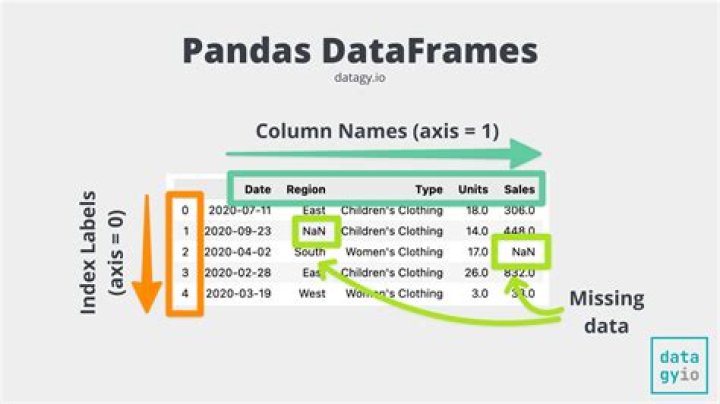
In [144]: test = pd.DataFrame([[1,2,False,True],[4,5,True,False]], columns=['a','b','isBool', 'isBool2']) In [145]: test Out[145]: a b isBool isBool2 0 1 2 False True 1 4 5 True False In [147]: b = pd.DataFrame([[45,45]], index=[0], columns=['a','b']) In [148]: b Out[148]: a b 0 45 45 In [149]: test.update(b) In [150]: test Out[150]: a b isBool isBool2 0 45 45 0 1 1 4 5 1 0 Was this meant to be the behavior of the update function? I would think that if nothing was specified that update wouldn't mess with the other columns.
EDIT: I started tinkering around a little more. The plot thickens. If I insert one more command: test.update([]) before running test.update(b), boolean behavior works at the cost of numbers upcasted as objects. This also applies to DSM's simplified example.
Based on panda's source code, it looks like the reindex_like method is creating a DataFrame of dtype object, while reindex_like b creates a DataFrame of dtype float64. Since object is more general, subsequent operations work with bools. Unfortunately running np.log on the numerical columns will fail with an AttributeError.
2 Answers
Before updating, the dateframe b is been filled by reindex_link, so that b becomes
In [5]: b.reindex_like(a) Out[5]: a b isBool isBool2 0 45 45 NaN NaN 1 NaN NaN NaN NaN And then use numpy.where to update the data frame.
The tragedy is that for numpy.where, if two data have different type, the more general one would be used. For example
In [20]: np.where(True, [True], [0]) Out[20]: array([1]) In [21]: np.where(True, [True], [1.0]) Out[21]: array([ 1.]) Since NaN in numpy is floating type, it'll also return an floating type.
In [22]: np.where(True, [True], [np.nan]) Out[22]: array([ 1.]) Therefore, after updating, your 'isBool' and 'isBool2' column become floating type.
I've added this issue on the issue tracker for pandas
1this is a bug, update shouldn't touch unspecified columns, fixed here
4