I have a Spring-Boot application where the default properties are set in an application.properties file in the classpath (src/main/resources/application.properties).
I would like to override some default settings in my JUnit test with properties declared in a test.properties file (src/test/resources/test.properties)
I usualy have a dedicated Config Class for my Junit Tests, e.g.
package foo.bar.test; import org.springframework.boot.autoconfigure.EnableAutoConfiguration; import org.springframework.context.annotation.Configuration; import org.springframework.context.annotation.Import; @Configuration @Import(CoreConfig.class) @EnableAutoConfiguration public class TestConfig { } I first thought that using @PropertySource("classpath:test.properties") in the TestConfig class would do the trick, but these properties will not overwrite the application.properties settings (see Spring-Boot Reference Doc - 23. Externalized Configuration).
Then I tried to use -Dspring.config.location=classpath:test.properties when invoking the test. That was successful - but I don't want to set this system property for each test execution. Thus I put it in the code
@Configuration @Import(CoreConfig.class) @EnableAutoConfiguration public class TestConfig { static { System.setProperty("spring.config.location", "classpath:test.properties"); } } which unfortunatly was again not successful.
There must be a simple solution on how to override application.properties settings in JUnit tests with test.properties that I must have overlooked.
12 Answers
You can use @TestPropertySource to override values in application.properties. From its javadoc:
test property sources can be used to selectively override properties defined in system and application property sources
For example:
@RunWith(SpringJUnit4ClassRunner.class) @SpringApplicationConfiguration(classes = ExampleApplication.class) @TestPropertySource(locations="classpath:test.properties") public class ExampleApplicationTests { } Spring Boot automatically loads src/test/resources/application.properties, if following annotations are used
@RunWith(SpringRunner.class) @SpringBootTest So, rename test.properties to application.properties to utilize auto configuration.
If you only need to load the properties file (into the Environment) you can also use the following, as explained here
@RunWith(SpringRunner.class) @ContextConfiguration(initializers = ConfigFileApplicationContextInitializer.class) [Update: Overriding certain properties for testing]
- Add
src/main/resources/application-test.properties. - Annotate test class with
@ActiveProfiles("test").
This loads application.properties and then application-test.properties properties into application context for the test case, as per rules defined here.
You can also use meta-annotations to externalize the configuration. For example:
@RunWith(SpringJUnit4ClassRunner.class) @DefaultTestAnnotations public class ExampleApplicationTests { ... } @Retention(RetentionPolicy.RUNTIME) @Target(ElementType.TYPE) @SpringApplicationConfiguration(classes = ExampleApplication.class) @TestPropertySource(locations="classpath:test.properties") public @interface DefaultTestAnnotations { } Another approach suitable for overriding a few properties in your test, if you are using @SpringBootTest annotation:
@SpringBootTest(properties = {"propA=valueA", "propB=valueB"}) If you are like me and you have the same application.properties in src/main/resources and src/test/resources, and you are wondering why the application.properties in your test folder is not overriding the application.properties in your main resources, read on...
Simple explanation:
If you have application.properties under src/main/resources and the same application.properties under src/test/resources, which application.properties gets picked up, depends on how you are running your tests. The folder structure src/main/resources and src/test/resources, is a Maven architectural convention, so if you run your test like mvnw test or even gradlew test, the application.properties in src/test/resources will get picked up, as test classpath will precede main classpath. But, if you run your test like Run as JUnit Test in Eclipse/STS, the application.properties in src/main/resources will get picked up, as main classpath precedes test classpath.
You can check it out by opening the menu bar Run > Run Configurations > JUnit > *your_run_configuration* > Click on "Show Command Line".
You will see something like this:
XXXbin\javaw.exe -ea -Dfile.encoding=UTF-8 -classpath
XXX\workspace-spring-tool-suite-4-4.5.1.RELEASE\project_name\bin\main;
XXX\workspace-spring-tool-suite-4-4.5.1.RELEASE\project_name\bin\test;
Do you see that classpath xxx\main comes first, and then xxx\test? Right, it's all about classpath :-)
Side-note: Be mindful that properties overridden in the Launch Configuration(In Spring Tool Suite IDE, for example) takes priority over application.properties.
Change the order:
Now, everything is configurable in Spring. You can change the build classpath, so that xxx\test comes first, and then xxx\main.
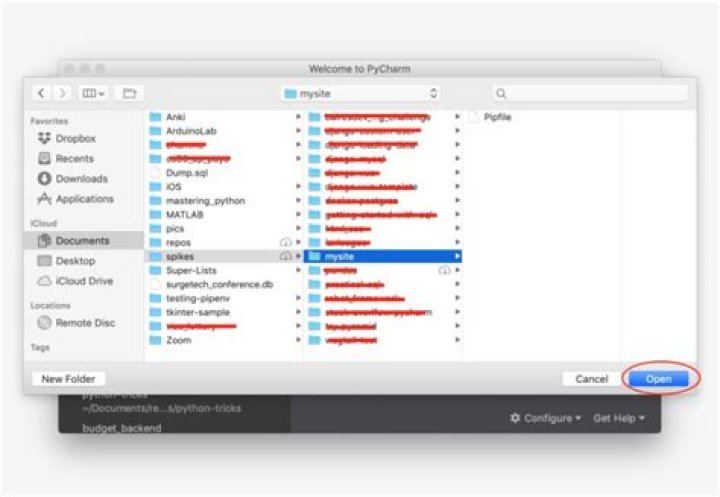
Simply go to Project > Properties > Java Build Path > Order and Export, change the build class path order by putting any of the test folder first such as:
And that's it!
Better solution
A better solution though, when testing, would be to activate the src/test/resources/application-{profile}.properties (where profile can be test), such as the following in src/main/resources/application.properties:
spring.profiles.active=test
This is neater, and gives you complete control on what profile to activate when doing what.
3TLDR:
So what I did was to have the standard src/main/resources/application.properties and also a src/test/resources/application-default.properties where i override some settings for ALL my tests.
For power-developers:
In order to change/use even more easily different spring profiles, I have a now an application-default.yaml that declares the profiles I want to use. This file is not committed, so that each developer may choose his way of activating profiles and needs (e.g. feature) he/she is working on.
spring: profiles: include: - local - devlocal - wip # - kafka@docker --- spring.profiles: wip # ... overriding properties Whole Story
I ran into the same problem and was not using profiles either so far. It seemed to be bothersome to have to do it now and remember declaring the profile -- which can be easily forgotten.
The trick is, to leverage that a profile specific application-<profile>.properties overrides settings in the general profile. See .
If you're using Spring 5.2.5 and Spring Boot 2.2.6 and want to override just a few properties instead of the whole file. You can use the new annotation: @DynamicPropertySource
@SpringBootTest @Testcontainers class ExampleIntegrationTests { @Container static Neo4jContainer<?> neo4j = new Neo4jContainer<>(); @DynamicPropertySource static void neo4jProperties(DynamicPropertyRegistry registry) { registry.add("spring.data.neo4j.uri", neo4j::getBoltUrl); } } Otherwise we may change the default property configurator name, setting the property spring.config.name=test and then having class-path resource src/test/test.properties our native instance of org.springframework.boot.SpringApplication will be auto-configured from this separated test.properties, ignoring application properties;
Benefit: auto-configuration of tests;
Drawback: exposing "spring.config.name" property at C.I. layer
3spring.config.name=application # Config file name
I just configured min as the following : spring.h2.console.enabled=true spring.h2.console.path=/h2-console # changing the name of my data base for testing spring.datasource.url= jdbc:h2:mem:mockedDB spring.datasource.username=sa spring.datasource.password=sa # in testing i don`t need to know the port #Feature that determines what happens when no accessors are found for a type #(and there are no annotations to indicate it is meant to be serialized). spring.jackson.serialization.FAIL_ON_EMPTY_BEANS=false`enter code here` I think you can also use this:
@TestPropertySource(properties = "spring.config.additional-location=classpath:application-test.yml") when custom config locations are configured by using spring.config.additional-location, they are used in addition to the default locations.
The file will have precedence
Please refer here for more details.
You can create a spring.factories file in src/test/resources/META-INF and a EnvironmentPostProcessor Implementation class in src/test/java.
spring.factories like
# Environment Post Processors org.springframework.boot.env.EnvironmentPostProcessor=\ com.example.test.YourTestPropertiesConfig YourTestPropertiesConfig.java like
package com.example.test; import org.springframework.boot.SpringApplication; import org.springframework.boot.env.EnvironmentPostProcessor; import org.springframework.core.env.ConfigurableEnvironment; import org.springframework.core.env.MapPropertySource; import java.util.HashMap; import java.util.Map; public class YourTestPropertiesConfig implements EnvironmentPostProcessor { private static final Map<String, Object> testProperties = new HashMap<>(); private static final Set<String> testPropertiesFile = new HashSet<>(); static { //Add the properties you need to take effect globally in the test directly here. testProperties.put("spring.jackson.time-zone", "GMT"); testPropertiesFile.add("classpath:test.properties"); } @Override public void postProcessEnvironment(ConfigurableEnvironment environment, SpringApplication application) { environment.getPropertySources().addFirst(new MapPropertySource("TestProperties", testProperties)); for (String location : testPropertiesFile) { try { environment.getPropertySources().addFirst(new ResourcePropertySource(location)); } catch (IOException e) { e.printStackTrace(); } } } public static void addProperty(String key, Object value) { testProperties.put(key, value); } public static void addProperty(String location) { testPropertiesFile.add(location); } } You can also create a application.properties file in src/test/resources where your JUnits are written.
2