
i have a start date string "20.03.2014" and i want to add 5 days to this with moment.js but i don't get the new date "25.03.2014" in the alert window.
here my javascript Code:
startdate = "20.03.2014"; var new_date = moment(startdate, "DD-MM-YYYY").add("DD-MM-YYYY", 5); alert(new_date); How can i solve this ?
I like this string format "25.03.2014"
Hope someone can help me.
011 Answers
UPDATED: January 19, 2016
As of moment 2.8.4 - use .add(5, 'd') (or .add(5, 'days')) instead of .add('d', 5)
var new_date = moment(startdate, "DD-MM-YYYY").add(5, 'days'); Thanks @Bala for the information.
UPDATED: March 21, 2014
This is what you'd have to do to get that format.
startdate = "20.03.2014"; var new_date = moment(startdate, "DD-MM-YYYY").add('days', 5); var day = new_date.format('DD'); var month = new_date.format('MM'); var year = new_date.format('YYYY'); alert(day + '.' + month + '.' + year); ORIGINAL: March 20, 2014
You're not telling it how/what unit to add. Use -
var new_date = moment(startdate, "DD-MM-YYYY").add('days', 5); moment(moment('2015/04/09 16:00:00').add(7, 'd').format('YYYY/MM/DD HH:mm:ss')) has to format and then convert to moment again.
1The function add() returns the old date, but changes the original date :)
startdate = "20.03.2014"; var new_date = moment(startdate, "DD.MM.YYYY"); new_date.add(5, 'days'); alert(new_date); You can add days in different formats:
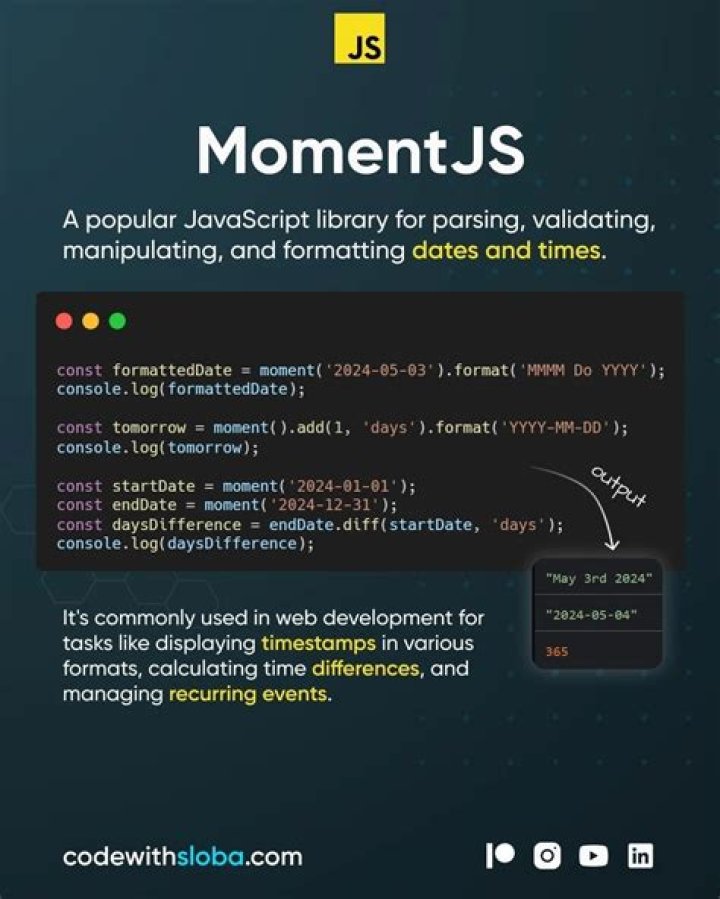
// Normal adding moment().add(7, 'days'); // Short Hand moment().add(7, 'd'); // Literal Object moment().add({days:7, months:1}); See more about it on Moment.js docs:
var end_date = moment(start_date).clone().add(5, 'days'); If we want to use the current date or present date:
var new_date = moment(moment(), "MM-DD-YYYY").add(7, 'days') alert(new_date); To get an actual working example going that returns what one would expect:
var startdate = "20.03.2014"; var new_date = moment(startdate, "DD.MM.YYYY"); var thing = new_date.add(5, 'days').format('DD/MM/YYYY'); window.console.log(thing) - add to your html page
var todayDate = moment().format('DD-MM-YYYY');//to get today date 06/03/2018 if you want to add extra day to your current datethenvar dueDate = moment().add(15,'days').format('DD-MM-YYYY')// to add 15 days to current date..
point 2 and 3 are using in your jquery code...
You can reduce what they said in a few lines of code:
var nowPlusOneDay = moment().add('days', 1); var nowPlusOneDayStr = nowPlusOneDay.format('YYYY-MM-DD'); alert('nowPlusOneDay Without Format(Unix Date):'+nowPlusOneDay); alert('nowPlusOneDay Formatted(String):'+nowPlusOneDayStr); updated:
startdate = "20.03.2014"; var new_date = moment(startdate, "DD-MM-YYYY").add(5,'days'); alert(new_date) If you do end up running with formatting problems after adding X time to the function, try this format:
startDate = moment(startDate).add(1, "days").format("YYYY-MM-DD");
instead of:
startDate = moment(startDate, "YYYY-MM-DD").add(1, "days");
This last version keeps the time attached to the returned data, whereas the format method doesn't and literally returns YYYY-MM-DD.