 $\begingroup$
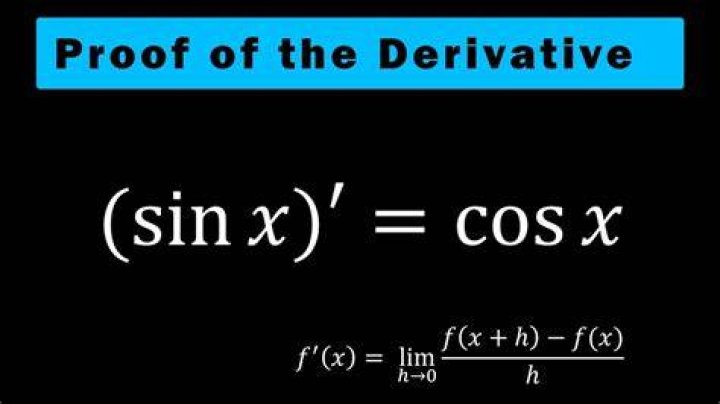
The proof of $\frac{d}{dx}\sin(x)$ goes something like this:
$$\begin{aligned} \lim_{h\to0}\frac{\sin(x+h)-\sin(x)}{h}=\lim_{h\to0}\frac{\sin(x)\cos(h)+\cos(x)\sin(h)-\sin(x)}{h}\\ =\lim_{h\to0}\frac{\sin(x)(\cos(h)-1)+\cos(x)\sin(h)}{h}\\ =\lim_{h\to0}\frac{\sin(x)(\cos(h)-1)}{h}+\cos(x)\lim_{h\to0}\frac{\sin(h)}{h}\\ =0+\cos(x)\times1\\ =\cos(x) \end{aligned}$$
My doubt about this is that it uses the limit of $\frac{\sin(h)}h$ and $\frac{\cos(h)-1}{h}$ in the proof. However, proving these two limits uses L'Hopital's rule, which uses the derivative of $\sin(x)$ and $\cos(x)$ to prove the limits. This causes a circular argument because we're using the derivative of $\sin(x)$ to prove the derivative of $\sin(x)$. Is there a way to prove these two limits without using L'Hopital's rule or just looking at the graph, or is there a way to find $\frac{d}{dx}\sin(x)$ without using these two limits?
There is a nice way to prove the limits using geometry here, but I'm wondering if there's a way to do it without using this, either.
Edit: The way I'm defining sine is by the unit circle definition, not the Taylor series one.
$\endgroup$134 Answers
$\begingroup$Here is a different approach that uses the integral definition of the arcsine function. We will deduce the limit of interest, $\lim_{h\to 0}\frac{\sin(h)}{h}=1$, without appeal to geometry or differential calculus. (Note that $\cos(h)-1=-2\sin^2(h/2)$)
Instead, we only rely on elementary analysis of continuous functions and their inverses along with simple properties of the Riemann integral. To that end, we now proceed.
We define the sine function, $\sin(x)$, as the inverse function of the function $f(x)$ given by
$$\bbox[5px,border:2px solid #C0A000]{f(x)=\int_0^x \frac{1}{\sqrt{1-t^2}}\,dt }\tag 1$$
for $|x|< 1$.
NOTE: It can be shown that the sine function defined as the inverse of $f(x)$ given in $(1)$ has all of the familiar properties that characterize the circular function $\sin(x)$.
It is straightforward to show that since $\frac{1}{\sqrt{1-t^2}}$ is positive and continuous for $t\in (-1,1)$, $f(x)$ is continuous and strictly increasing for $x\in (-1,1)$ with $\displaystyle\lim_{x\to 0}f(x)=f(0)=0$.
Therefore, since $f$ is continuous and strictly increasing, its inverse function, $\sin(x)$, exists and is also continuous and strictly increasing with $\displaystyle \lim_{x\to 0}\sin(x)=\sin(0)=0$.
From $(1)$, we have the bounds (SEE HERE)
$$\bbox[5px,border:2px solid #C0A000]{1 \le \frac{f(x)}x\le \frac{1}{\sqrt{1-x^2}}} \tag 2$$
for $x\in (-1,1)$, whence applying the squeeze theorem to $(2)$ yields
$$\lim_{x\to 0}\frac{f(x)}{x}=1 \tag 3$$
Finally, let $y=f(x)$ so that $x=\sin(y)$. As $x\to 0$, $y\to 0$ and we can write $(3)$ as
$$\lim_{y\to 0}\frac{y}{\sin(y)}=1$$
from which we have
$$\bbox[5px,border:2px solid #C0A000]{\lim_{y\to 0}\frac{\sin(y)}{y}=1}$$
as was to be shown!
$\endgroup$$\begingroup$NOTE:
We can deduce the following set of useful inequalities from $(2)$. We let $x=\sin(\theta)$ and restrict $x$ so that $x\in [0,1)$. In addition, we define new functions, $\cos(\theta)=\sqrt{1-\sin^2(\theta)}$ and $\tan(\theta)=\sin(\theta)/\cos(\theta)$.
Then, we have from $(2)$
$$\bbox[5px,border:2px solid #C0A000]{y\cos(y)\le \sin(y)\le y\le \tan(y)} $$
which are the familiar inequalities often introduced in an introductory geometry or trigonometry course.
This is too long for a comment.
The last sentence of the question gives the definition of sine being used here. To express the definition clearly, if one walks on the unit circle $x^{2}+y^{2}=1$ starting from point $A=(1, 0)$ in counter-clockwise direction and covers a distance $\theta $ (if $\theta$ is negative then the direction being clockwise) to reach point $P$ on the unit circle then the coordinates of this point $P$ are by definition $(\cos\theta, \sin\theta) $.
If the full circumference of unit circle is defined to be $2\pi$ then the length of a quadrant is $\pi/2$ and thus working only in the first quadrant we can see that that following formula holds $$\theta=\int_{0}^{\sin\theta}\frac{dt}{\sqrt{1 - t^{2}}}\tag{1}$$ for $0\leq\theta<\pi/2$. The above equation is the actual meaning of the geometric definition of sine function. Now we can argue like in user Mark Viola's answer.
$\endgroup$$\begingroup$This really comes down to how you define $\sin(x)$ and $\cos(x)$. As you say, there are geometric proofs that demonstrate the limits that you are asking about. You are correct that you can't use l'Hopital's rule to prove these limits.
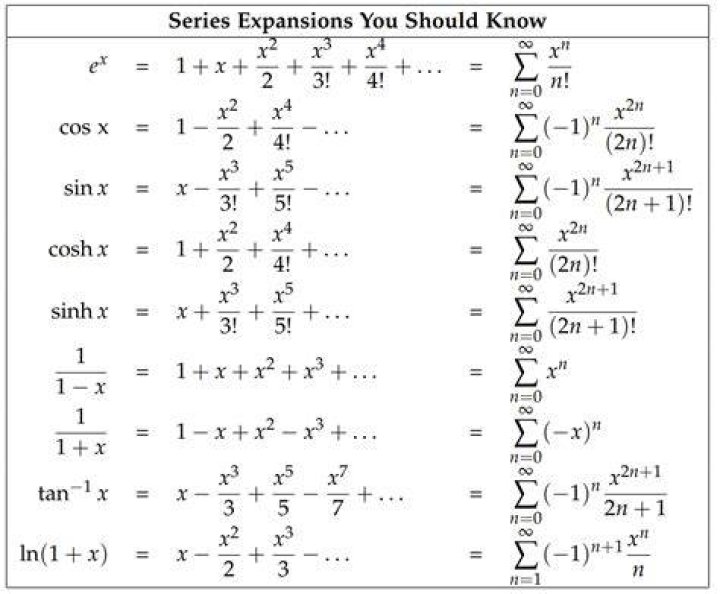
A usual definition of $\sin(x)$ is through its Taylor series $$\sin(x) = x - \frac{x^3}{6} + \frac{x^5}{120} - \cdots.$$ From here, you can see that $$\frac{\sin(h)}{h} = \frac{h - \frac{h^3}{6} + \frac{h^5}{120} - \cdots}{h} = 1 - \frac{h^2}{6} + \frac{h^4}{120} - \cdots \to 1$$ as $h\to 0$.
Similarly, it can be demonstrated that $\frac{\cos(x)-1}{h} \to 0$ as $h \to 0$.
You do not need to know what $\sin(x)$ to make this Taylor series. In Advanced Calculus courses, $\sin(x)$ is defined using the Taylor series, and later the trigonometric properties of $\sin(x)$ are demonstrated using the Taylor series as a starting point.
$\endgroup$9$\begingroup$As mentioned in the comments above, it is all about your definition of $\sin$ and $\cos$. If you define it using Taylor series, then your proof probably ends up using that. If you use the "unit circle" to define the functions, then you proof will end up using some kind of geometry (since this is how you defined them).
As you note you don't have to use L'Hopital's rule to prove that $$ \lim_{h\to 0}\frac{\sin(h)}{n} = 1\quad\text{and}\quad\lim_{h\to 0}\frac{\cos(h) - 1}{h} = 0 $$ One can prove this limits from elementary geometric considerations.
It should be easy to find something using Google. I quickly found these notes.
$\endgroup$