
Word2vec is a open source tool to calculate the words distance provided by Google. It can be used by inputting a word and output the ranked word lists according to the similarity. E.g.
Input:
france Output:
Word Cosine distance spain 0.678515 belgium 0.665923 netherlands 0.652428 italy 0.633130 switzerland 0.622323 luxembourg 0.610033 portugal 0.577154 russia 0.571507 germany 0.563291 catalonia 0.534176 However, what I need to do is to calculate the similarity distance by giving 2 words. If I give the 'france' and 'spain', how can I get the score 0.678515 without reading the whole words list by giving just 'france'.
5 Answers
gensim has a Python implementation of Word2Vec which provides an in-built utility for finding similarity between two words given as input by the user. You can refer to the following:
UPDATED: Gensim 4.0.0 and above
The syntax in Python for finding similarity between two words goes like this:
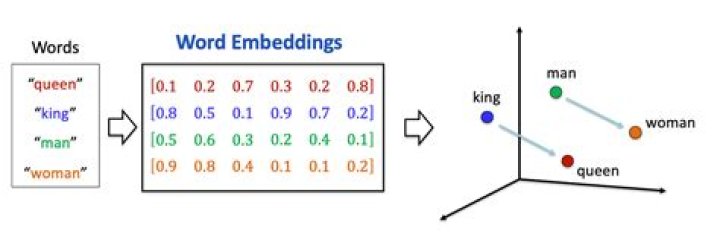
>> from gensim.models import Word2Vec >> model = Word2Vec.load(path/to/your/model) >> model.wv.similarity('france', 'spain') As you know word2vec can represent a word as a mathematical vector. So once you train the model, you can obtain the vectors of the words spain and france and compute the cosine distance (dot product).
An easy way to do this is to use this Python wrapper of word2vec. You can obtain the vector using this:
>>> model['computer'] # raw numpy vector of a word array([-0.00449447, -0.00310097, 0.02421786, ...], dtype=float32) To compute the distances between two words, you can do the following:
>>> import numpy >>> cosine_similarity = numpy.dot(model['spain'], model['france'])/(numpy.linalg.norm(model['spain'])* numpy.linalg.norm(model['france'])) I just stumbled on this while looking for how to do this by modifying the original distance.c version, not by using another library like gensim.
I didn't find an answer so I did some research, and am sharing it here for others who also want to know how to do it in the original implementation.
After looking through the C source, you will find that 'bi' is an array of indexes. If you provide two words, the index for word1 will be in bi[0] and the index of word2 will be in bi[1].
The model 'M' is an array of vectors. Each word is represented as a vector with dimension 'size'.
Using these two indexes and the model of vectors, look them up and calculate the cosine distance (which is the same as the dot product) like this:
dist = 0; for (a = 0; a < size; a++) { dist += M[a + bi[0] * size] * M[a + bi[1] * size]; } after this completes, the value 'dist' is the cosine similarity between the two words.
I have developed a code to help with calculating cosine similarity for 2 sentences / SKUs using gensim. The code can be found here
The code is using data for Kaggle competition on Crowdflower
It has been developed using Code for Kaggle Tutorial on Word2Vec available here
I hope this helps
2If you look at the source code of the Gensim's native method to calculate word similarities, you will find that it calculates word similarities using the following method:
import numpy as np from gensim import matutils # utility fnc for pickling, common scipy operations etc def similarity_cosine(vec1, vec2): cosine_similarity = np.dot(matutils.unitvec(vec1), matutils.unitvec(vec2)) return cosine_similarity similarity_cosine(model.wv['space'], model.wv['france'])