I have Kubernetes working well in two different environments, namely in my local environment (MacBook running minikube) and as well as on Google's Container Engine (GCE, Kubernetes on Google Cloud). I use the MacBook/local environment to develop and test my YAML files and then, upon completion, try them on GCE.
Currently I need to work with each environment individually: I need to edit the YAML files in my local environment and, when ready, (git) clone them to a GCE environment and then use/deploy them. This is a somewhat cumbersome process.
Ideally, I would like to use kubectl from my Macbook to easily switch between the local minikube or GCE Kubernetes environments and to easily determine where the YAML files are used. Is there a simple way to switch contexts to do this?
14 Answers
You can switch from local (minikube) to gcloud and back with:
kubectl config use-context CONTEXT_NAME
to list all contexts:
kubectl config get-contexts
You can create different enviroments for local and gcloud and put it in separate yaml files.
3List contexts
kubectl config get-contexts Switch contexts
kubectl config set current-context MY-CONTEXT A faster shortcut to the standard kubectl commands is to use kubectx:
- List contexts:
kubectx- Equivalent to
kubectl config get-contexts
- Equivalent to
- Switch context (to foo):
kubectx foo- Equivalent to
kubectl config use-context foo
- Equivalent to
To install on macOS: brew install kubectx
The kubectx package also includes a similar tool for switching namespaces called kubens.
These two are super convenient if you work in multiple contexts and namespaces regularly.
If you're looking for a GUI-based solution for Mac and have the Docker Desktop installed, you can use the Docker Menu Bar icon. Here you can find "Kubernetes" menu with all the contexts you have in your kubeconfig and easily switch between them.
2To get all context
C:\Users\arun>kubectl config get-contexts To get current context
C:\Users\arun>kubectl config current-context To switch context
C:\Users\arun>kubectl config use-context <any context name from above list> Latest 2020 answer is here,
A simple way to switch between kubectl context,
kubectl top nodes **--context=**context01name kubectl top nodes --context=context02name You can also store the context name as env like context01name=gke_${GOOGLE_CLOUD_PROJECT}_us-central1-a_standard-cluster-1
I got bored of typing this over and over so I wrote a simple bash utility to switch contexts
The canonical answer of switching/reading/manipulating different kubernetes environments (aka kubernetes contexts) is, as Mark mentioned, to use kubectl config, see below:
$ kubectl config Modify kubeconfig files using subcommands like "kubectl config set current-context my-context" Available Commands: current-context Displays the current-context delete-cluster Delete the specified cluster from the kubeconfig delete-context Delete the specified context from the kubeconfig get-clusters Display clusters defined in the kubeconfig get-contexts Describe one or many contexts rename-context Renames a context from the kubeconfig file. set Sets an individual value in a kubeconfig file set-cluster Sets a cluster entry in kubeconfig set-context Sets a context entry in kubeconfig set-credentials Sets a user entry in kubeconfig unset Unsets an individual value in a kubeconfig file use-context Sets the current-context in a kubeconfig file view Display merged kubeconfig settings or a specified kubeconfig file Usage: kubectl config SUBCOMMAND [options] Behind the scene, there is a ~/.kube/config YAML file that stores all the available contexts with their corresponding credentials and endpoints for each contexts.
Kubectl off the shelf doesn't make it easy to manage different kubernetes contexts as you probably already know. Rather than rolling your own script to manage all that, a better approach is to use a mature tool called kubectx, created by a Googler named "Ahmet Alp Balkan" who's on Kubernetes / Google Cloud Platform developer experiences Team that builds tooling like this. I highly recommend it.
$ kctx --help USAGE: kubectx : list the contexts kubectx <NAME> : switch to context <NAME> kubectx - : switch to the previous context kubectx <NEW_NAME>=<NAME> : rename context <NAME> to <NEW_NAME> kubectx <NEW_NAME>=. : rename current-context to <NEW_NAME> kubectx -d <NAME> [<NAME...>] : delete context <NAME> ('.' for current-context) (this command won't delete the user/cluster entry that is used by the context) kubectx -h,--help : show this message TL;DR: I created a GUI to switch Kubernetes contexts via AppleScript. I activate it via shift-cmd-x.
I too had the same issue. It was a pain switching contexts by the command line. I used FastScripts to set a key combo (shift-cmd-x) to run the following AppleScript (placed in this directory: $(HOME)/Library/Scripts/Applications/Terminal).
use AppleScript version "2.4" -- Yosemite (10.10) or later use scripting additions do shell script "/usr/local/bin/kubectl config current-context" set curcontext to result do shell script "/usr/local/bin/kubectl config get-contexts -o name" set contexts to paragraphs of result choose from list contexts with prompt "Select Context:" with title "K8s Context Selector" default items {curcontext} set scriptArguments to item 1 of result do shell script "/usr/local/bin/kubectl config use-context " & scriptArguments display dialog "Switched to " & scriptArguments buttons {"ok"} default button 1 Cloning the YAML files across repos for different environments is definitely ideal. What you to do is templatize your YAML files - by extracting the parameters which differ from environment to environment.
You can, of course, use some templating engine and separate the values in a YAML and produce the YAML for a specific environment. But this is easily doable if you adopt the Helm Charts. To take a look at some sample charts go to stable directory at this Github repo
To take an example of the Wordpress chart, you could have two different commands for two environments:
For Dev:
helm install --name dev-release --set \ wordpressUsername=dev_admin, \ wordpressPassword=dev_password, \ mariadb.mariadbRootPassword=dev_secretpassword \ stable/wordpress
It is not necessary to pass these values on CLI though, you can store the values in a file called aptly values.yml and you could have different files for different environments
You will need some work in converting to Helm chart standards, but the effort will be worth it.
Check also the latest (docker 19.03) docker context command.
Ajeet Singh Raina ) illustrates it in "Docker 19.03.0 Pre-Release: Fast Context Switching, Rootless Docker, Sysctl support for Swarm Services"
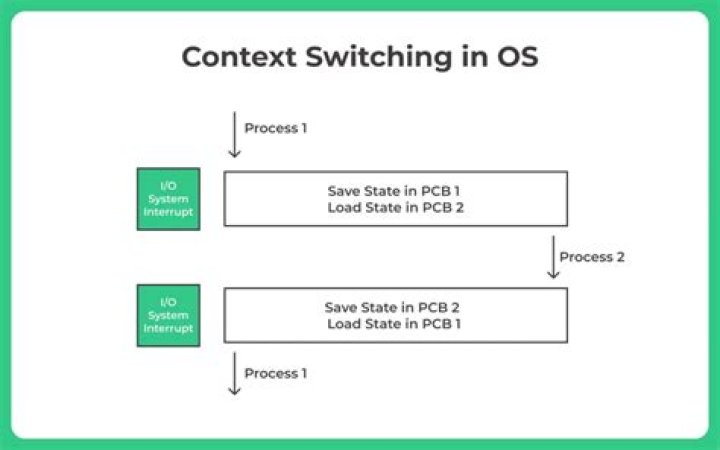
A context is essentially the configuration that you use to access a particular cluster.
Say, for example, in my particular case, I have 4 different clusters – mix of Swarm and Kubernetes running locally and remotely.
Assume that I have a default cluster running on my Desktop machine , 2 node Swarm Cluster running on Google Cloud Platform, 5-Node Cluster running on Play with Docker playground and a single-node Kubernetes cluster running on Minikube and that I need to access pretty regularly.Using docker context CLI I can easily switch from one cluster(which could be my development cluster) to test to production cluster in seconds.
$ sudo docker context --help Usage: docker context COMMAND Manage contexts Commands: create Create a context export Export a context to a tar or kubeconfig file import Import a context from a tar file inspect Display detailed information on one or more contexts ls List contexts rm Remove one or more contexts update Update a context use Set the current docker context Run 'docker context COMMAND --help' for more information on a command. For example:
[:)Captain'sBay=>sudo docker context ls NAME DESCRIPTION DOCKER ENDPOINT KUBERNETES ENDPOINT ORCHESTRATOR default * Current DOCKER_HOST based configuration unix:///var/run/docker.sock (default) swarm swarm-context1
I use kubeswitch (disclaimer: I wrote the tool) that can be used just like kubectx, but is designed for a large number of kubeconfig files. If you have to deal with hundreds or thousands of kubeconfig files, this tool might be useful to you, otherwise kubectx or kubectl config use-context might be sufficient.
For instance, it adds capabilities like reading from vault, hot reload while searching, and an index to speed up subsequent searches.
You can install it from here.
EDIT: now also includes support for GKE directly. So you can use and discover kubeconfig files without having to manually download and update them.
In case you might be looking for a simple way to switch between different contexts maybe this will be of help.
I got inspired by kubectx and kswitch scripts already mentioned, which I can recommend for most use-cases. They are helping with solving the switching task, but are breaking for me on some bigger or less standard configurations of ~/.kube/config. So I created a sys-exec invocation wrapper and a short-hand around kubectl.
If you call k without params you would see an intercepted prompt to switch context.
Switch kubectl to a different context/cluster/namespace. Found following options to select from: >>> context: [1] franz >>> context: [2] gke_foo_us-central1-a_live-v1 >>> context: [3] minikube --> new num [?/q]: Further, k continues to act as a short-hand. The following is equivalent:
kubectl get pods --all-namespaces k get pods -A k p -A yes, i think this is what your asking about. To view your current config, use kubectl config view. kubectl loads and merges config from the following locations (in order)
--kubeconfig=/path/to/.kube/config command line flag KUBECONFIG=/path/to/.kube/config env variable $HOME/.kube/config - The DEFAULT i use --kubeconfig since i switch alot between multiple clusters. its slightly cumbersome but it works well.
1