 $\begingroup$
Let $\large{I} = \Large \int\limits_{-\infty}^{\infty} \normalsize e^{\small -\frac{y^2}{2}}\ dy$.
Then, my textbook says,
$$\tag{1} I^2 = \left( \int\limits_{-\infty}^{\infty} \normalsize e^{\small -\frac{y^2}{2}}\ dy\ \right) \left( \int\limits_{-\infty}^{\infty} \normalsize e^{\small -\frac{x^2}{2}}\ dx\ \right) = \int\limits_{-\infty}^{\infty} \int\limits_{-\infty}^{\infty} e^{-(y^2 +x^2)/2}\ dy\ dx $$
I am not seeing how we reach the rightmost, iterated integral, and I do not remember the calculus how or why this works. Why can we restate the product of two integrals, each having funcions of different variable, as an iterated integral including both variables?
Let $\large{I} = \Large \int\limits_{-\infty}^{\infty} \normalsize f_y(y)\ dy$ for any continuous, differentiable $ f_y: \mathbb{R} \to \mathbb{R}$
Now, does (2) generally hold, $\forall x, y \in \mathbb{R}$ ? $$\tag{2} I^2 = \left( \int\limits_{-\infty}^{\infty} \normalsize f_y(y)\ dy\ \right) \left( \int\limits_{-\infty}^{\infty} \normalsize f_x(x)\ dx\ \right) = \int\limits_{-\infty}^{\infty} \int\limits_{-\infty}^{\infty} f_y(y)f_x(x) dy\ dx $$
or is result(1) specific to the particular function $e^{-(y^2)/2}$?
Please show the work or reasoning behind how and why this transformation is valid.
$\endgroup$41 Answer
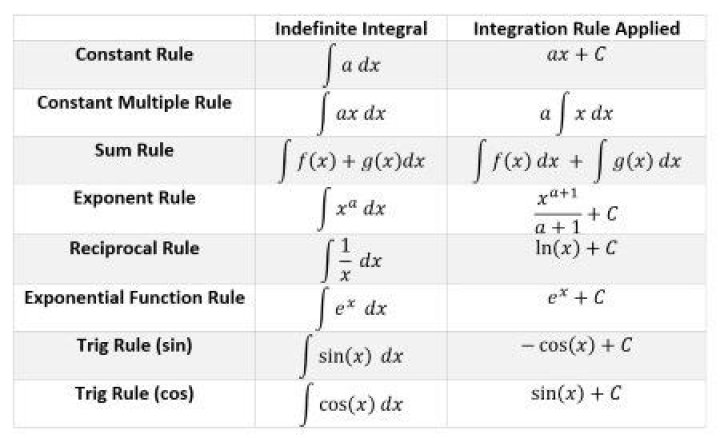
$\begingroup$Note first, that for any integrable $f \colon \def\R{\mathbb R}\R \to \R$ and any $\alpha \in \R$ we have $$ \int_\R \alpha f(x)\, dx = \alpha \int_\R f(x) \, dx $$ Now note that with $\alpha := \int_\R f(y)\, dy$ (this depends on $f$, but given $f$ it is a constant) this gives $$ \int_\R \left(\int_\R f(y)\, dy\right)\, f(x)\, dx = \int_\R f(y)\, dy \cdot \int_\R f(x)\, dx $$ Now, for every fixed $x \in \R$, we apply the above again, now for $\alpha = f(x)$ (which is not depending on $y$), giving $$ \left(\int_\R f(y)\, dy\right)\, f(x) = \int_\R f(x)f(y)\, dy $$ altogether $$ \int_\R \int_\R f(y)f(x)\, dy\, dx = \int_\R f(y)\, dy \cdot \int_\R f(x)\, dx $$
$\endgroup$4