
I have a string and I need to scan for every occurrence of "foo" and read all the text following it until a second ". Since Rust does not have a , I need to iterate by characters scanning for it. How would I do this?contains function for strings
Edit: Rust's &str has a contains() and find() method.
3 Answers
I need to iterate by characters scanning for it.
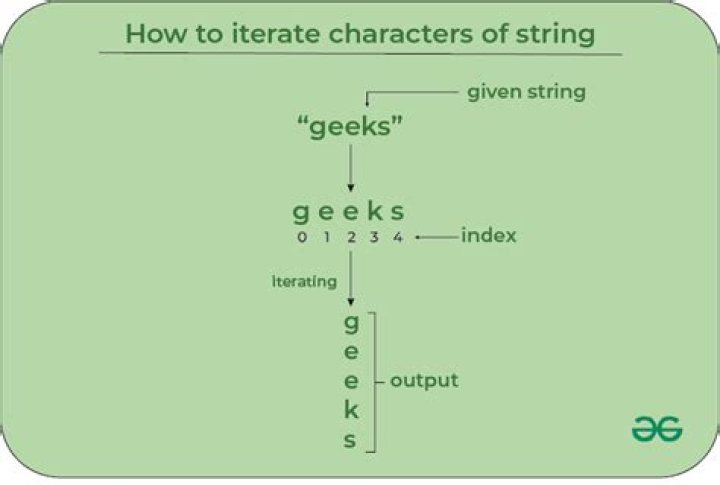
The .chars() method returns an iterator over characters in a string. e.g.
for c in my_str.chars() { // do something with `c` } for (i, c) in my_str.chars().enumerate() { // do something with character `c` and index `i` } If you are interested in the byte offsets of each char, you can use char_indices.
Look into .peekable(), and use peek() for looking ahead. It's wrapped like this because it supports UTF-8 codepoints instead of being a simple vector of characters.
You could also create a vector of chars and work on it from there, but that's more time and space intensive:
let my_chars: Vec<_> = mystr.chars().collect(); The concept of a "character" is very ambiguous and can mean many different things depending on the type of data you are working with. The most obvious answer is the chars method. However, this does not work as advertised. What looks like a single "character" to you may actually be made up of multiple Unicode code points, which can lead to unexpected results:
"a̐".chars() // => ['a', '\u{310}'] For a lot of string processing, you want to work with graphemes. A grapheme consists of one or more unicode code points represented as a string slice. These map better to the human perception of "characters". To create an iterator of graphemes, you can use the unicode-segmentation crate:
use unicode_segmentation::UnicodeSegmentation; for grapheme in my_str.graphemes(true) { // ... } If you are working with raw ASCII then none of the above applies to you, and you can simply use the bytes iterator:
for byte in my_str.bytes() { // ... } Although, if you are working with ASCII then arguably you shouldn't be using String/&str at all and instead use Vec<u8>/&[u8] directly.
fn main() { let s = "Rust is a programming language"; for i in s.chars() { print!("{}", i); }} Output: Rust is a programming language
I use the chars() method to iterate over each element of the string.
1