
s = 'hello %s, how are you doing' % (my_name) That's how you do it in python. How can you do that in javascript/node.js?
414 Answers
With Node.js v4 , you can use ES6's Template strings
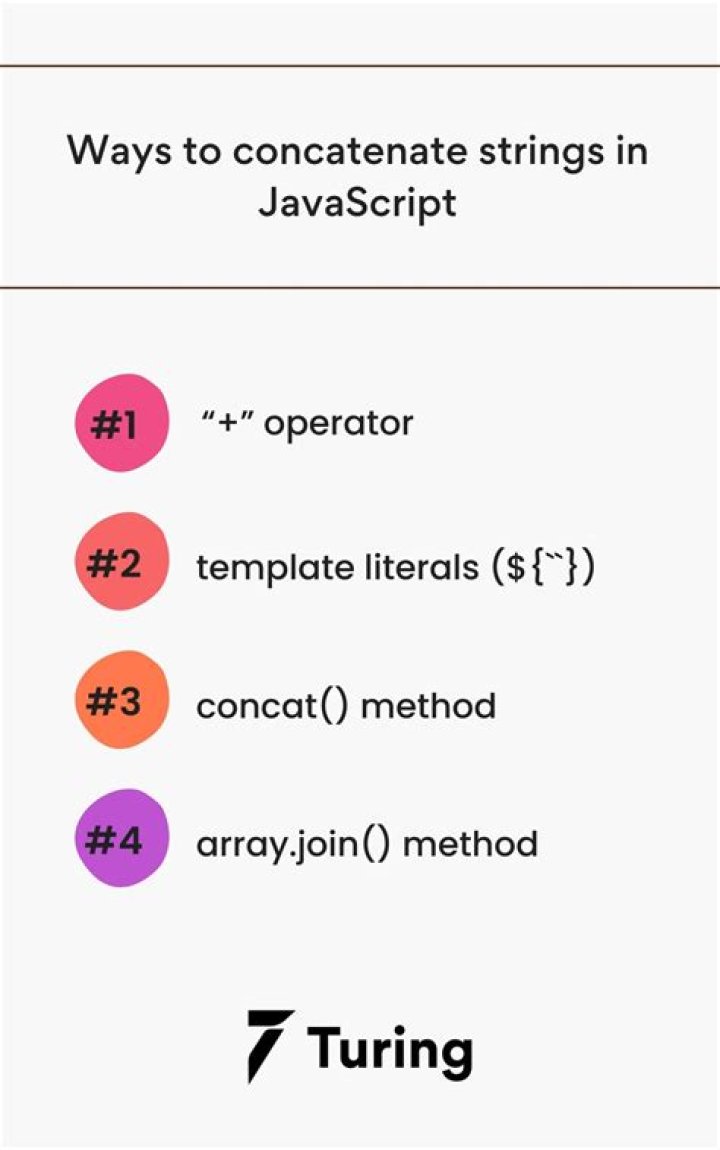
var my_name = 'John'; var s = `hello ${my_name}, how are you doing`; console.log(s); // prints hello John, how are you doing You need to wrap string within backtick ` instead of '
Note, from 2015 onwards, just use backticks for templating
let a = `hello ${name}` // NOTE!!!!!!!! ` not ' or " Note that it is a backtick, not a quote.
If you want to have something similar, you could create a function:
function parse(str) { var args = [].slice.call(arguments, 1), i = 0; return str.replace(/%s/g, () => args[i++]); } Usage:
s = parse('hello %s, how are you doing', my_name); This is only a simple example and does not take into account different kinds of data types (like %i, etc) or escaping of %s. But I hope it gives you some idea. I'm pretty sure there are also libraries out there which provide a function like this.
if you are using ES6, the you should use the Template literals.
//you can do this let sentence = `My name is ${ user.name }. Nice to meet you.` util.format does this.
It will be part of v0.5.3 and can be used like this:
var uri = util.format('http%s://%s%s', (useSSL?'s':''), apiBase, path||'/'); As of node.js >4.0 it gets more compatible with ES6 standard, where string manipulation greatly improved.
The answer to the original question can be as simple as:
var s = `hello ${my_name}, how are you doing`; // note: tilt ` instead of single quote ' Where the string can spread multiple lines, it makes templates or HTML/XML processes quite easy. More details and more capabilitie about it: Template literals are string literals at mozilla.org.
1Do that:
s = 'hello ' + my_name + ', how are you doing' Update
With ES6, you could also do this:
s = `hello ${my_name}, how are you doing` I wrote a function which solves the problem precisely.
First argument is the string that wanted to be parameterized. You should put your variables in this string like this format "%s1, %s2, ... %s12".
Other arguments are the parameters respectively for that string.
/*** * @example parameterizedString("my name is %s1 and surname is %s2", "John", "Doe"); * @return "my name is John and surname is Doe" * * @firstArgument {String} like "my name is %s1 and surname is %s2" * @otherArguments {String | Number} * @returns {String} */ const parameterizedString = (...args) => { const str = args[0]; const params = args.filter((arg, index) => index !== 0); if (!str) return ""; return str.replace(/%s[0-9]+/g, matchedStr => { const variableIndex = matchedStr.replace("%s", "") - 1; return params[variableIndex]; }); } Examples
parameterizedString("my name is %s1 and surname is %s2", "John", "Doe"); // returns "my name is John and surname is Doe" parameterizedString("this%s1 %s2 %s3", " method", "sooo", "goood"); // returns "this method sooo goood" If variable position changes in that string, this function supports it too without changing the function parameters.
parameterizedString("i have %s2 %s1 and %s4 %s3.", "books", 5, "pencils", "6"); // returns "i have 5 books and 6 pencils." A few ways to extend String.prototype, or use ES2015 template literals.
var result = document.querySelector('#result'); // ----------------------------------------------------------------------------------- // Classic String.prototype.format = String.prototype.format || function () { var args = Array.prototype.slice.call(arguments); var replacer = function (a){return args[a.substr(1)-1];}; return this.replace(/(\$\d+)/gm, replacer) }; result.textContent = 'hello $1, $2'.format('[world]', '[how are you?]'); // ES2015#1 'use strict' String.prototype.format2 = String.prototype.format2 || function(...merge) { return this.replace(/\$\d+/g, r => merge[r.slice(1)-1]); }; result.textContent += '\nHi there $1, $2'.format2('[sir]', '[I\'m fine, thnx]'); // ES2015#2: template literal var merge = ['[good]', '[know]']; result.textContent += `\nOk, ${merge[0]} to ${merge[1]}`;<pre></pre>Try sprintf in JS or you could use this gist
1If you are using node.js, console.log() takes format string as a first parameter:
console.log('count: %d', count); const format = (...args) => args.shift().replace(/%([jsd])/g, x => x === '%j' ? JSON.stringify(args.shift()) : args.shift()) const name = 'Csaba' const formatted = format('Hi %s, today is %s and your data is %j', name, Date(), {data: {country: 'Hungary', city: 'Budapest'}}) console.log(formatted)var user = "your name"; var s = 'hello ' + user + ', how are you doing'; var print = console.log; function dformat(str, ...arr) { return str.replace(/%(\d+)/g, function(_,i) { return arr[--i]; }); } function wformat(str, dict) { return str.replace(/%(\w+)/g, function(_,k) { return dict[k]; }); } function sformat(str, dict) { return str.replace(/\$(\w+)/g, function(_,m) { return dict[m]; }); } function tformat(str, dict) { return str.replace(/\${(\w+)}/g, function(_,m) { return dict[m]; }); } print(1, dformat("uid:%1, name:%2", 120, "someone") ) print(2, wformat("color: %name", {name: "green"}) ) print(3, sformat("img: $url", {url: "#"}) ) print(4, tformat("${left} ${right}", {right:"1000", left: "7fff"}) ) Here is a Multi-line String Literal example in Node.js.
> let name = 'Fred' > tm = `Dear ${name}, ... This is to inform you, ${name}, that you are ... IN VIOLATION of Penal Code 64.302-4. ... Surrender yourself IMMEDIATELY! ... THIS MEANS YOU, ${name}!!! ... ... ` 'Dear Fred,\nThis is to inform you, Fred, that you are\nIN VIOLATION of Penal Code 64.302-4.\nSurrender yourself IMMEDIATELY!\nTHIS MEANS YOU, Fred!!!\n\n' console.log(tm) Dear Fred, This is to inform you, Fred, that you are IN VIOLATION of Penal Code 64.302-4. Surrender yourself IMMEDIATELY! THIS MEANS YOU, Fred!!! undefined >