 $\begingroup$
I want to prove this using contradiction, supposing that there is a ring isomorphism between the two and then finding a contradiction.
$\endgroup$03 Answers
$\begingroup$Is there an element $a\in\mathbb{R}$ such that $a^2=-1$?
Added from comments.
Suppose $f\colon\mathbb{C}\to\mathbb{R}$ is an isomorphism. It's usually required that field homomorphisms map $1$ into $1$, but it's not necessary to make this assumption here. Indeed, set $x=f(1)$. Then $$ x=f(1)=f(1^2)=f(1)f(1)=x^2 $$ so $x-x^2=0$, which means $x=0$ or $x=1$ because we're in a field. If $f(1)=0$, then, for all $z\in\mathbb{C}$, we have $$ f(z)=f(z\cdot1)=f(z)f(1)=f(z)\cdot0=0 $$ which is impossible, because $f$ is bijective (injectivity is sufficient).
Thus $f(1)=1$, hence $f(-1)=-1$. Now $a=f(i)$ would have the property that $a^2=f(i^2)=f(-1)=-1$ and there's no such element $a\in\mathbb{R}$.
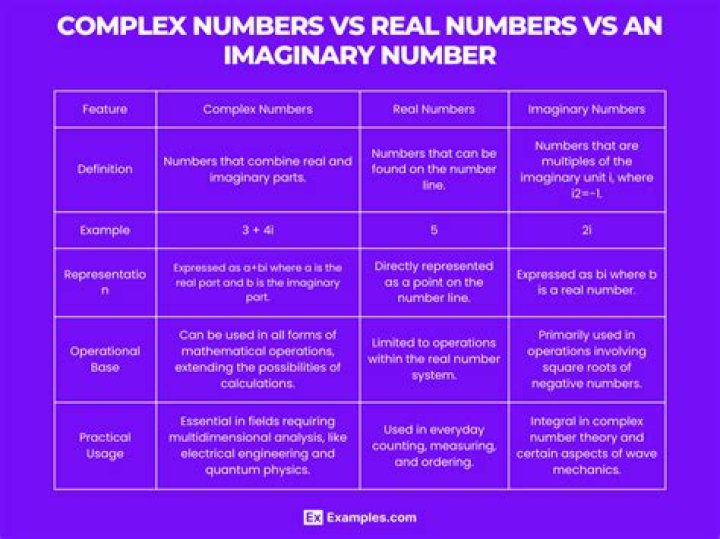
$\endgroup$12$\begingroup$Hint: If the field of complex numbers were isomorphic to the field of real numbers, there would be no reason to define the notion of complex numbers when we already have the real numbers. But there is such a reason. (What is it?)
$\endgroup$$\begingroup$$\mathbb{C}$ has a nontrivial ring automorphism, $\mathbb{R}$ not.
$\endgroup$