
This should be simple, but I have been at it for over 12 hours and am no further forward.
The SSD on my laptop just died. It contains my Windows 10 partitions.
I have:
- a 10 year old laptop, also with Windows 10 (home edition), but only 4gB RAM, which makes everything I try excruciatingly slow
- an external 1tB hard drive
- a 16gB USB stick
- a Windows 10 ISO
- a
WindowsImageBackupfolder, created by MiniTools partition Wizard, that I can't figure out how to restore to the external drive
Tools like Rufus and Windows Media Installer don't recognize the external hard drive (maybe only USB sticks?).
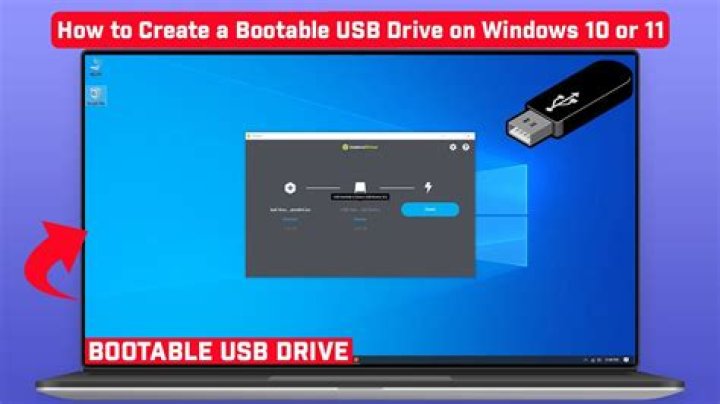
How, given what I have, do I get Windows 10 installed on the external hard drive and make it bootable, so that I can use that until I get a new SSD installed (possibly instead of)?
Please note that I do not want to open my main laptop. I will leave that to the repair shop when/if I buy a new SSD.
[Update] given that the comments say that this is somewhere between very difficult and impossible to do, a I am open to jumping through hoops.
I forgot to mention that in addition to the SSD there is also another internal hard drive. For instance instance installing a Linux GRUB boot-loader to the remaining drive and having it boot into Windows on the external drive.
In the worst case, I could use a bootable Linux USB stick and GpartEd to create a new partition on the internal drive and install Windows to that, I guess ...
Any other suggestions?
208 Answers
The simple answer is, use another OS, such as a bootable Linux Live USB drive, which also would give access to data if parts of the SSD can be salvaged. You could even run some existing Windows programs using wine. Some Linux distros come with common applications. Ubuntu, for example, has a complete office suite, LibreOffice, which can handle documents of MS Office, and it also includes Firefox web browser and Thunderbird email client.
Since it takes about 1/2 hour total to create a live USB and to boot from it, that's certainly an easier way to get running again, and it might even provide access to the remnants of the HDD. This should tide you over until the machine is repaired.
Linux and Windows user interfaces have become more similar through the years, each adopting best features of the other. You might even decide to make Linux your primary OS.
3I'm worried about these two symptoms : (1) Your SSD died, (2) The external USB disk is no longer recognized.
It looks to me like your laptop has experienced some catastrophic error, perhaps electrical in nature such as a power surge. This seems to have caused damage not only to the SSD. Therefore I'm not sure that what you plan is feasible, or that installing Windows to the second disk is without any danger of further damage.
Normally, I would counsel using the USB disk or stick to create bootable media with the ISO. After installing again Windows 10 to the computer, Windows will activate itself automatically once it got through to the Microsoft activation servers via the internet.
Perhaps visiting the repair-shop should be done sooner rather than later. There is also the question whether a 10-years old laptop that has suffered a catastrophic crash is worth this investment.
Use a USB3 NVME Drive.
You can install Windows 10 directly from a bootable USB to a USB3 NVME drive.
Select it as your Boot drive from the BIOS, or push the boot device selection key to select it. Consult the BIOS Shortcuts here:
Some caveats:
- USB Cables can move and lose connection: you will lose data if this happens.
- Windows will require re-activation if you boot it from the 3rd different PC.
- This is assuming your USB controller hasn't been damaged
If you want to test your hardware, just make a bootable Ubuntu USB stick and use it to connect to Wi-Fi, test USB, and if you want to recover your files from your drive, try testdisk or dd_rescue.
Although its slow and requires some sort of knowledge to fix any error that may occur in the process, here are the three way you can go about doing this: (Please watch video tutorials or ask for expert help before doing these things)
Use the official Windows To Go tool found in the Windows Control Panel. More detail can be found here and the tool is very easy to use. However, note that you must have a valid Windows 10 Enterprise ISO and key.
Third party tools such as WinToUSB, Rufus and AOMEI Partition Assistant all have features which allow you to the same as the official tool but you do not need an enterprise ISO of Windows. More detail on the tools and a full list of tools can be found here
Don't Bother. Its easier to use a Linux live USB than to waste countless hours to achieve Windows on an external hard drive. It will work if you still want to do it, albeit very slow
Another option may be using eSATA. eSATA is just connected to an internal SATA port, so the hard disk works the same as an internal drive.
2As a free open-source program, Rufus can help you install a bootable Windows 10 to an external hard drive easily. In case Rufus can’t recognize your external hard drive, ticking the "List USB Hard Drives" checkbox under the "Hide advanced drive properties" section on the Rufus page should help.
You can also use the command prompt on your old Windows 10 laptop to install a bootable Windows 10 to an external hard drive. But the process will be a little troublesome.
Microsoft’s Windows To Go is not practical unless you have an enterprise or education edition of Windows 10 prior to Windows 10, version 2004 and a Windows To Go certified external drive.
1Recently I installed Windows 10 on an external SSD, and it works perfectly. The only thing is that I need to change settings in the BIOS if I want to switch operating system. For external SSD, I need to disable 'secure boot' and enable 'boot from legacy device'. Booting from internal HD requires the opposite of course (or typing in the 'bitlocker key' each time you start up) I assume only a USB3 SSD will give acceptable performance. (note: if you want to access your internal HD from the external SSD, you will need the bitlocker key)
I believe this was already answered here, but I'll post the link again. Please note that you will need a Windows 10 computer to make the bootable external USB.
1