 $\begingroup$
I'm not sure how to evaluate the limit as $x \rightarrow \infty $ of the following:
$$ \bullet \lim_{x\to\infty}e^{-x}\cdot \log x $$
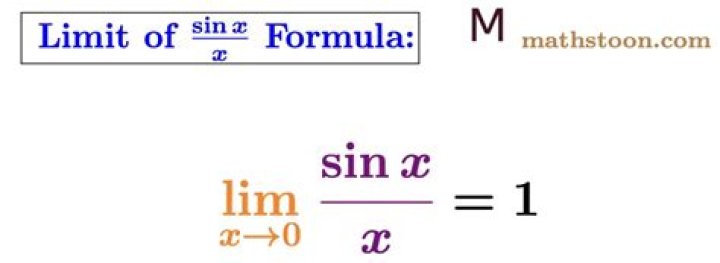
$$\bullet\lim_{x\to\infty} \frac{\sin(2x)}{x}$$
$\endgroup$1
2 Answers
$\begingroup$Your first expression can be written as
$$\frac{\ln x}{e^x}$$
Both numerator and denominator approach $+\infty$ as $x\to +\infty$, so we can use L'Hôpital's rule.
$$\begin{align} \lim_{x\to+\infty}\frac{\ln x}{e^x} &= \lim_{x\to+\infty}\frac{\frac{d}{dx}\ln x}{\frac{d}{dx}e^x} \\[2 ex] &= \lim_{x\to+\infty}\frac{\frac 1x}{e^x} \\[2 ex] &= \lim_{x\to+\infty}\frac{1}{xe^x} \\[2 ex] &= 0 \end{align}$$
That last equality is due to the numerator being bounded and the denominator approaching $+\infty$.
In your second expression, the absolute value of the numerator $\sin 2x$ is bounded by $1$, while the denominator approaches $+\infty$. This is like the last equality of the previous limit, therefore the limit is zero here also.
$\endgroup$$\begingroup$We can also proceed without using L'Hospital's Rule. Instead we note the inequalities
$$\log x<x-1 \tag 1$$
and for $x\ge0$
$$e^x\ge \left(1+\frac x2\right)^2 \tag 2$$
both of which can be shown by defining $e^x$ as
$$e^x=\lim_{n\to \infty}\left(1+\frac xn\right)^n$$
Then, we have
$$\begin{align} e^{-x}\log x&=\frac{\log x}{e^x}\\\\ &\le \frac{x-1}{\left(1+\frac x2\right)^2}\\\\ &\to 0\,\,\text{as}\,\,x\to \infty \end{align}$$
For the second limit, we have
$$\left|\frac{\sin 2x}{x}\right|\le\frac{1}{x}\to 0\,\,\text{as}\,\,x\to \infty$$
$\endgroup$