In order to duplicate an array in JavaScript: Which of the following is faster to use?
Slice method
var dup_array = original_array.slice(); For loop
for(var i = 0, len = original_array.length; i < len; ++i) dup_array[i] = original_array[i]; I know both ways do only a shallow copy: if original_array contains references to objects, objects won't be cloned, but only the references will be copied, and therefore both arrays will have references to the same objects. But this is not the point of this question.
I'm asking only about speed.
225 Answers
There are at least 6 (!) ways to clone an array:
- loop
- slice
- Array.from()
- concat
- spread operator (FASTEST)
- map
A.map(function(e){return e;});
There has been a huuuge BENCHMARKS thread, providing following information:
for blink browsers
slice()is the fastest method,concat()is a bit slower, andwhile loopis 2.4x slower.for other browsers
while loopis the fastest method, since those browsers don't have internal optimizations forsliceandconcat.
This remains true in Jul 2016.
Below are simple scripts that you can copy-paste into your browser's console and run several times to see the picture. They output milliseconds, lower is better.
while loop
n = 1000*1000; start = + new Date(); a = Array(n); b = Array(n); i = a.length; while(i--) b[i] = a[i]; console.log(new Date() - start); slice
n = 1000*1000; start = + new Date(); a = Array(n); b = a.slice(); console.log(new Date() - start); Please note that these methods will clone the Array object itself, array contents however are copied by reference and are not deep cloned.
origAr == clonedArr //returns false origAr[0] == clonedArr[0] //returns true Technically slice is the fastest way. However, it is even faster if you add the 0 begin index.
myArray.slice(0); is faster than
myArray.slice(); what about es6 way?
arr2 = [...arr1]; Easiest way to deep clone Array or Object:
var dup_array = JSON.parse(JSON.stringify(original_array)) var cloned_array = [].concat(target_array); 🏁 Fastest Way to Clone an Array
I made this very plain utility function to test the time that it takes to clone an array. It is not 100% reliable however it can give you a bulk idea as for how long it takes to clone an existing array:
function clone(fn) { const arr = [...Array(1000000)]; console.time('timer'); fn(arr); console.timeEnd('timer'); } And tested different approach:
1) 5.79ms -> clone(arr => Object.values(arr)); 2) 7.23ms -> clone(arr => [].concat(arr)); 3) 9.13ms -> clone(arr => arr.slice()); 4) 24.04ms -> clone(arr => { const a = []; for (let val of arr) { a.push(val); } return a; }); 5) 30.02ms -> clone(arr => [...arr]); 6) 39.72ms -> clone(arr => JSON.parse(JSON.stringify(arr))); 7) 99.80ms -> clone(arr => arr.map(i => i)); 8) 259.29ms -> clone(arr => Object.assign([], arr)); 9) Maximum call stack size exceeded -> clone(arr => Array.of(...arr)); UPDATE:
- Tests were made back in 2018, so today most likely you'll get different result with current browsers.
- Out of all of those, the only way to deep clone an array is by using
JSON.parse(JSON.stringify(arr)).That said, do not use the above if your array might include functions as it will return
null.
Thank you @GilEpshtain for this update.
I ran @mesqueeb's Benchmark in Chrome and Firefox. slice() still seems to be a quite good option.
Chrome 95.0: 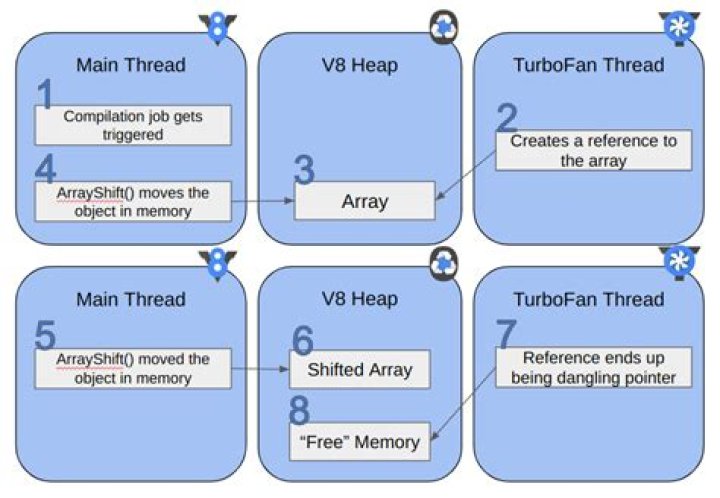
Firefox 94.0: 
My results on Internet Explorer 8 are 156, 782, and 750, which would indicate slice is much faster in this case.
a.map(e => e) is another alternative for this job. As of today .map() is very fast (almost as fast as .slice(0)) in Firefox, but not in Chrome.
On the other hand, if an array is multi-dimensional, since arrays are objects and objects are reference types, none of the slice or concat methods will be a cure... So one proper way of cloning an array is an invention of Array.prototype.clone() as follows.
Array.prototype.clone = function(){ return this.map(e => Array.isArray(e) ? e.clone() : e); }; var arr = [ 1, 2, 3, 4, [ 1, 2, [ 1, 2, 3 ], 4 , 5], 6 ], brr = arr.clone(); brr[4][2][1] = "two"; console.log(JSON.stringify(arr)); console.log(JSON.stringify(brr));Take a look at: link. It's not about speed, but comfort. Besides as you can see you can only use slice(0) on primitive types.
To make an independent copy of an array rather than a copy of the refence to it, you can use the array slice method.
Example:
To make an independent copy of an array rather than a copy of the refence to it, you can use the array slice method.
var oldArray = ["mip", "map", "mop"]; var newArray = oldArray.slice();To copy or clone an object :
function cloneObject(source) { for (i in source) { if (typeof source[i] == 'source') { this[i] = new cloneObject(source[i]); } else{ this[i] = source[i]; } } } var obj1= {bla:'blabla',foo:'foofoo',etc:'etc'}; var obj2= new cloneObject(obj1);
Source: link
2Fastest way to clone an Array of Objects will be using spread operator
var clonedArray=[...originalArray] but the objects inside that cloned array will still pointing at the old memory location. hence change to clonedArray objects will also change the orignalArray. So
var clonedArray = originalArray.map(({...ele}) => {return ele}) this will not only create new array but also the objects will be cloned to.
1ECMAScript 2015 way with the Spread operator:
Basic examples:
var copyOfOldArray = [...oldArray] var twoArraysBecomeOne = [...firstArray, ..seccondArray] Try in the browser console:
var oldArray = [1, 2, 3] var copyOfOldArray = [...oldArray] console.log(oldArray) console.log(copyOfOldArray) var firstArray = [5, 6, 7] var seccondArray = ["a", "b", "c"] var twoArraysBecomOne = [...firstArray, ...seccondArray] console.log(twoArraysBecomOne); References
2As @Dan said "This answer becomes outdated fast. Use benchmarks to check the actual situation", there is one specific answer from jsperf that has not had an answer for itself: while:
var i = a.length; while(i--) { b[i] = a[i]; } had 960,589 ops/sec with the runnerup a.concat() at 578,129 ops/sec, which is 60%.
This is the lastest Firefox (40) 64 bit.
@aleclarson created a new, more reliable benchmark.
4Benchmark time!
function log(data) { document.getElementById("log").textContent += data + "\n"; } benchmark = (() => { time_function = function(ms, f, num) { var z = 0; var t = new Date().getTime(); for (z = 0; ((new Date().getTime() - t) < ms); z++) f(num); return (z) } function clone1(arr) { return arr.slice(0); } function clone2(arr) { return [...arr] } function clone3(arr) { return [].concat(arr); } Array.prototype.clone = function() { return this.map(e => Array.isArray(e) ? e.clone() : e); }; function clone4(arr) { return arr.clone(); } function benchmark() { function compare(a, b) { if (a[1] > b[1]) { return -1; } if (a[1] < b[1]) { return 1; } return 0; } funcs = [clone1, clone2, clone3, clone4]; results = []; funcs.forEach((ff) => { console.log("Benchmarking: " + ff.name); var s = time_function(2500, ff, Array(1024)); results.push([ff, s]); console.log("Score: " + s); }) return results.sort(compare); } return benchmark; })() log("Starting benchmark...\n"); res = benchmark(); console.log("Winner: " + res[0][0].name + " !!!"); count = 1; res.forEach((r) => { log((count++) + ". " + r[0].name + " score: " + Math.floor(10000 * r[1] / res[0][1]) / 100 + ((count == 2) ? "% *winner*" : "% speed of winner.") + " (" + Math.round(r[1] * 100) / 100 + ")"); }); log("\nWinner code:\n"); log(res[0][0].toString());<textarea rows="50" cols="80"></textarea>The benchmark will run for 10s since you click the button.
My results:
Chrome (V8 engine):
1. clone1 score: 100% *winner* (4110764) 2. clone3 score: 74.32% speed of winner. (3055225) 3. clone2 score: 30.75% speed of winner. (1264182) 4. clone4 score: 21.96% speed of winner. (902929) Firefox (SpiderMonkey Engine):
1. clone1 score: 100% *winner* (8448353) 2. clone3 score: 16.44% speed of winner. (1389241) 3. clone4 score: 5.69% speed of winner. (481162) 4. clone2 score: 2.27% speed of winner. (192433) Winner code:
function clone1(arr) { return arr.slice(0); } Winner engine:
SpiderMonkey (Mozilla/Firefox)
It depends on the browser. If you look in the blog post Array.prototype.slice vs manual array creation, there is a rough guide to performance of each:
Results:
There is a much cleaner solution:
var srcArray = [1, 2, 3]; var clonedArray = srcArray.length === 1 ? [srcArray[0]] : Array.apply(this, srcArray); The length check is required, because the Array constructor behaves differently when it is called with exactly one argument.
Remember .slice() won't work for two-dimensional arrays. You'll need a function like this:
function copy(array) { return array.map(function(arr) { return arr.slice(); }); } It depends on the length of the array. If the array length is <= 1,000,000, the slice and concat methods are taking approximately the same time. But when you give a wider range, the concat method wins.
For example, try this code:
var original_array = []; for(var i = 0; i < 10000000; i ++) { original_array.push( Math.floor(Math.random() * 1000000 + 1)); } function a1() { var dup = []; var start = Date.now(); dup = original_array.slice(); var end = Date.now(); console.log('slice method takes ' + (end - start) + ' ms'); } function a2() { var dup = []; var start = Date.now(); dup = original_array.concat([]); var end = Date.now(); console.log('concat method takes ' + (end - start) + ' ms'); } function a3() { var dup = []; var start = Date.now(); for(var i = 0; i < original_array.length; i ++) { dup.push(original_array[i]); } var end = Date.now(); console.log('for loop with push method takes ' + (end - start) + ' ms'); } function a4() { var dup = []; var start = Date.now(); for(var i = 0; i < original_array.length; i ++) { dup[i] = original_array[i]; } var end = Date.now(); console.log('for loop with = method takes ' + (end - start) + ' ms'); } function a5() { var dup = new Array(original_array.length) var start = Date.now(); for(var i = 0; i < original_array.length; i ++) { dup.push(original_array[i]); } var end = Date.now(); console.log('for loop with = method and array constructor takes ' + (end - start) + ' ms'); } a1(); a2(); a3(); a4(); a5(); If you set the length of original_array to 1,000,000, the slice method and concat method are taking approximately the same time (3-4 ms, depending on the random numbers).
If you set the length of original_array to 10,000,000, then the slice method takes over 60 ms and the concat method takes over 20 ms.
In ES6, you can simply utilize the Spread syntax.
Example:
let arr = ['a', 'b', 'c']; let arr2 = [...arr]; Please note that the spread operator generates a completely new array, so modifying one won't affect the other.
Example:
arr2.push('d') // becomes ['a', 'b', 'c', 'd'] console.log(arr) // while arr retains its values ['a', 'b', 'c'] There were several ways to clone an array. Basically, Cloning was categorized in two ways:
- Shallow copy
- Deep copy
Shallow copies only cover the 1st level of the array and the rest are referenced. If you want a true copy of nested elements in the arrays, you’ll need a deep clone.
Example :
const arr1 = [1,2,3,4,5,6,7] // Normal Array (shallow copy is enough) const arr2 = [1,2,3,[4],[[5]],6,7] // Nested Array (Deep copy required) Approach 1 : Using (...)Spread Operator (Shallow copy enough) const newArray = [...arr1] // [1,2,3,4,5,6,7] Approach 2 : Using Array builtIn Slice method (Deep copy) const newArray = arr1.slice() // [1,2,3,4,5,6,7] Approach 3 : Using Array builtIn Concat method (Deep a copy) const newArray = [].concat(arr1) // [1,2,3,4,5,6,7] Approach 4 : Using (Deep a copy & fastest) const newArray = JSON.parse(JSON.stringify(arr2));) // [1,2,3,[4],[[5]],6,7] Approach 5: Using own recursive function or using loadash's __.cloneDeep method. (Deep copy) A simple solution:
original = [1,2,3] cloned = original.map(x=>x) const arr = ['1', '2', '3']; // Old way const cloneArr = arr.slice(); // ES6 way const cloneArrES6 = [...arr]; // But problem with 3rd approach is that if you are using muti-dimensional // array, then only first level is copied const nums = [ [1, 2], [10], ]; const cloneNums = [...nums]; // Let's change the first item in the first nested item in our cloned array. cloneNums[0][0] = '8'; console.log(cloneNums); // [ [ '8', 2 ], [ 10 ], [ 300 ] ] // NOOooo, the original is also affected console.log(nums); // [ [ '8', 2 ], [ 10 ], [ 300 ] ] So, in order to avoid these scenarios to happen, use
const arr = ['1', '2', '3']; const cloneArr = Array.from(arr); Fast ways to duplicate an array in JavaScript in Order:
#1: array1copy = [...array1];
#2: array1copy = array1.slice(0);
#3: array1copy = array1.slice();
If your array objects contain some JSON-non-serializable content (functions, Number.POSITIVE_INFINITY, etc.) better to use
array1copy = JSON.parse(JSON.stringify(array1))
You can follow this code. Immutable way array clone. This is the perfect way to array cloning
const array = [1, 2, 3, 4] const newArray = [...array] newArray.push(6) console.log(array) console.log(newArray) If you want a REAL cloned object/array in JS with cloned references of all attributes and sub-objects:
export function clone(arr) { return JSON.parse(JSON.stringify(arr)) } ALL other operations do not create clones, because they just change the base address of the root element, not of the included objects.
Except you traverse recursive through the object-tree.
For a simple copy, these are OK. For storage address relevant operations I suggest (and in most all other cases, because this is fast!) to type convert into string and back in a complete new object.
If you are taking about slice it is used to copy elements from an array and create a clone with same no. of elements or less no. of elements.
var arr = [1, 2, 3 , 4, 5]; function slc() { var sliced = arr.slice(0, 5); // arr.slice(position to start copying master array , no. of items in new array) console.log(sliced); } slc(arr);