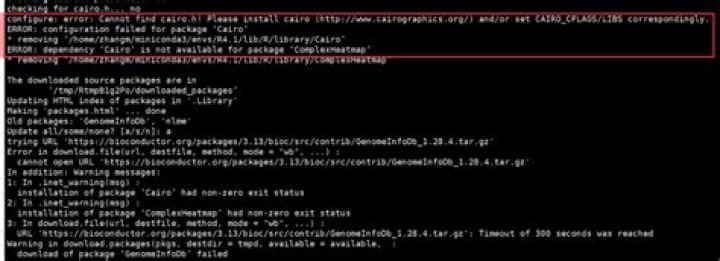

I'm getting this strange error, when I try to run a docker with a name it gives me this error.
docker: Error response from daemon: service endpoint with name qc.T8 already exists. However, there is no container with this name.
> docker ps -a CONTAINER ID IMAGE COMMAND CREATED STATUS PORTS NAMES > sudo docker info Containers: 0 Running: 0 Paused: 0 Stopped: 0 Images: 3 Server Version: 1.12.3 Storage Driver: aufs Root Dir: /ahdee/docker/aufs Backing Filesystem: extfs Dirs: 28 Dirperm1 Supported: false Logging Driver: json-file Cgroup Driver: cgroupfs Plugins: Volume: local Network: null bridge host overlay Swarm: inactive Runtimes: runc Default Runtime: runc Security Options: apparmor Kernel Version: 3.13.0-101-generic Operating System: Ubuntu 14.04.4 LTS OSType: linux Architecture: x86_64 CPUs: 64 Total Memory: 480.3 GiB Is there anyway I can flush this out?
8 Answers
Just in case someone else needs this. As @Jmons pointed out it was a weird networking issue. So I solved this by forcing a removal
docker network disconnect --force bridge qc.T8 A
2TLDR: restart your docker daemon or restart your docker-machine (if you're using that e.g. on a mac).
Edit: As there are more recent posts below, they answer the question better then mine. The Network adapter is stuck on the daemon. I'm updating mine as its possibly 'on top' of the list and people might not scroll down.
Restarting your docker daemon / docker service / docker-machine is the easiest answer.
the better answer (via Shalabh Negi):
docker network inspect <network name> docker network disconnect <network name> <container id/ container name> This is also faster in real time if you can find the network as restarting the docker machine/demon/service in my experience is a slow thing. If you use that, please scroll down and click +1 on their answer.
So the problem is probably your network adapter (virtual, docker thing, not real): have a quick peek at this: .
To prevent it happening again is a bit tricky. It seems there may be an issue with docker where a container exits with a bad status code (e.g. non-zero) that holds the network open. You can't then start a new container with that endpoint.
3docker network inspect <network name> docker network disconnect <network name> <container id/ container name> You can also try doing:
docker network prune docker volume prune docker system prune these commands will help clearing zombie containers, volume and network. When no command works then do
sudo service docker restart your problem will be solved
1docker network rm <network name> Worked for me
Restarting docker solved it for me.
1I created a script a while back, I think this should help people working with swarm. Using docker-machine this can help a bit.
declare -a NODE_NAMES=("node_01", "node_02"); declare -a CONTAINER_NAMES=("container_a", "container_b"); declare -a NETWORK_NAMES=("network_1", "network_2"); for x in "${NODE_NAMES[@]}"; do; docker-machine env $x; eval $(docker-machine env $x) for CONTAINER_NAME in "${CONTAINER_NAMES[@]}"; do; for NETWORK_NAME in "${NETWORK_NAMES[@]}"; do; echo "Disconnecting $CONTAINER_NAME from $NETWORK_NAME" docker network disconnect -f $NETWORK_NAME $CONTAINER_NAME; done; done; done; This could be because an abrupt removal of a container may leave the network open for that endpoint (container-name).
Try stopping the container first before removing it. docker stop <container-name>. Then docker rm <container-name>.
Then docker run <same-container-name>.
Even reboot did not help in my case. It turned out that port 80 to be assigned by the nginx container automatically was in use, even after reboot. How come?
root@IONOS_2: /root/2_proxy # netstat -tlpn Active Internet connections (only servers) Proto Recv-Q Send-Q Local Address Foreign Address State PID/Program name tcp 0 0 0.0.0.0:873 0.0.0.0:* LISTEN 1378/rsync tcp 0 0 0.0.0.0:5355 0.0.0.0:* LISTEN 1565/systemd-resolv tcp 0 0 0.0.0.0:80 0.0.0.0:* LISTEN 1463/nginx: master tcp 0 0 0.0.0.0:22 0.0.0.0:* LISTEN 1742/sshd tcp6 0 0 :::2377 :::* LISTEN 24139/dockerd tcp6 0 0 :::873 :::* LISTEN 1378/rsync tcp6 0 0 :::7946 :::* LISTEN 24139/dockerd tcp6 0 0 :::5355 :::* LISTEN 1565/systemd-resolv tcp6 0 0 :::21 :::* LISTEN 1447/vsftpd tcp6 0 0 :::22 :::* LISTEN 1742/sshd tcp6 0 0 :::5000 :::* LISTEN 24139/dockerd No idea what nginx: master means or where it came from. And indeed 1463 is the PID:
root@IONOS_2: /root/2_proxy # ps aux | grep "nginx" root 1463 0.0 0.0 43296 908 ? Ss 00:53 0:00 nginx: master process /usr/sbin/nginx root 1464 0.0 0.0 74280 4568 ? S 00:53 0:00 nginx: worker process root 30422 0.0 0.0 12108 1060 pts/0 S+ 01:23 0:00 grep --color=auto nginx So I tried this:
root@IONOS_2: /root/2_proxy # kill 1463 root@IONOS_2: /root/2_proxy # ps aux | grep "nginx" root 30783 0.0 0.0 12108 980 pts/0 S+ 01:24 0:00 grep --color=auto nginx And the problem was gone.
4