 $\begingroup$
Can you write $\cos \alpha x$ in terms of $\cos x$ ? similarly for $\sin \alpha x$. where $\alpha$ is a scalar in $\mathbb{R}$. (not necessarily integer).
$\endgroup$2 Answers
$\begingroup$For $\alpha=n$ an integer, we have the relation $$ \cos{nx} = T_n(\cos{x}), $$ where $T_n$ is the $n$th Chebyshev polynomial. This works for every real $x$.
For $-\pi \leqslant x \leqslant \pi$, we also have the half-angle formula $$ \cos{\tfrac{1}{2}x} = \sqrt{\frac{1+\cos{x}}{2}}, $$ from which we can derive half-integer formulae like $$ \cos{\tfrac{3}{2}x} = \sqrt{\frac{1+\cos{x}}{2}}(2\cos{x}-1), $$ and we could also iterate the "halving" to express dyadic rational multiples over $[-\pi,\pi]$. Hence we could produce a sequence of functions of $\cos{x}$ approximating $\cos{\alpha x}$ for any real $\alpha$.
The exact expression for $x \in [-\pi,\pi]$ is given by (DLMF 15.4.E12) $$ \cos{\alpha x} = {}_2F_1 \left( {-\alpha,\alpha \atop 1/2}; \frac{1-\cos{x}}{2} \right), $$ where ${}_2F_1$ is a hypergeometric function.
Another expression can be found using Fourier series (which I did here): $$ \cos{\alpha x} = \frac{\sin{\pi\alpha}}{\pi \alpha}+\sum_{k=1}^{\infty} \frac{(-1)^k 2\alpha\sin{\pi\alpha}}{\pi(\alpha^2-k^2)} \cos{kx}, $$ and again, this works for $x \in [-\pi,\pi]$. In the case that you want, you can then replace the $\cos{kx}$s by $T_k(\cos{x})$ to have a function entirely in terms of $\cos{x}$. You can produce similar expressions for longer finite intervals in the same way, although they will have to be multiples of $\pi$ in length.
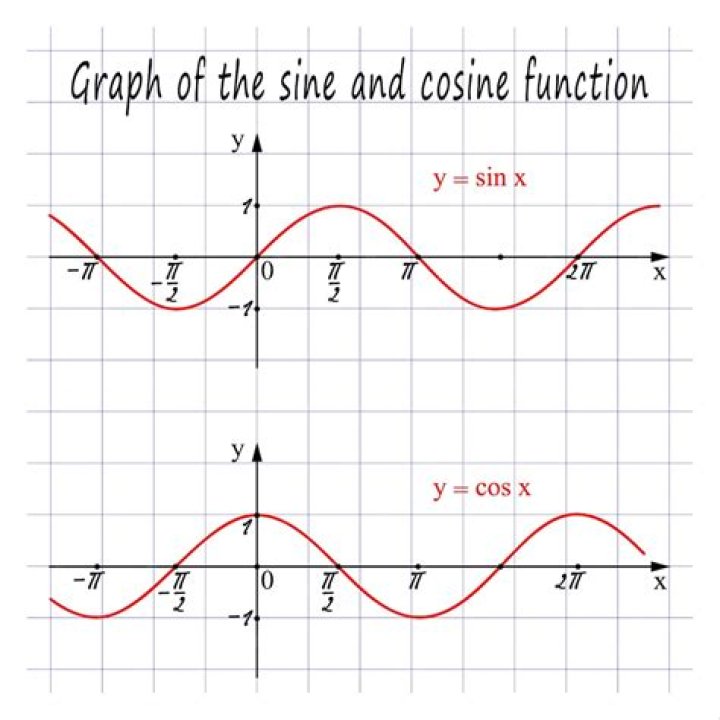
$\endgroup$2$\begingroup$Not in general, no, because $\cos x=\cos (x+2\pi)$ but $\cos(\alpha x)\neq \cos(\alpha(x+2\pi))$ when $\alpha$ is not an integer. So if you could write:
$$g(x)=\cos(\alpha x)=f(\cos x)$$ for some function $f$, then $$\cos(\alpha(x+2\pi))=g(x+2\pi)=g(x)=\cos(\alpha x)$$ for all $x$.
That is only true for $\alpha$ an integer.
Now, you can define $\left|\cos(\alpha x)\right|$ in terms of $\cos x$ when $\alpha$ is a half-integer. That's because $\left|\cos x\right|$ has period $\pi$.
$\endgroup$0