(It's probably a dumb question due to my limited knowledge with Docker or mysql administration, but since I spent a whole evening on this issue, I dare to ask it.)
In a nutshell
I want to run mysql in a docker container and connect to it from my host. So far, the best I have achieved is:
ERROR 2002 (HY000): Can't connect to local MySQL server through socket '/var/run/mysqld/mysqld.sock' (2) More details
I'm using the following Dockerfile:
FROM ubuntu:14.04.3 RUN apt-get update && apt-get install -y mysql-server # Ensure we won't bind to localhost only RUN grep -v bind-address /etc/mysql/my.cnf > temp.txt \ && mv temp.txt /etc/mysql/my.cnf # It doesn't seem needed since I'll use -p, but it can't hurt EXPOSE 3306 CMD /etc/init.d/mysql start && tail -F /var/log/mysql.log In the directory where there is this file, I can succesfully build the image and run it with:
> docker build -t my-image . > docker run -d -p 12345:3306 my-image When I attach to the image, it seems to work just fine:
# from the host > docker exec -it <my_image_name> bash #inside of the container now $ mysql -u root Welcome to the MySQL monitor. Commands end with ; or \g. [...] However I don't have that much success from the host:
> mysql -P 12345 -uroot ERROR 2002 (HY000): Can't connect to local MySQL server through socket '/var/run/mysqld/mysqld.sock' (2) Even more details
- I've seen that there's a question which looks like mine. However, it isn't the same (and it doesn't have any answers anyway)
- I've seen that there are images dedicated to mysql, but I didn't have more success with them
- My
grep -vmay feel weird. Admittedly, there may be cleaner way to do it. But when I attach my image, I can observe it actually worked as expected (ie: removed thebind-address). And I can see in the container/var/log/mysql/error.log:
2Server hostname (bind-address): '0.0.0.0'; port: 3306 - '0.0.0.0' resolves to '0.0.0.0'; Server socket created on IP: '0.0.0.0'.
18 Answers
If your Docker MySQL host is running correctly you can connect to it from local machine, but you should specify host, port and protocol like this:
mysql -h localhost -P 3306 --protocol=tcp -u root Change 3306 to port number you have forwarded from Docker container (in your case it will be 12345).
Because you are running MySQL inside Docker container, socket is not available and you need to connect through TCP. Setting "--protocol" in the mysql command will change that.
9If you use "127.0.0.1" instead of localhost mysql will use tcp method and you should be able to connect container with:
mysql -h 127.0.0.1 -P 3306 -u root I recommend checking out docker-compose. Here's how that would work:
Create a file named, docker-compose.yml that looks like this:
version: '2' services: mysql: image: mariadb:10.1.19 ports: - 8083:3306 volumes: - ./mysql:/var/lib/mysql environment: MYSQL_ROOT_PASSWORD: wp Next, run:
$ docker-compose up
Notes:
Now, you can access the mysql console thusly:
$ mysql -P 8083 --protocol=tcp -u root -p
Enter password: Welcome to the MySQL monitor. Commands end with ; or \g. Your MySQL connection id is 8 Server version: 5.5.5-10.1.19-MariaDB-1~jessie mariadb.org binary distribution Copyright (c) 2000, 2016, Oracle and/or its affiliates. All rights reserved. Oracle is a registered trademark of Oracle Corporation and/or its affiliates. Other names may be trademarks of their respective owners. Type 'help;' or '\h' for help. Type '\c' to clear the current input statement. mysql> Notes:
You can pass the -d flag to run the mysql/mariadb container in detached/background mode.
The password is "wp" which is defined in the docker-compose.yml file.
Same advice as maniekq but full example with docker-compose.
The simple method is to share the mysql unix socket to host machine. Then connect through the socket
Steps:
- Create shared folder for host machine eg:
mkdir /host - Run docker container with volume mount option
docker run -it -v /host:/shared <mysql image>. - Then change mysql configuration file
/etc/my.cnfand change socket entry in the file tosocket=/shared/mysql.sock - Restart MySQL service
service mysql restartin docker - Finally Connect to MySQL servver from host through the socket
mysql -u root --socket=/host/mysql.sock. If password use -p option
OK. I finally solved this problem. Here follows my solution used in .
The Complete Solution
To make the demo self-contained, I moved all necessary code to .
The Key to the Solution
I don't use the official image on DockerHub.com . Instead, I made my own by installing MySQL on Ubuntu 18.04. This approach gives me the chance to start mysqld and bind it to 0.0.0.0 (all IPs).
For details, please refer to these lines in my GitHub repo.
SQLFLOW_MYSQL_HOST=${SQLFLOW_MYSQL_HOST:-0.0.0.0} echo "Start mysqld ..." sed -i "s/.*bind-address.*/bind-address = ${SQLFLOW_MYSQL_HOST}/" \ /etc/mysql/mysql.conf.d/mysqld.cnf service mysql start To Verify My Solution
- Git clone the aforementioned repo.
git clone cd mysql-server-in-docker - Build the MySQL server Docker image
docker build -t mysql:yi . - Start MySQL server in a container
docker run --rm -d -p 23306:3306 mysql:yi - Install the MySQL client on the host, if not yet. I am running Ubuntu 18.04 on the host (my workstation), so I use
apt-get.sudo apt-get install -y mysql-client - Connect from the host to the MySQL server running in the container.
mysql --host 127.0.0.1 --port 23306 --user root -proot
Connect from Another Container on the Same Host
We can run MySQL client from even another container (on the same host).
docker run --rm -it --net=host mysql/mysql-server mysql \ -h 127.0.0.1 -P 13306 -u root -proot Connect from Another Host
On my iMac, I install the MySQL client using Homebrew.
brew install mysql-client export PATH="/usr/local/opt/mysql-client/bin:$PATH" Then, I can access the above Ubuntu host (192.168.1.22).
mysql -h 192.168.1.22 -P 13306 -u root -proot Connect from a Container Running on Another Host
I can even run MySQL client in a container running on the iMac to connect to the MySQL server in a container on my Ubuntu workstation.
docker run --rm -it --net=host mysql/mysql-server mysql \ -h 192.168.1.22 -P 13306 -u root -proot A Special Case
In the case that we run MySQL client and server in separate containers running on the same host -- this could happen when we are setting up a CI, we don't need to build our own MySQL server Docker image. Instead, we can use the --net=container:mysql_server_container_name when we run the client container.
To start the server
docker run --rm -d --name mysql mysql/mysql-server To start the client
docker run --rm -it --net=container:mysql mysql/mysql-server mysql \ -h 127.0.0.1 -P 3306 -u root -proot if you running docker under docker-machine?
execute to get ip:
docker-machine ip <machine> returns the ip for the machine and try connect mysql:
mysql -h<docker-machine-ip> In your terminal run: docker exec -it container_name /bin/bash Then: mysql
I do this by running a temporary docker container against my server so I don't have to worry about what is installed on my host. First, I define what I need (which you should modify for your purposes):
export MYSQL_SERVER_CONTAINER=mysql-db export MYSQL_ROOT_PASSWORD=pswd export DB_DOCKER_NETWORK=db-net export MYSQL_PORT=6604 I always create a new docker network which any other containers will need:
docker network create --driver bridge $DB_DOCKER_NETWORK Start a mySQL database server:
docker run --detach --name=$MYSQL_SERVER_CONTAINER --net=$DB_DOCKER_NETWORK --env="MYSQL_ROOT_PASSWORD=$MYSQL_ROOT_PASSWORD" -p ${MYSQL_PORT}:3306 mysql Capture IP address of the new server container
export DBIP="$(docker inspect ${MYSQL_SERVER_CONTAINER} | grep -i 'ipaddress' | grep -oE '((1?[0-9][0-9]?|2[0-4][0-9]|25[0-5])\.){3}(1?[0-9][0-9]?|2[0-4][0-9]|25[0-5])')" Open a command line interface to the server:
docker run -it -v ${HOST_DATA}:/data --net=$DB_DOCKER_NETWORK --link ${MYSQL_SERVER_CONTAINER}:mysql --rm mysql sh -c "exec mysql -h${DBIP} -uroot -p" This last container will remove itself when you exit the mySQL interface, while the server will continue running. You can also share a volume between the server and host to make it easier to import data or scripts. Hope this helps!
mysql -u root -P 4406 -h localhost --protocol=tcp -p Remember to change the user, port and host so that it matches your configurations. The -p flag is required if your database user is configured with a password
For conversion,you can create ~/.my.cnf file in host:
[Mysql] user=root password=yourpass host=127.0.0.1 port=3306 Then next time just run mysql for mysql client to open connection.
docker run -e MYSQL_ROOT_PASSWORD=pass --name sql-db -p 3306:3306 mysql
docker exec -it sql-db bash
mysql -u root -p
run following command to run container
docker run --name db_name -e MYSQL_ROOT_PASSWORD=PASS--publish 8306:3306 db_name run this command to get mysql db in host machine
mysql -h 127.0.0.1 -P 8306 -uroot -pPASS in your case it is
mysql -h 127.0.0.1 -P 12345 -uroot -pPASS I was able to connect my sql server5.7 running on my host using the below command : mysql -h 10.10.1.7 -P 3307 --protocol=tcp -u root -p where the ip given is my host ip and 3307 is the port forwaded in mysql docker .After entering the command type the password for myql.that is it.Now you are connected the mysql docker container from the you hostmachine
You should inspect the IP address assigned to the running container, and ther connect to that host:
docker inspect -f '{{range .NetworkSettings.Networks}}{{.IPAddress}}{{end}}' <container name or id>
than you can connect with:
mysql -h <IP provided by inspect command> -P <port> -u <user> -p <db name>
First, see the logs Are there any errors or not.
docker ps -a docker logs container_name If there is any error, search for the solution of that particular error, if there are no errors you may proceed to the next step.
Remember after starting your container MySQL take a few minutes to start so run those commands after 3-4 minutes.
docker exec -it container_name bash # ONCE YOU ARE INSIDE CONTAINER mysql -u root -p SHOW DATABASES; exit To connect from terminal or command prompt
mysql -h localhost -P 3306 --protocol=tcp -u root -p According to the photos, go to the project -> MySQL -> inspect tab in the docker desktop app and modify the information about the database .env file.
.env file example:
DB_CONNECTION=mysql DB_HOST=0.0.0.0:3306 DB_PORT=3306 DB_DATABASE=testdb DB_USERNAME=sail DB_PASSWORD=password 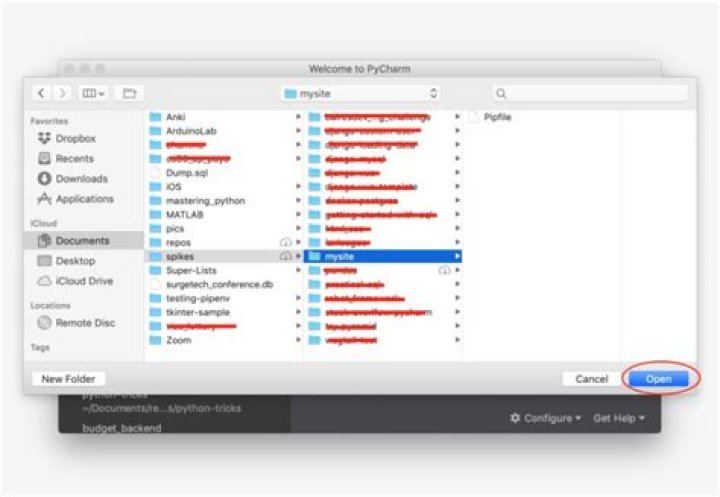
In case this will help somebody:
My prefered solution
add ~/.my.cnf with contents
[client] user=<yourusername> password=typethepasswordhere host=127.0.0.1 port=3306 then from the terminal run >$ mysql and you should get in your sql cmd.
The hardcore alternative
you can also connect like this
docker exec -it containername mysql To get into the sql cmd
or
docker exec -it contaiinername bash (or sh) to connect in the container and then run >$ mysql
change "localhost" to your real con ip addr
because it's to mysql_connect()