
I am trying to setup a daemon width systemd on Debian.
systemd was already a part of the distro.. Have just added a new unit file my-daemon.service under /etc/systemd/system/ but after reboot I get this error no matter what I do. It worked before reboot
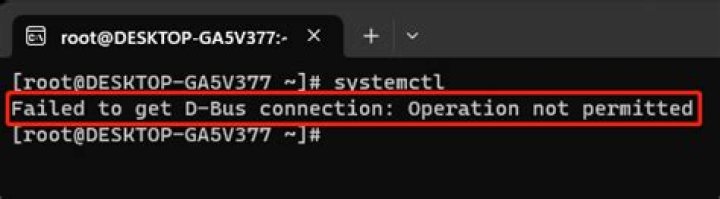
~ # systemctl daemon-reload Failed to get D-Bus connection: Unknown error -1 ~ # systemctl list-units Failed to get D-Bus connection: Unknown error -1 Have also tried to delete the unit file my-daemon.service and rebooted the system.. But still get the same error
update
# dpkg -l | grep -i dbus ii at-spi2-core 2.14.0-1 amd64 Assistive Technology Service Provider Interface (dbus core) ii dbus 1.8.22-0+deb8u1 amd64 simple interprocess messaging system (daemon and utilities) ii dbus-x11 1.8.20-0+deb8u1 amd64 simple interprocess messaging system (X11 deps) ii libdbus-1-3:amd64 1.8.20-0+deb8u1 amd64 simple interprocess messaging system (library) ii libdbus-glib-1-2:amd64 0.102-1 amd64 simple interprocess messaging system (GLib-based shared library) ii libdbusmenu-glib4:amd64 12.10.2-1 amd64 library for passing menus over DBus ii libdbusmenu-gtk4:amd64 12.10.2-1 amd64 library for passing menus over DBus - GTK+ version ii libnet-dbus-perl 1.0.0-2+b2 amd64 Perl extension for the DBus bindings ii libnih-dbus1 1.0.3-4.3 amd64 NIH D-Bus Bindings Library ii libqt4-dbus:amd64 4:4.8.6+git64-g5dc8b2b+dfsg-3+deb8u1 amd64 Qt 4 D-Bus module ii libqt5dbus5:amd64 5.3.2+dfsg-4+deb8u1 amd64 Qt 5 D-Bus module ii libqtdbus4:amd64 4:4.8.6+git64-g5dc8b2b+dfsg-3+deb8u1 amd64 Qt 4 D-Bus module library ii qdbus 4:4.8.6+git64-g5dc8b2b+dfsg-3+deb8u1 amd64 Qt 4 D-Bus tool update 2
# cd /run/dbus && ls -la total 4 drwxr-xr-x 2 messagebus messagebus 80 Feb 2 11:08 . drwxr-xr-x 21 root root 740 Feb 6 19:33 .. -rw-r--r-- 1 root root 5 Feb 2 11:08 pid srwxrwxrwx 1 root root 0 Feb 2 11:08 system_bus_socket # cat /etc/fstab proc /proc proc defaults 0 0 /dev/md/0 none swap sw 0 0 /dev/md/1 /boot ext3 defaults 0 0 /dev/md/2 / ext4 defaults 0 0 2 Answers
Resolution
Install systemd-sysv:
apt install systemd-sysv Explanation
Failed to get D-Bus connection: Unknown error -1 means that systemd is not running.
Here is my LMDE 2 installation, which is a lot like Debian 8:
lmde ~ # systemctl status ssh.service Failed to get D-Bus connection: Unknown error -1 On your system, /sbin/init probably isn't a symlink pointing to /lib/systemd/systemd. Here's what it looks like on LMDE 2:
lmde ~ # file /sbin/init /sbin/init: ELF 64-bit LSB executable, x86-64, version 1 (SYSV), dynamically linked, interpreter /lib64/ld-linux-x86-64.so.2, for GNU/Linux 2.6.32, BuildID[sha1]=416c01d5df07b3a795694ff3360339b509daaf86, stripped Here's what it looks like on Ubuntu 16.04 LTS, which runs systemd by default:
root@node51 [~]# file /sbin/init /sbin/init: symbolic link to /lib/systemd/systemd To resolve this, replace the package sysvinit-core with systemd-sysv:
lmde ~ # apt install systemd-sysv Reading package lists... Done Building dependency tree Reading state information... Done The following packages will be REMOVED: sysvinit-core The following NEW packages will be installed: systemd-sysv 0 upgraded, 1 newly installed, 1 to remove and 533 not upgraded. Need to get 32.7 kB of archives. After this operation, 177 kB disk space will be freed. Do you want to continue? [Y/n] Y Get:1 betsy/upstream systemd-sysv amd64 215+12+betsy [32.7 kB] Fetched 32.7 kB in 0s (81.1 kB/s) dpkg: sysvinit-core: dependency problems, but removing anyway as you requested: init depends on systemd-sysv | sysvinit-core | upstart; however: Package systemd-sysv is not installed. Package sysvinit-core is to be removed. Package upstart is not installed. (Reading database ... 159705 files and directories currently installed.) Removing sysvinit-core (2.88dsf-58) ... Processing triggers for man-db (2.7.0.2-5) ... Selecting previously unselected package systemd-sysv. (Reading database ... 159681 files and directories currently installed.) Preparing to unpack .../systemd-sysv_215+12+betsy_amd64.deb ... Unpacking systemd-sysv (215+12+betsy) ... Processing triggers for man-db (2.7.0.2-5) ... Setting up systemd-sysv (215+12+betsy) ... Now reboot with reboot.
Once the system has rebooted, you'll be running systemd instead of SysV:
lmde ~ # file /sbin/init /sbin/init: symbolic link to /lib/systemd/systemd lmde ~ # systemctl status ssh.service ● ssh.service - OpenBSD Secure Shell server Loaded: loaded (/lib/systemd/system/ssh.service; enabled) Active: active (running) since Wed 2017-02-08 06:58:27 CST; 1min 10s ago Main PID: 598 (sshd) CGroup: / └─598 /usr/sbin/sshd -D Feb 08 06:58:27 lmde sshd[598]: Server listening on 0.0.0.0 port 22. Feb 08 06:58:27 lmde sshd[598]: Server listening on :: port 22. Feb 08 06:58:29 lmde sshd[598]: Received SIGHUP; restarting. Feb 08 06:58:29 lmde sshd[598]: Server listening on 0.0.0.0 port 22. Feb 08 06:58:29 lmde sshd[598]: Server listening on :: port 22. Feb 08 06:58:44 lmde sshd[1614]: Accepted password for root from 10.0.0.2 port 59703 ssh2 Feb 08 06:58:44 lmde sshd[1614]: pam_unix(sshd:session): session opened for user root by (uid=0) Possible Cause?
You indicated that systemd on your Debian installation worked in the past. It is possible that a package or its dependencies required SysVinit instead of systemd and erased or disabled systemd.
Be on the lookout for broken dependencies if this is the case.
Additional Resources
Documentation
Description of sysvinit-core
lmde ~ # apt show sysvinit-core Package: sysvinit-core State: not installed Version: 2.88dsf-59 Priority: extra Section: admin Maintainer: Debian sysvinit maintainers <> Architecture: amd64 Uncompressed Size: 199 k Depends: initscripts (>= 2.88dsf-13.3), sysv-rc | file-rc, sysvinit-utils (>= 2.86.ds1-66), libc6 (>= 2.15), libselinux1 (>= 1.32), libsepol1 (>= 1.14), debconf (>= 0.5) | debconf-2.0, debianutils (>= 4) Conflicts: systemd-sysv, systemd-sysv, upstart, upstart, sysvinit-core Replaces: systemd-sysv, systemd-sysv, sysvinit (< 2.88dsf-44~), sysvinit (< 2.88dsf-44~), upstart, upstart Description: System-V-like init utilities This package contains programs required for booting a Debian system and doing basic process management. The most important program in the package is /sbin/init. It is the first process started on boot and continues to run as process number 1 until the system halts. All other processes are descended from it. Homepage: Description of systemd-sysv
lmde ~ # apt show systemd-sysv Package: systemd-sysv State: installed Automatically installed: no Version: 215+12+betsy Priority: extra Section: admin Maintainer: Debian systemd Maintainers <> Architecture: amd64 Uncompressed Size: 77.8 k Depends: systemd (= 215+12+betsy) PreDepends: systemd Conflicts: sysvinit-core, sysvinit-core, upstart, upstart, systemd-sysv Replaces: sysvinit (< 2.88dsf-44~), sysvinit (< 2.88dsf-44~), sysvinit-core, sysvinit-core, upstart, upstart Description: system and service manager - SysV links systemd is a replacement for sysvinit. It is dependency-based and able to read the LSB init script headers in addition to parsing rcN.d links as hints. It also provides process supervision using cgroups and the ability to not only depend on other init script being started, but also availability of a given mount point or dbus service. This package provides the manual pages and links needed for systemd to replace sysvinit. Installing systemd-sysv will overwrite /sbin/init with a link to systemd. Homepage: verify prerequisites
A (at least partly) populated /dev is required. Depending on your setup (e.g. on embedded systems), check that the Linux kernel config options CONFIG_DEVTMPFS and CONFIG_DEVTMPFS_MOUNT are set. Also support for cgroups and fanotify is recommended for a flawless operation, so check that the Linux kernel config options CONFIG_CGROUPS and CONFIG_FANOTIFY are set.
The message "Failed to get D-Bus connection: No connection to service manager." during various systemctl operations is an indicator that these are missing.