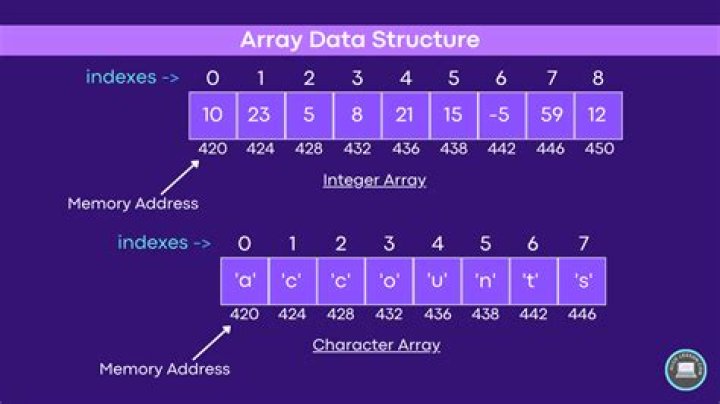

I want to have two arrays in a struct, which are initialized at start but need editing further on. I need three instances of the struct, so that I can index into a specific struct and modify as I wish. Is it possible?
This is what I thought I could do but I get errors:
struct potNumber{ int array[20] = {[0 ... 19] = 10}; char *theName[] = {"Half-and-Half", "Almond", "Rasberry", "Vanilla", …}; } aPot[3]; Then I access the structs as follows:
printf("some statement %s", aPot[0].array[0]); aPot[0].theName[3]; … 2 Answers
The struct themselves do not have data. You need to create objects of the struct type and set the objects ...
struct potNumber { int array[20]; char *theName[42]; }; /* I like to separate the type definition from the object creation */ struct potNumber aPot[3]; /* with a C99 compiler you can use 'designated initializers' */ struct potNumber bPot = {{[7] = 7, [3] = -12}, {[4] = "four", [6] = "six"}}; for (i = 0; i < 20; i++) { aPot[0].array[i] = i; } aPot[0].theName[0] = "Half-and-Half"; aPot[0].theName[1] = "Almond"; aPot[0].theName[2] = "Rasberry"; aPot[0].theName[3] = "Vanilla"; /* ... */ for (i = 0; i < 20; i++) { aPot[2].array[i] = 42 + i; } aPot[2].theName[0] = "Half-and-Half"; aPot[2].theName[1] = "Almond"; aPot[2].theName[2] = "Rasberry"; aPot[2].theName[3] = "Vanilla"; /* ... */ In C struct array elements must have a fixed size, so the char *theNames[] is not valid. Also you can not initialize a struct that way. In C arrays are static, i.e. one cannot change their size dynamically.
A correct declaration of the struct would look like the following
struct potNumber{ int array[20]; char theName[10][20]; }; and you initialize it like this:
struct potNumber aPot[3]= { /* 0 */ { {10, 10, 10, 10, 10, 10, 10, 10, 10, 10, 10, 10, 10, 10, 10, 10, 10, 10, 10, 10 /* up to 20 integer values*/ }, {"Half-and-Half", "Almond", "Raspberry", "Vanilla", /* up to 10 strings of max. 20 characters */ } }, /* 1 */ { {10, 10, 10, 10, 10, 10, 10, 10, 10, 10, 10, 10, 10, 10, 10, 10, 10, 10, 10, 10 /* up to 20 integer values*/ }, {"Half-and-Half", "Almond", "Raspberry", "Vanilla", /* up to 10 strings of max. 20 characters */ } }, /* 2 */ { {10, 10, 10, 10, 10, 10, 10, 10, 10, 10, 10, 10, 10, 10, 10, 10, 10, 10, 10, 10 /* up to 20 integer values*/ }, {"Half-and-Half", "Almond", "Raspberry", "Vanilla", /* up to 10 strings of max. 20 characters */ } } }; But, I'm pretty sure this is not what you want. The sane way to do this required some boilerplate code:
struct IntArray { size_t elements; int *data; }; struct String { size_t length; char *data; }; struct StringArray { size_t elements; struct String *data; }; /* functions for convenient allocation, element access and copying of Arrays and Strings */ struct potNumber { struct IntArray array; struct StringArray theNames; }; Personally I strongly advise against using naked C arrays. Doing everything through helper structs and functions keeps you clear from buffer under/overruns and other trouble. Every serious C coder builds a substancial code library with stuff like this over time.
5