
I am buying a 4k monitor for my workstation.
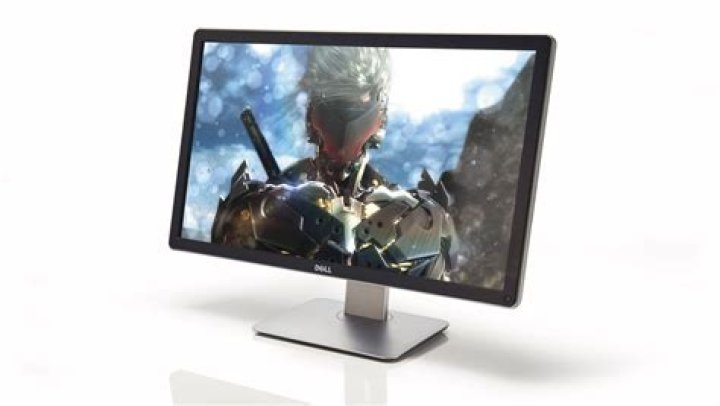
I am interested in the Dell 24 UltraHD 4K Monitor - P2415Q
But there is also the Dell UltraSharp 24 Ultra HD Monitor - UP2414Q
The only difference is "Premier Color" -- and $340.
It says
"PremierColor technology delivers vivid, true-to-life color and professional tools for detailed projects. Work confidently knowing your monitor is compatible with major industry color standards, and has wide color coverage such as 99% AdobeRGB and 100% sRGB. Get exceptional color accuracy and consistency, right out of the box, with precise factory calibration to a Delta-E<2."
But I'm not sure how to interpret that, or if it's worth it. I'm also not sure how to make sense of the differences in technical specs. Can someone help guide me on what the advantages are of Premier Color?
43 Answers
What Dell calls "Premier Color" and HP calls "Dreamcolor" is marketing-speak for 10-bits per channel color. They are also pre-calibrated with a selection of color profiles for professional work in (especially) video and television, also applicable to photography and graphic design, which you can find in their specs.
You can use the full capabilities of a 10-bit monitor only if you have an OS that supports it and have a professional-grade GPU that will output 10-bit color. There is a good answer here with more details on that topic.
Unless you are doing truly color-critical work, the extra color depth and color presets may not be worth the extra cost, but it's worth noting that they can display sRGB, Adobe RGB (almost!), and several television standards, which are not achievable with the usual 8-bit/channel displays. The details are, frankly, highly technical and tl;dr for most purposes. If you Google "10 bit displays" you'll find a ton of information.
4Others have talked about the differences in the panel (WLED versus GB-r backlight). But there is also a difference in the electronics - where the P2415Q is superior. The older monitor must be driven as two logical displays over MST to run at full refresh. It appears to the video card as two 1920x2160 screens and it is up to the video driver to tile them back again. Not all video drivers can do this correctly all of the time, or they may do it but not support rotation. That said, the driver support has improved since the monitor was first released.
Additionally, with Nvidia cards, two logical outputs are 'used up' by the MST arrangement, so a card which supports two screens will only be able to drive a single UP2414Q over MST, even if there is a second DisplayPort physically present on the card. (This is the case for the NVS 310 for example.)
You can run the UP2414Q without MST, so it more straightforwardly appears as a single screen, but then refresh rate is limited to 30Hz. If you want to switch to lower resolutions (for gaming perhaps) then you need to switch off MST in the monitor's on-screen menu.
By contrast, the P2415Q can be driven as a single screen at 60Hz.
There are also some firmware bugs with the UP2414Q, particularly related to waking from sleep mode. I had to install the Windows utility Don't Sleep to work around it. I think the newer firmware releases (A01 and A02) may fix this, but the firmware isn't upgradable and you don't know when buying a UP2414Q from Dell which firmware revision you will get.
So it's annoying that there is no single best choice. You may consider the NEC EA244UHD-BK, which I think combines the UP2414Q's panel with superior electronics, but it costs more than either of the Dells.
2P2415Q use panel with cheaper and worse WLED backlight, while UP2414Q use panel with better and more costly GB-r backlight
Read about differences between WLED and GB-r here:
Edit by third party
GB-r LEDs allow the emission of the three colors separately (red, green, blue), while white LEDs emit a continuous spectrum. The result is that the saturation of each color can be improved and you get a "greener" green, "redder" red and "bluer" blue. They are so saturated that if you display them at maximum saturation they really "burn your eyes" if you have never experienced them. Doing the same with sRGB displays (WLED) just gives you "so so" greens, reds, blues. It's like OLED, if you ever compared it with normal LCD TVs.
As result, you can display more colors. 8 vs 10 bits has nothing to do with it.
3